Why the Rowing Machine Is Back as the Number One Cardio Piece in Gyms
For years the rowing machine sat in the corner of the gym floor as the piece everyone respected from a distance. You climbed on telling yourself you would do five minutes, and you got off having renegotiated terms with your lungs. Yet it has come back strongly, in commercial clubs as much as in functional training boxes. Not because it is fashionable, but because it ticks every box the modern market asks for: effective, measurable, and demanding enough that members feel they have genuinely worked.
What the rowing machine actually trains
It is a whole-body endurance effort: legs, back, arms and trunk. Contrary to a persistent belief, it is not an arm exercise. Most of the work comes from the legs, then the trunk, then the arms. That sequence is what produces the sensation of global effort, and it is what makes the movement hard to cheat.
For an operator, that matters commercially. One machine delivers a full cardiovascular session without loading the joints the way running does, which makes it usable across a much wider membership than a treadmill: general members, athletes in conditioning blocks, and older members who need low-impact work.
Why it is back at the centre of the floor
Because training has become a matter of reference points: time, distance, pace, watts, calories. The rower turns a session into a score, and a score into a challenge. Add to that the fact that it films well, compares well between members, and does not demand an intimidating level of technique to get started, and you have a machine that fills classes.
There is a floor-planning argument too. A rower occupies a long, narrow footprint and most models can be stood upright for storage, so a bank of rowers absorbs a class-sized group in far less area than the equivalent number of treadmills, and clears away when the space is needed for something else.
The mistake that ruins it
Rowing with a rounded back and pulling too early with the arms. The result is predictable: the member tires quickly, ends up sore, and comes to dislike the machine. The order is legs, then trunk, then arms, and the back stays long throughout.
This is an argument for putting rowers where a coach can see them, and for a short technique briefing at induction. A rower that members use badly is a rower that stops being used.
What separates a commercial rower
Under intensive use, a professional rower shows itself in three ways: the consistency of the resistance stroke after stroke, the robustness of the frame and rail, and the reliability of the feel, meaning the glide, the traction and the console readout. It is typically the kind of product where the difference becomes visible after a few months of real use rather than in the showroom.
Two practical points when specifying. First, the resistance type: air resistance scales directly with how hard the member pulls and suits interval and competitive formats, while magnetic resistance runs quieter, which matters in a hotel or a shared building. Second, compliance: equipment installed in a supervised commercial facility must meet EN ISO 20957-1 class S, the professional class for stationary training equipment. Class S is what covers the duty cycle of a machine used all day by members you do not select.
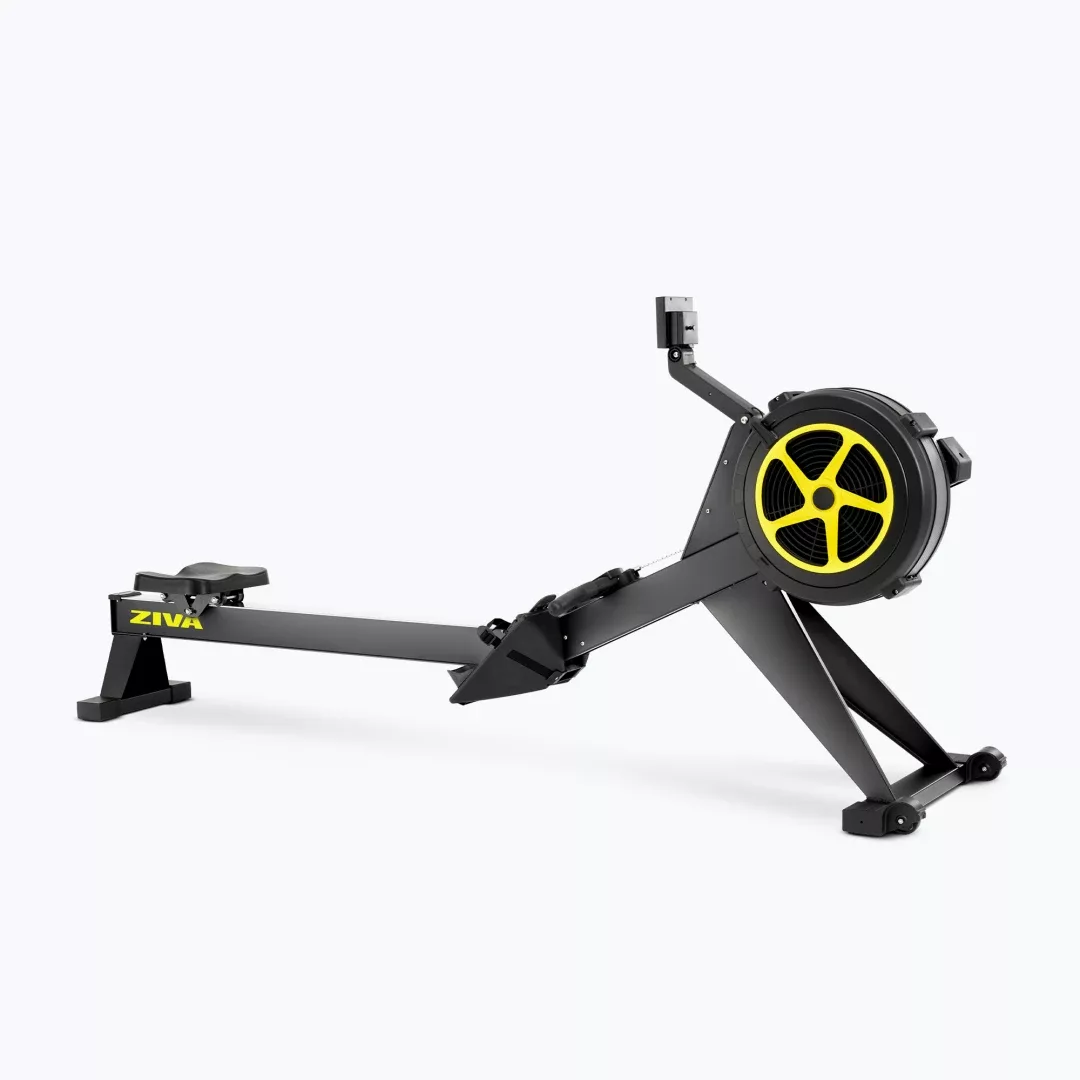
In our range, the Bodytone ZRORv3 ALTO rowing machine is built for continuous club use, while the Bodytone BLAST-R air rower, with its raised design and air resistance, is aimed at interval and functional formats. The full range of professional rowing machines sits alongside the rest of the cardio line-up.
Frequently asked questions
How many rowers does a gym need?
It depends on your class format rather than on total membership. A bank sized to the peak-hour group is the usual rule, because rowers are most often used collectively rather than as a solo station.
Air resistance or magnetic resistance?
Air resistance responds to the effort of the member and suits interval and competitive work. Magnetic resistance is significantly quieter and is usually the answer in hotels, offices and buildings with residential neighbours.
Is a rower suitable for older members?
Yes, at low resistance and with attention to technique. There is no impact loading, which is precisely why it works for members who cannot use a treadmill comfortably.
What maintenance does a rower need in a club?
Wipe the seat and handle daily, keep the rail clean so the seat runs freely, and check the chain or belt and the footplate straps periodically. The rail is the part that shows neglect first.
Specifying your rowers
The right number of rowers, the right resistance type and the right position on the floor are decided together, from your class timetable and your building. Light In Fitness has been equipping professional facilities since 2013.
Send us your floor plan and class format and we will come back with a costed proposal: request a quote.
À lire aussi sur le même thème
- Rameur Xebex Air Rower 3.0 Smart Connect VS Rameur RowErg Tall Concept2 (PM5)
- Commercial rowing machines: a specification and buying guide
- Seated row machines: types, specification and buying guide
- Cross Trainer or Treadmill: Which Is Really Better for the Joints?
- How to Choose a Professional Treadmill for Your Gym