
Bodytone powerlifting platforms
Bodytone powerlifting platforms: our professional selection
Bodytone powerlifting platforms are dedicated lifting surfaces for gyms and strength areas, designed to absorb the impact of deadlifts and heavy loaded movements and to protect the building floor. A platform separates the lifting zone from the rest of the floor, which limits noise transmission and keeps the slab intact where loaded bars are dropped repeatedly. Light In Fitness supports facilities on the layout of their strength zone.
Showing all 2 resultsSorted by latest
-
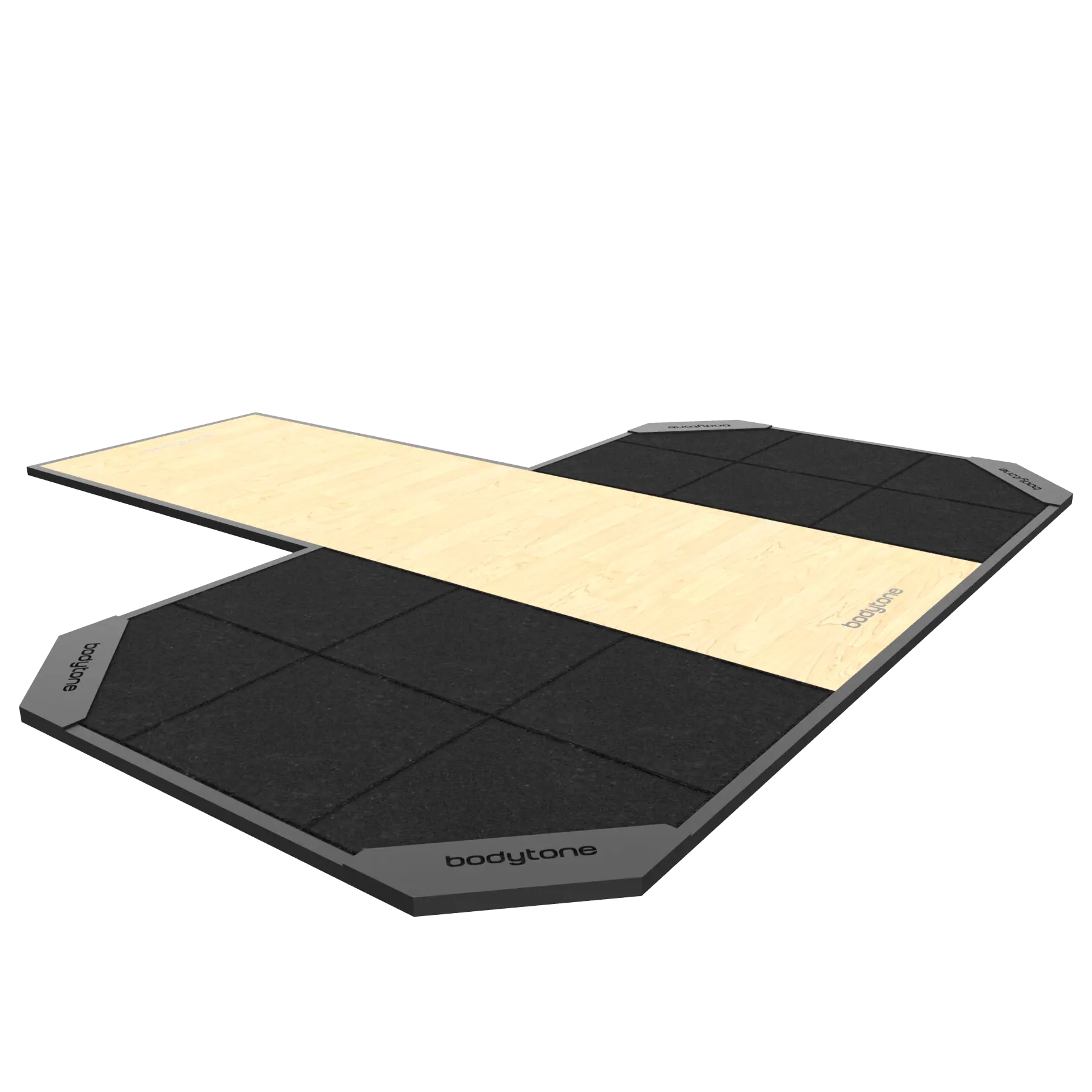
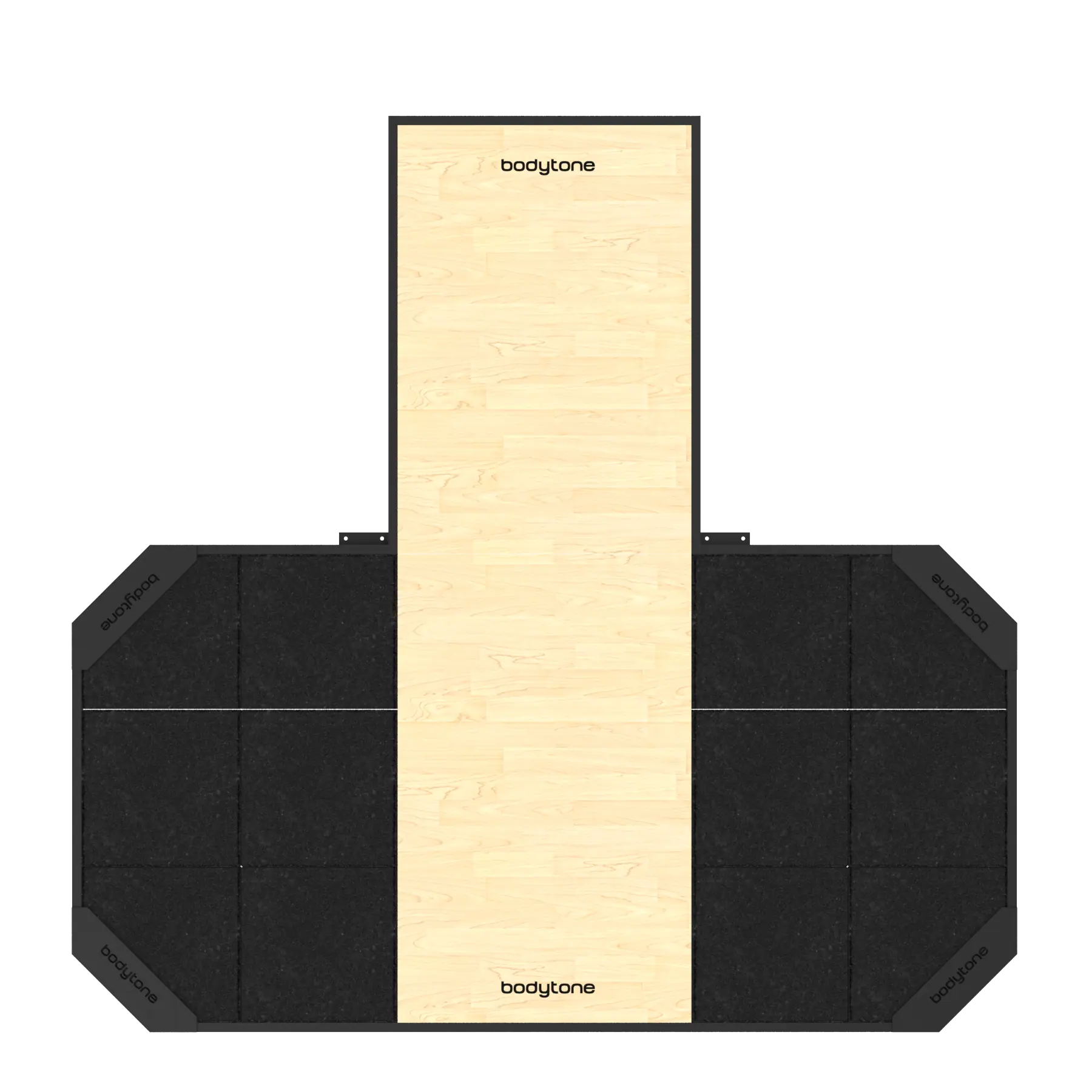
Bodytone PPB 3×2 Powerlifting Platform with Band Pegs — 306 × 206 cm, 159 kg to Pinterest (opens in a new window)Save on Pinterest : Bodytone PPB 3×2 Powerlifting Platform with Band Pegs — 306 × 206 cm, 159 kg
 Add to cartMORE INFO
Bodytone PPB 3×2 Powerlifting Platform with Band Pegs — 306 × 206 cm, 159 kg
2,263.30 € excl. VAT -
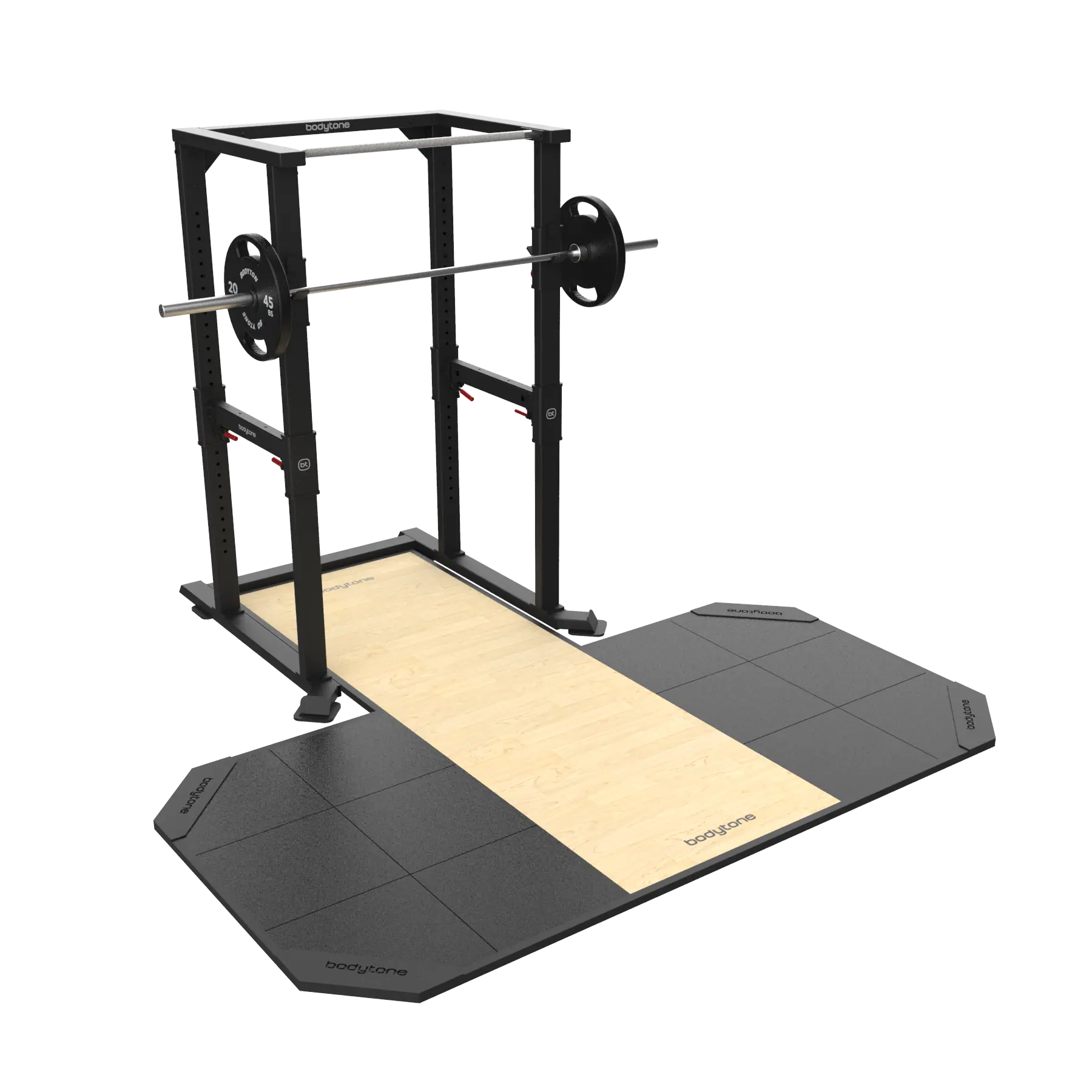
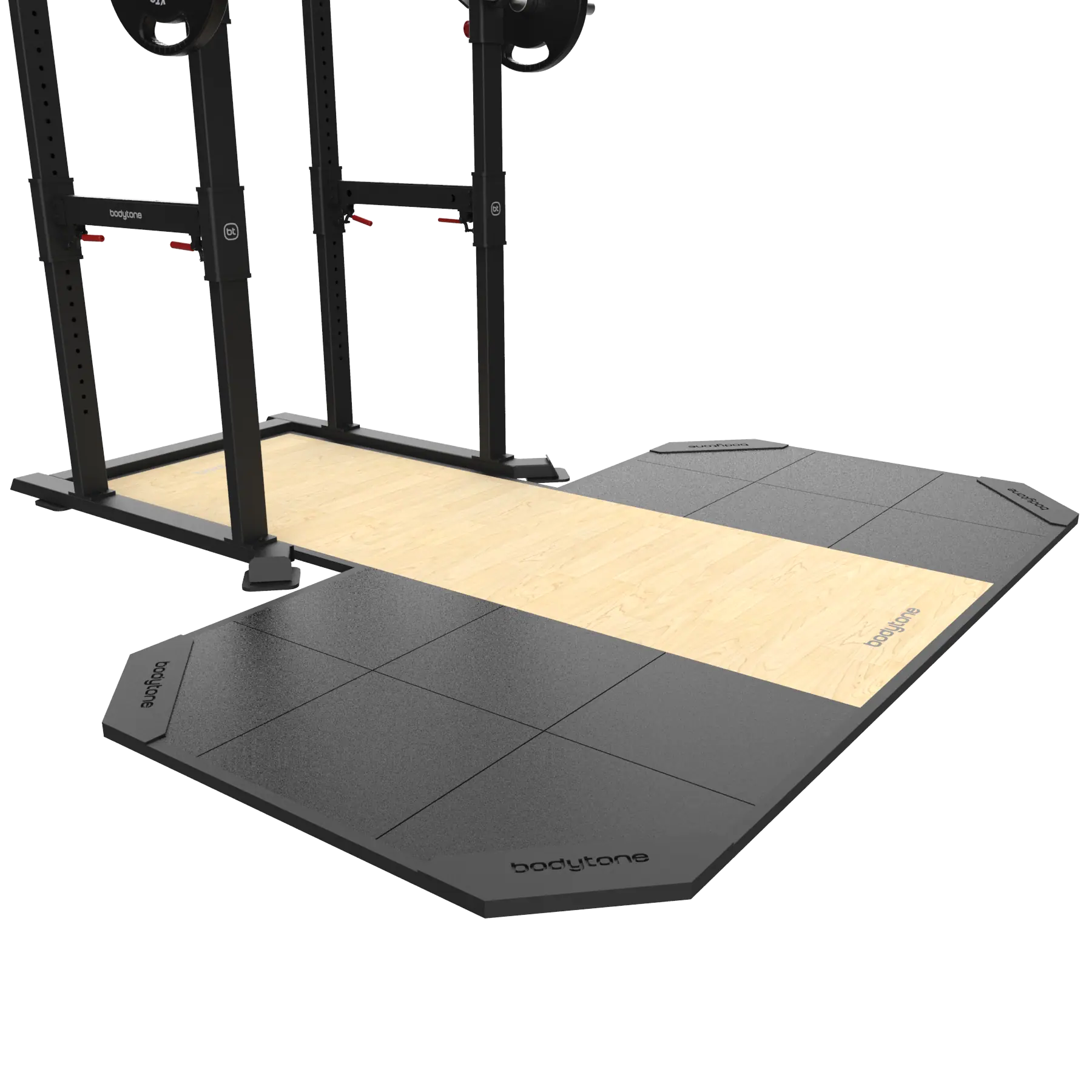
Bodytone PPR Powerlifting Platform for Rack — 302 × 295 cm, bamboo and rubber, 154 kg to Pinterest (opens in a new window)Save on Pinterest : Bodytone PPR Powerlifting Platform for Rack — 302 × 295 cm, bamboo and rubber, 154 kg
![Bodytone powerlifting platforms]()
 Add to cartMORE INFO
Bodytone PPR Powerlifting Platform for Rack — 302 × 295 cm, bamboo and rubber, 154 kg
1,231.40 € excl. VAT


Why a platform rather than tiles alone
Rubber tiles protect a floor from general use and moderate drops. A platform goes further: it gives a defined, level lifting surface, absorbs the impact of a loaded barbell at the two points where it lands, and marks out the zone so users and passers by know where the lifting happens. On upper floors and in mixed use buildings, that combination of impact absorption and zoning is usually what makes heavy lifting acceptable at all.
| Requirement | Rubber tiles | Powerlifting platform |
|---|---|---|
| General floor protection | Yes | Yes |
| Repeated loaded bar drops | Only in thick specifications | Designed for it |
| Level, defined lifting surface | No | Yes |
| Zoning of the strength area | Limited | Clear |
| Noise transmission | Reduced | Further reduced at impact points |
Installation and layout
A platform needs a level sub floor and enough clear space around it for the lifter, the bar and any spotters, plus circulation that does not cross the lifting zone. Plate storage belongs next to the platform, since plates left on the surface are a trip hazard and damage the finish. Surrounding areas are normally finished with rubber gym flooring tiles so levels match at the platform edge. Warranty runs from 2 to 5 years depending on the range.
Frequently asked questions
How many platforms does a strength area need?
One platform per lifting station is the working rule, since two lifters cannot share a surface safely. Clubs with class based strength programming size the count from the largest group. Room length and the circulation you need between stations will usually cap the figure.
Can a platform be installed on an upper floor?
Often yes, but the structural loading has to be checked first, because both the static load and the impact load matter. Send us the floor build up and, where available, the structural loading figures for the room with your enquiry. Where loading is limited, the answer is usually to reduce the drop height programme rather than the platform specification.
Tell us the room, the floor build up and how many lifting stations you need, and we will return a platform proposal. Request a quotation for a reply within 24 working hours.