
Rubber flooring rolls for gyms and sports halls
Rubber flooring rolls for gyms and sports halls: our professional selection
Rubber rolls cover large floor areas quickly and with very few joints, which is why they are the default surface for gym floors, cardio zones, functional areas and circulation routes. They are produced from recycled rubber granulate bound with a high performance resin, a construction that combines shock protection, walking comfort and a long service life under intensive use.
What defines our sports flooring
| Thicknesses and formats | From 6 to 60 mm, up to 100 mm for extreme use. Formats 50 × 50, 50 × 100 and 100 × 100 cm, plus mats and rolls |
|---|---|
| Density | 900 to 1,000 kg/m³ depending on the reference, stated on every product page |
| Composition | Recycled rubber granules with polyurethane binder; coloured, wood-effect or patterned versions depending on the range |
| Impact attenuation | For a play area, check the specific product test report, critical fall height and installation conditions. A fitness tile is not automatically validated to EN 1177 |
| Fire classification | Bfl-s1, Cfl-s1 or Dfl-s1 depending on the reference. Distinguish a classification covered by a test report from a Light In Fitness declaration for finishes or thicknesses outside its scope. Verify product, thickness, subfloor, installation and field of application; documents on request, not published online |
| Acoustics | A reduction in dB requires a report for the complete tile, underlay, subfloor and installation system. Generic values are not a guaranteed performance of each reference; verify evidence before specification |
| Installation | Loose-laid, connector-jointed or bonded depending on thickness and use. Substrate, flatness and drainage to be checked before ordering |
| Edge detailing | Finishing profiles for 20, 25 and 40 mm thicknesses, plus a sloped transition strip. Access ramps and made-to-measure edging available as an option, quoted with the layout |
| Available on request | Cellular tiles to be filled with gravel or topsoil, made-to-measure edging and ramps, interlocking rubber pavers for stables and technical rooms |
| Choosing the thickness | By use zone — free weights, cardio, functional training, play area — never by overall floor area |
Showing all 10 resultsSorted by latest
-
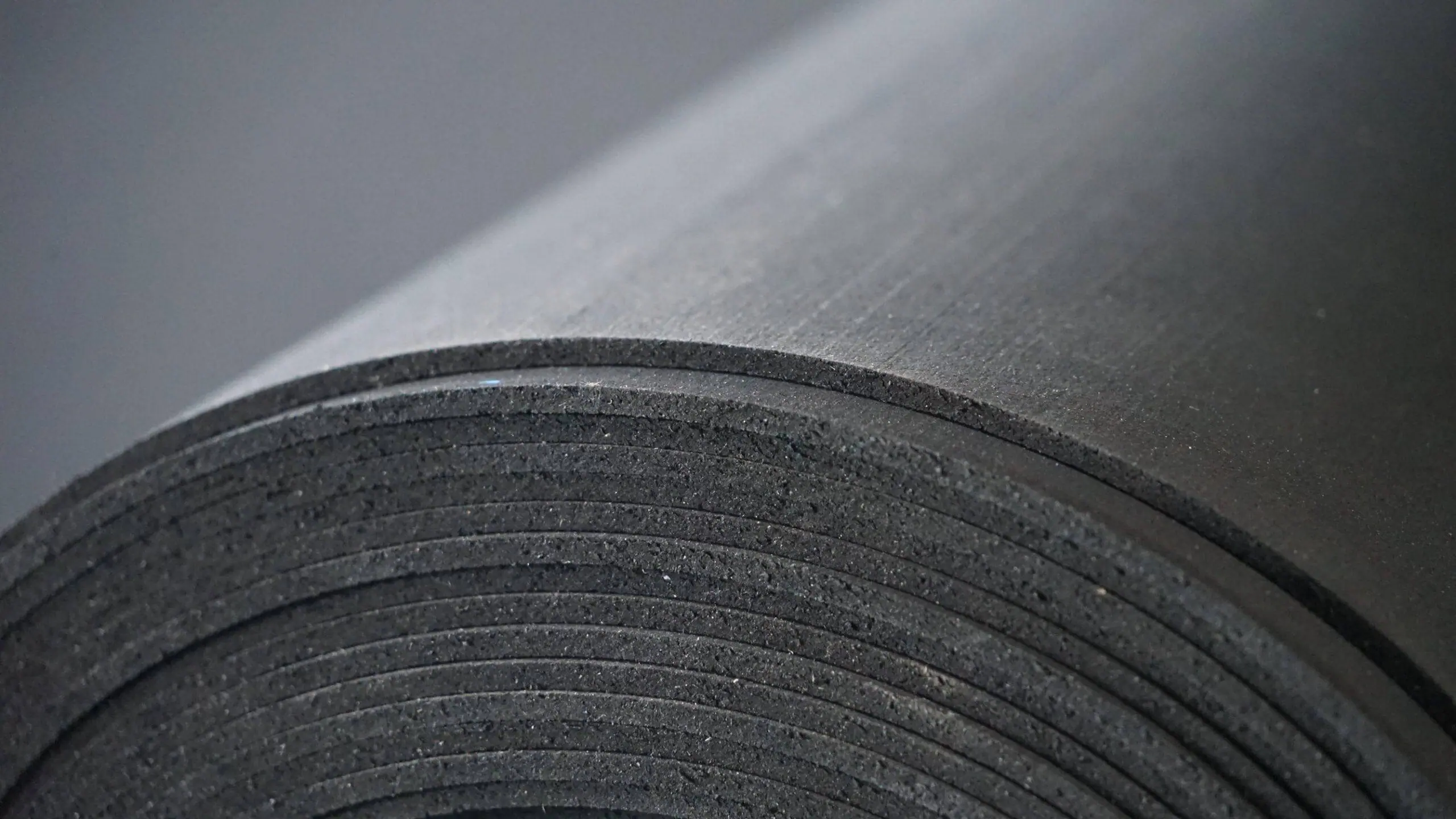
Rubber flooring roll 10 mm – 10 × 1.25 m – 12.5 m² to Pinterest (opens in a new window)Save on Pinterest : Rubber flooring roll 10 mm – 10 × 1.25 m – 12.5 m²
 Add to cartMORE INFO
Rubber flooring roll 10 mm – 10 × 1.25 m – 12.5 m²
300.00 € excl. VAT -
Black rubber flooring roll with white flecks 8 mm – 10 × 1 m to Pinterest (opens in a new window)Save on Pinterest : Black rubber flooring roll with white flecks 8 mm – 10 × 1 m
![Black rubber flooring roll with white flecks 8 mm – 10 × 1 m]() Add to cartMORE INFO
Black rubber flooring roll with white flecks 8 mm – 10 × 1 m
225.68 € excl. VAT -
Black rubber flooring roll with white flecks 6 mm – 10 × 1 m to Pinterest (opens in a new window)Save on Pinterest : Black rubber flooring roll with white flecks 6 mm – 10 × 1 m
![Black rubber flooring roll with white flecks 6 mm – 10 × 1 m]() Add to cartMORE INFO
Black rubber flooring roll with white flecks 6 mm – 10 × 1 m
174.72 € excl. VAT -
Black rubber flooring roll with white flecks 4 mm – 10 × 1 m to Pinterest (opens in a new window)Save on Pinterest : Black rubber flooring roll with white flecks 4 mm – 10 × 1 m
![Black rubber flooring roll with white flecks 4 mm – 10 × 1 m]() Add to cartMORE INFO
Black rubber flooring roll with white flecks 4 mm – 10 × 1 m
123.76 € excl. VAT -
Colour-flecked rubber flooring roll 8 mm – 10 × 1.25 m to Pinterest (opens in a new window)Save on Pinterest : Colour-flecked rubber flooring roll 8 mm – 10 × 1.25 m
![Colour-flecked rubber flooring roll 8 mm – 10 × 1.25 m]() Add to cartMORE INFO
Colour-flecked rubber flooring roll 8 mm – 10 × 1.25 m
282.10 € excl. VAT -
Colour-flecked rubber flooring roll 6 mm – 10 × 1.25 m to Pinterest (opens in a new window)Save on Pinterest : Colour-flecked rubber flooring roll 6 mm – 10 × 1.25 m
![Colour-flecked rubber flooring roll 6 mm – 10 × 1.25 m]() Add to cartMORE INFO
Colour-flecked rubber flooring roll 6 mm – 10 × 1.25 m
218.40 € excl. VAT -
Colour-flecked rubber flooring roll 4 mm – 10 × 1.25 m to Pinterest (opens in a new window)Save on Pinterest : Colour-flecked rubber flooring roll 4 mm – 10 × 1.25 m
![Colour-flecked rubber flooring roll 4 mm – 10 × 1.25 m]() Add to cartMORE INFO
Colour-flecked rubber flooring roll 4 mm – 10 × 1.25 m
154.70 € excl. VAT -
Rubber Flooring Roll 4 mm — 10 x 1.25 m (12.5 m2) to Pinterest (opens in a new window)Save on Pinterest : Rubber Flooring Roll 4 mm — 10 x 1.25 m (12.5 m2)
![Rubber Flooring Roll 4 mm — 10 x 1.25 m (12.5 m2)]() Add to cartMORE INFO
Rubber Flooring Roll 4 mm — 10 x 1.25 m (12.5 m2)
150.00 € excl. VAT -
Rubber Gym Flooring Roll 6 mm - 10 x 1.25 m (12.5 m2) to Pinterest (opens in a new window)Save on Pinterest : Rubber Gym Flooring Roll 6 mm - 10 x 1.25 m (12.5 m2)
![Rubber Gym Flooring Roll 6 mm - 10 x 1.25 m (12.5 m2)]() Add to cartMORE INFO
Rubber Gym Flooring Roll 6 mm - 10 x 1.25 m (12.5 m2)
220.00 € excl. VAT -
Rubber sports flooring roll 8 mm, black to Pinterest (opens in a new window)Save on Pinterest : Rubber sports flooring roll 8 mm, black
![Rubber sports flooring roll 8 mm, black]() Add to cartMORE INFO
Rubber sports flooring roll 8 mm, black
260.00 € excl. VAT
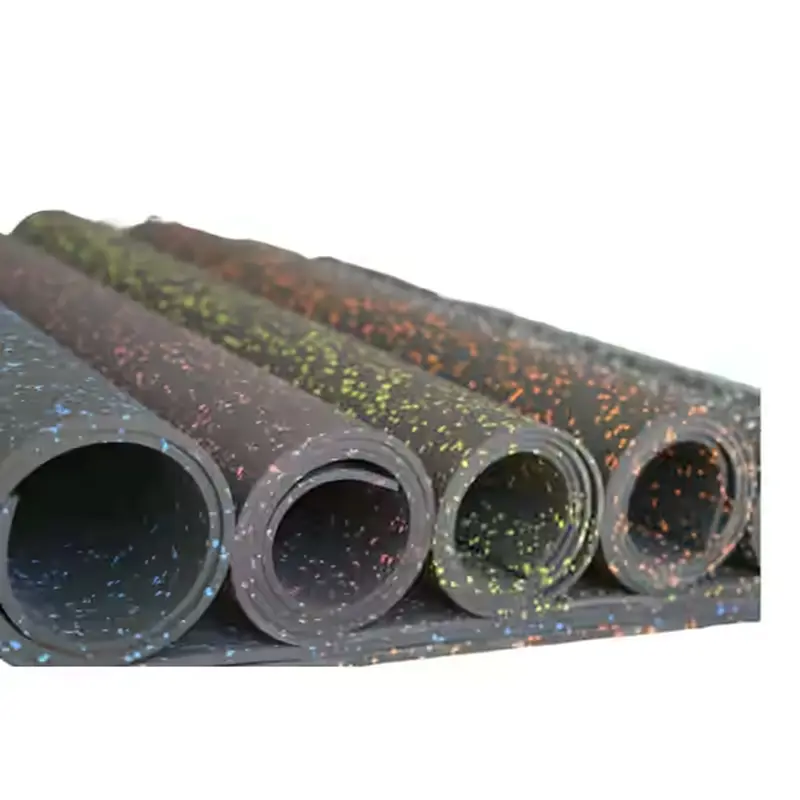
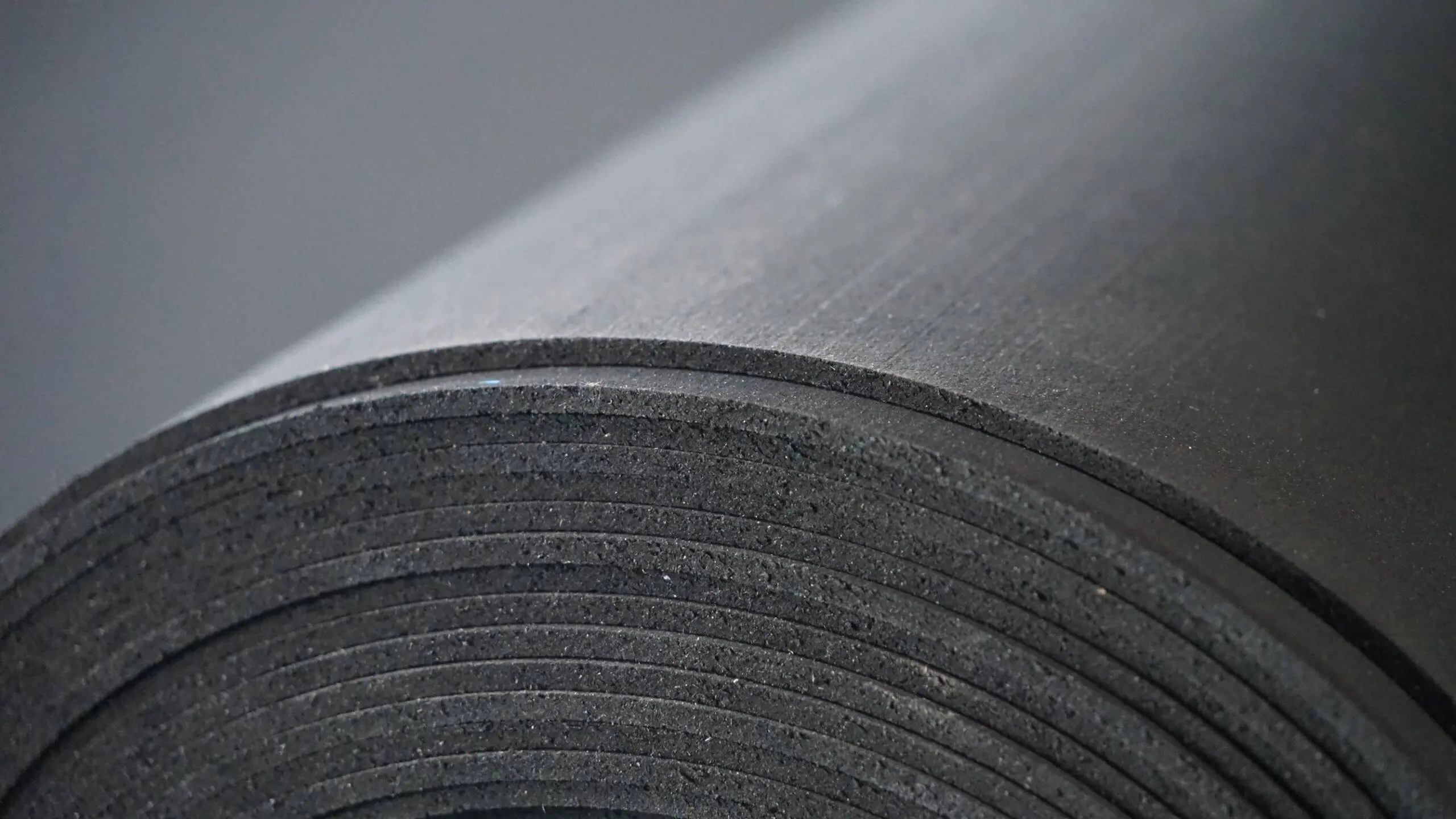


Thicknesses available
| Thickness | Roll format | Coverage per roll |
|---|---|---|
| 4 mm | 10 x 1.25 m | 12.5 m2 |
| 6 mm | 10 x 1.25 m | 12.5 m2 |
| 8 mm | 10 x 1.25 m, black | 12.5 m2; ordering unit to be confirmed with the quotation |
What a rubber floor roll is made of
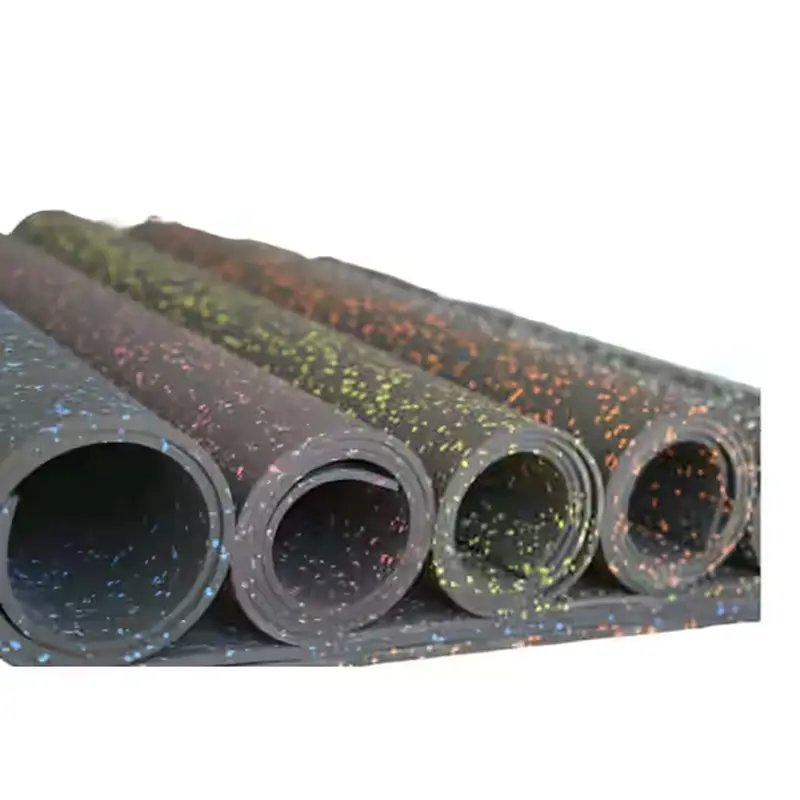
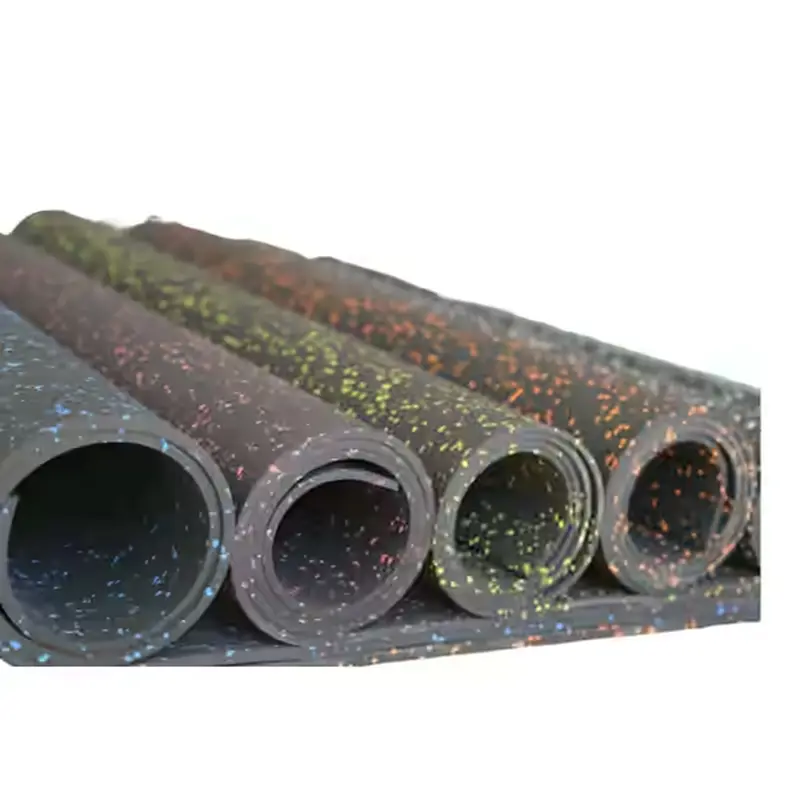
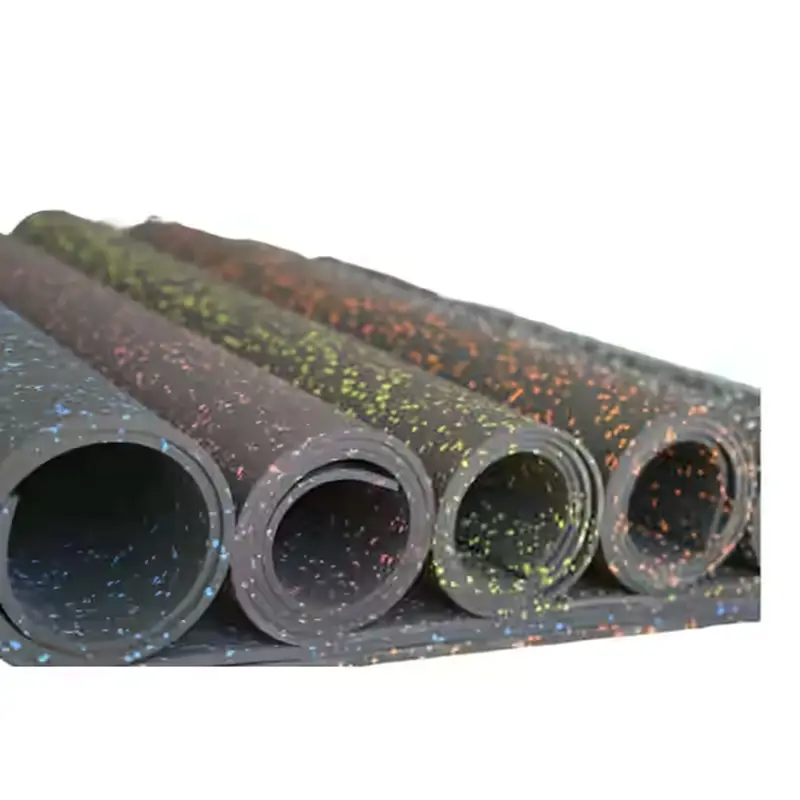
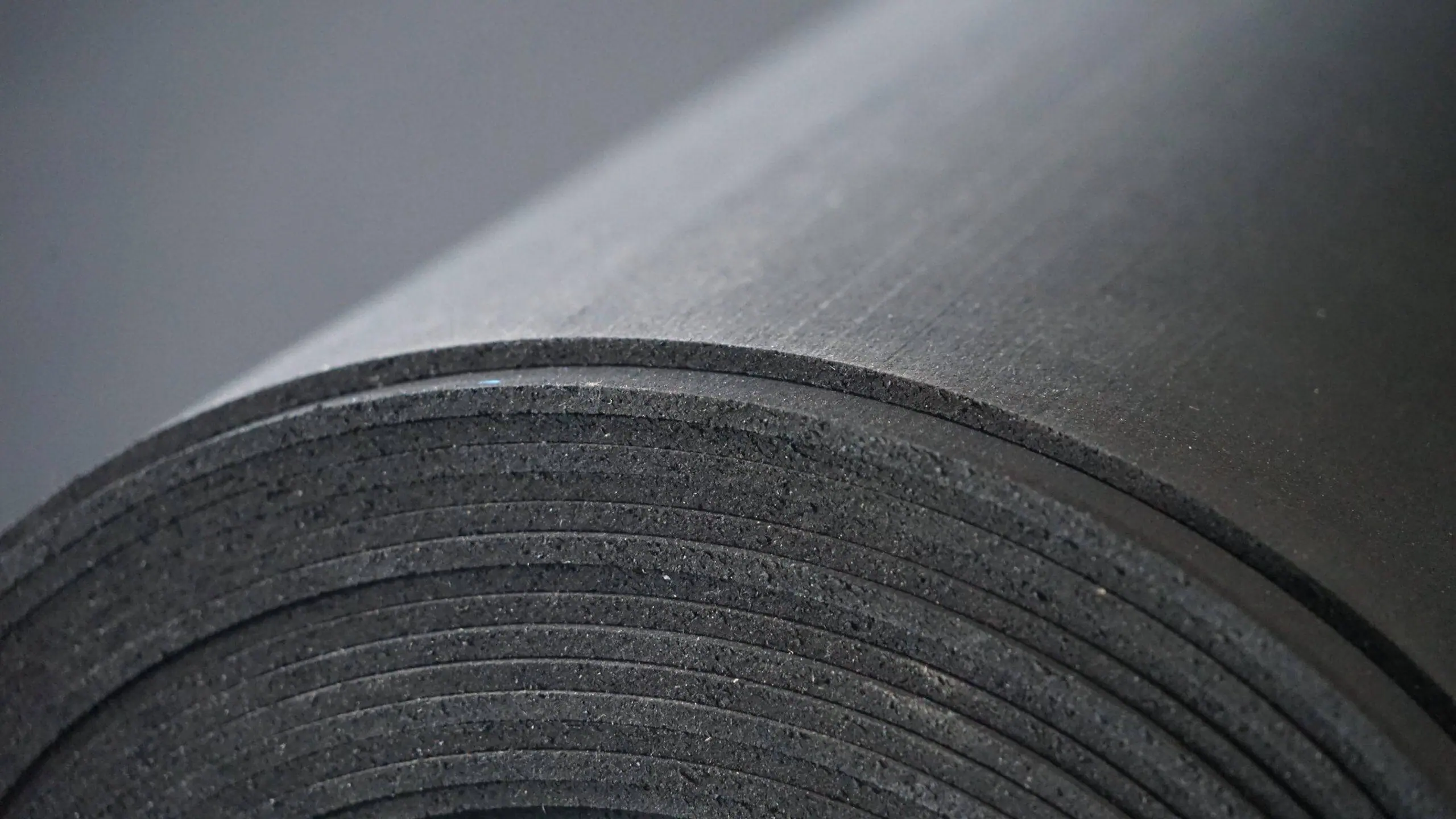
The covering is made of SBR rubber granules recovered from tyre recycling, bound with a polyurethane polymer. The flecks come from EPDM pigments, which is also what makes a bespoke colour possible in production, subject to a minimum order. This composition gives a non-slip floor even in the presence of moisture — the reason this type of covering is found in ski resorts and ice rinks as much as in gyms — and it takes the constant footfall of exhibition halls and trade shows.
Manufacturing tolerance: ± 1 %. The dry double-sided adhesive tape comes in three widths — 50, 85 and 150 mm — chosen according to the joint to be covered, and works under PVC flooring, rubber and artificial turf alike. For intensive use, full-surface bonding is recommended.
Choosing a thickness
Thickness is chosen against what happens on the floor, not against the size of the room. Thin rolls of 4 mm suit circulation areas, studios and cardio zones where the load is static and comfort under foot is the objective. Six and 8 mm are the usual specification for machine areas and general strength floors, where trolleys, machine feet and occasional dropped accessories have to be absorbed.
Rolls are not the right product under a drop zone. Where barbells are dropped from height, thick impact tiles are specified locally and the roll covers everything around them. That split gives a continuous appearance without paying for impact thickness across the whole surface.
Installation is on a flat, dry and clean base. Rolls are laid edge to edge, with joints kept to a minimum for hygiene and appearance, and can be bonded where trolleys or heavy machines are moved regularly.
Roll or tile?
Rolls give surface continuity and fewer infiltration points; rubber gym flooring tiles can be replaced one unit at a time after localised damage.
Can rubber rolls be used outdoors?
Outdoor use must be confirmed for the selected reference, substrate and drainage conditions. For permanent outdoor sports areas see outdoor sports flooring.