
Interlocking polypropylene sports court tiles
Interlocking polypropylene sports court tiles: our professional selection
Range overview — Sales units vary by product: m², tile, roll or piece. Accessories and maintenance equipment are priced separately. Compare flooring prices for the same surface area.
Interlocking polypropylene tiles clip together without adhesive on any flat, drained base, which makes them the quickest way to create or resurface a modular sports court. The open grid structure lets water pass straight through, so the same product works outdoors, around swimming pools and on any surface that has to be washed down.
What defines our sports flooring
| Thicknesses and formats | From 6 to 60 mm, up to 100 mm for extreme use. Formats 50 × 50, 50 × 100 and 100 × 100 cm, plus mats and rolls |
|---|---|
| Density | 900 to 1,000 kg/m³ depending on the reference, stated on every product page |
| Composition | Recycled rubber granules with polyurethane binder; coloured, wood-effect or patterned versions depending on the range |
| Impact attenuation | For a play area, check the specific product test report, critical fall height and installation conditions. A fitness tile is not automatically validated to EN 1177 |
| Fire classification | Bfl-s1, Cfl-s1 or Dfl-s1 depending on the reference. Distinguish a classification covered by a test report from a Light In Fitness declaration for finishes or thicknesses outside its scope. Verify product, thickness, subfloor, installation and field of application; documents on request, not published online |
| Acoustics | A reduction in dB requires a report for the complete tile, underlay, subfloor and installation system. Generic values are not a guaranteed performance of each reference; verify evidence before specification |
| Installation | Loose-laid, connector-jointed or bonded depending on thickness and use. Substrate, flatness and drainage to be checked before ordering |
| Edge detailing | Finishing profiles for 20, 25 and 40 mm thicknesses, plus a sloped transition strip. Access ramps and made-to-measure edging available as an option, quoted with the layout |
| Available on request | Cellular tiles to be filled with gravel or topsoil, made-to-measure edging and ramps, interlocking rubber pavers for stables and technical rooms |
| Choosing the thickness | By use zone — free weights, cardio, functional training, play area — never by overall floor area |
Showing all 5 resultsSorted by latest
-
Soft Connection I Interlocking Sports Tile — FIBA & ITF — 40 × 40 × 1.58 cm to Pinterest (opens in a new window)Save on Pinterest : Soft Connection I Interlocking Sports Tile — FIBA & ITF — 40 × 40 × 1.58 cm
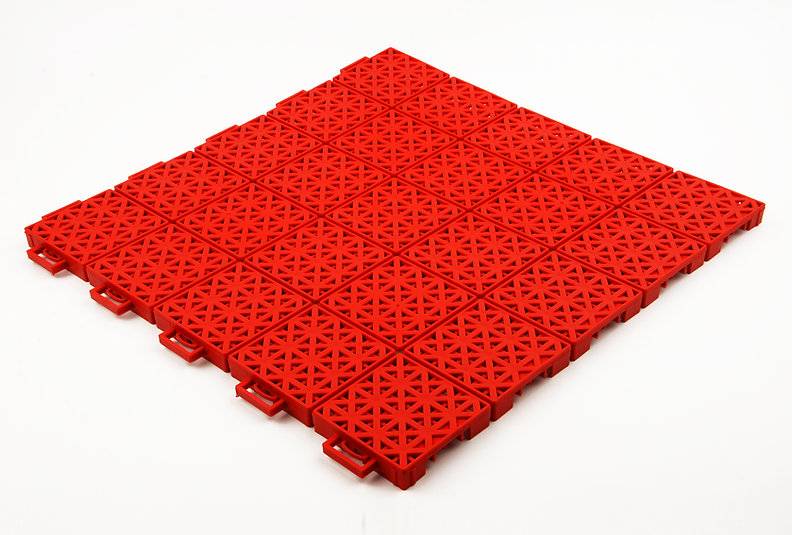
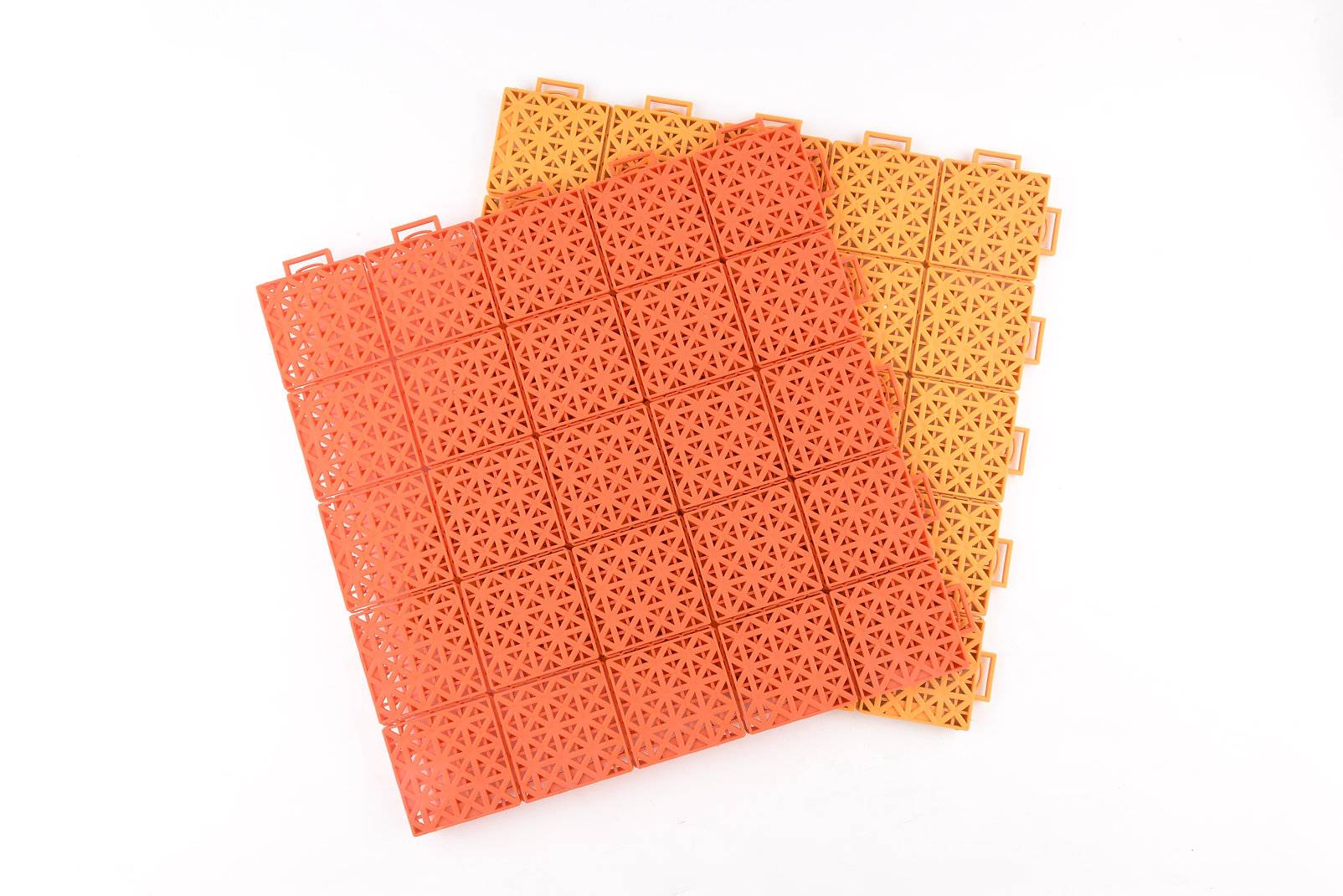
Soft Connection I Interlocking Sports Tile — FIBA & ITF — 40 × 40 × 1.58 cm
27.00 € excl. VATsoit 32.40 € TTC selon la destination de livraison
Add to cartMORE INFO -
Pearl Asterisk interlocking sports tile, 30.48 cm to Pinterest (opens in a new window)Save on Pinterest : Pearl Asterisk interlocking sports tile, 30.48 cm
![Pearl Asterisk interlocking sports tile, 30.48 cm]()
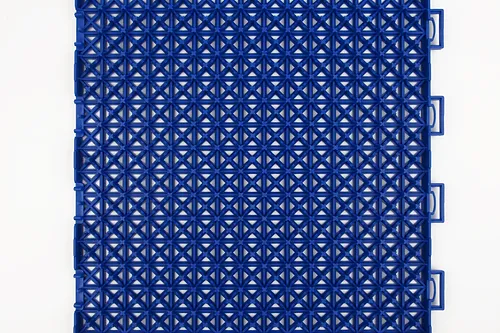
Pearl Asterisk interlocking sports tile, 30.48 cm
24.00 € excl. VATsoit 28.80 € TTC selon la destination de livraison
Add to cartMORE INFO -
Elastic Star Interlocking Polypropylene Sports Tile — 34 × 34 × 1.55 cm to Pinterest (opens in a new window)Save on Pinterest : Elastic Star Interlocking Polypropylene Sports Tile — 34 × 34 × 1.55 cm
![Elastic Star Interlocking Polypropylene Sports Tile — 34 × 34 × 1.55 cm]()
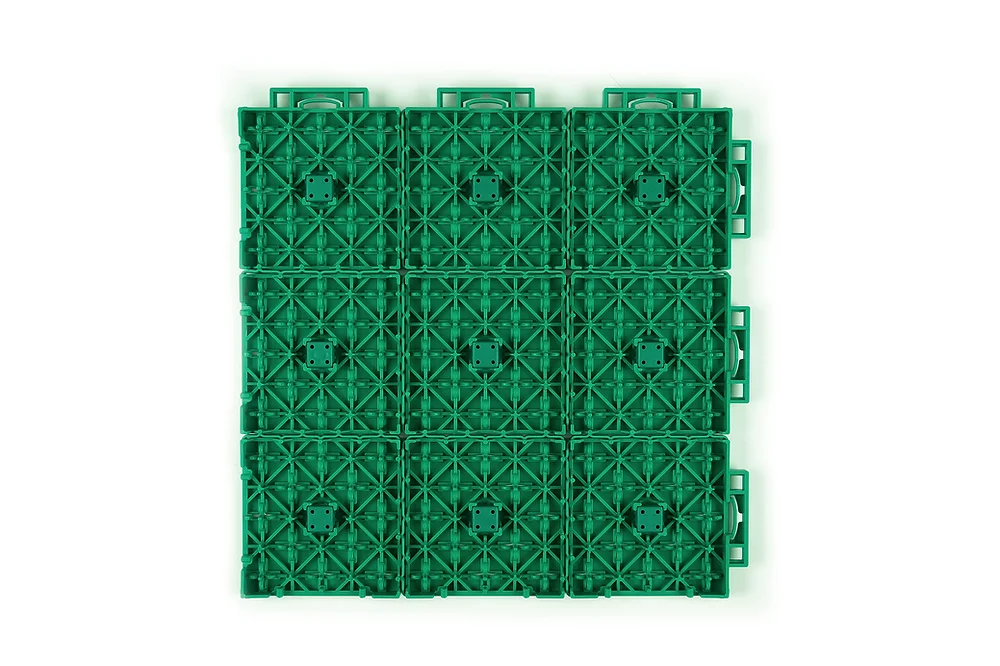
Elastic Star Interlocking Polypropylene Sports Tile — 34 × 34 × 1.55 cm
30.00 € excl. VATsoit 36.00 € TTC selon la destination de livraison
Add to cartMORE INFO -
SES Battle III elastic rubber basketball tile, 30.1 x 30.1 x 1.6 cm to Pinterest (opens in a new window)Save on Pinterest : SES Battle III elastic rubber basketball tile, 30.1 x 30.1 x 1.6 cm
![SES Battle III elastic rubber basketball tile, 30.1 x 30.1 x 1.6 cm]()
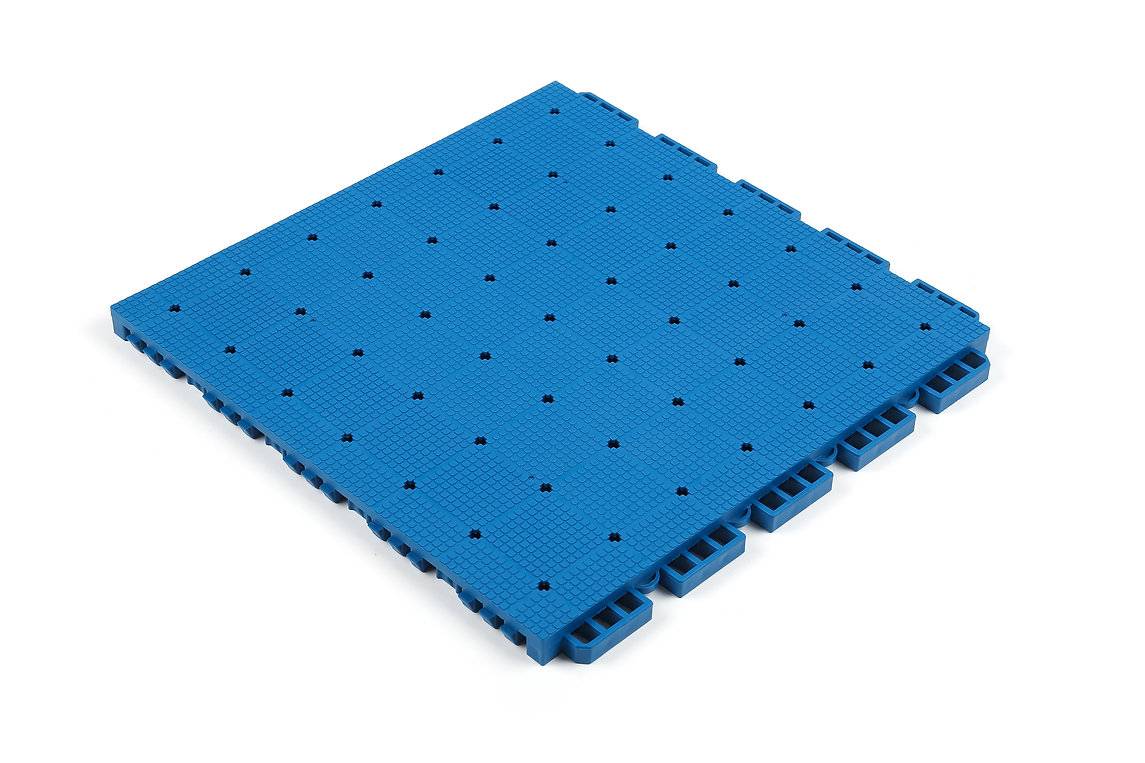
SES Battle III elastic rubber basketball tile, 30.1 x 30.1 x 1.6 cm
60.00 € excl. VATsoit 72.00 € TTC selon la destination de livraison
Add to cartMORE INFO -
SES Elite interlocking court tile 25 × 25 × 2 cm – FIBA 3x3 approved basketball surface to Pinterest (opens in a new window)Save on Pinterest : SES Elite interlocking court tile 25 × 25 × 2 cm – FIBA 3x3 approved basketball surface
![SES Elite interlocking court tile 25 × 25 × 2 cm – FIBA 3x3 approved basketball surface]()
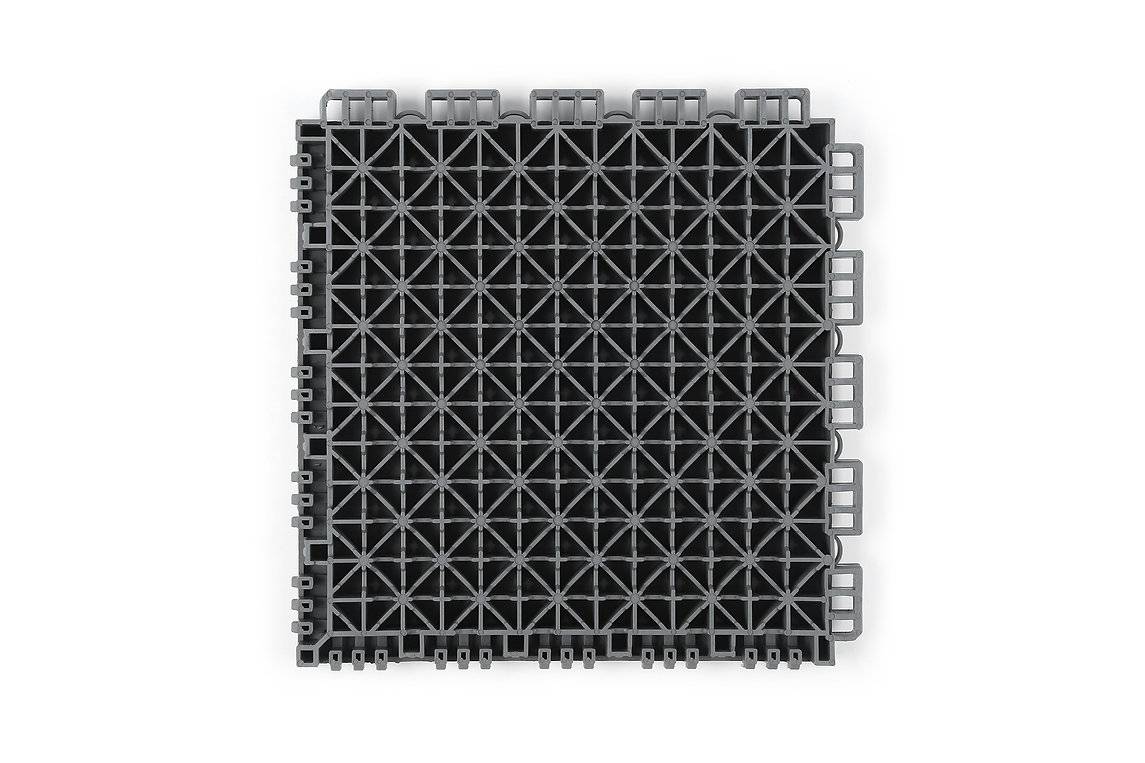
SES Elite interlocking court tile 25 × 25 × 2 cm – FIBA 3x3 approved basketball surface
90.00 € excl. VATsoit 108.00 € TTC selon la destination de livraison
Add to cartMORE INFO
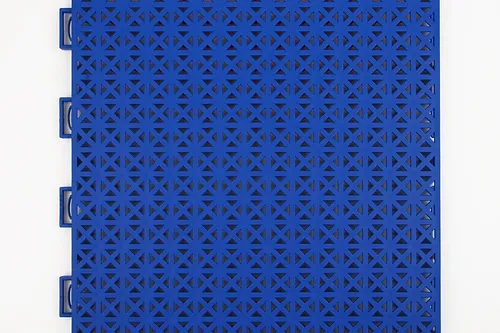
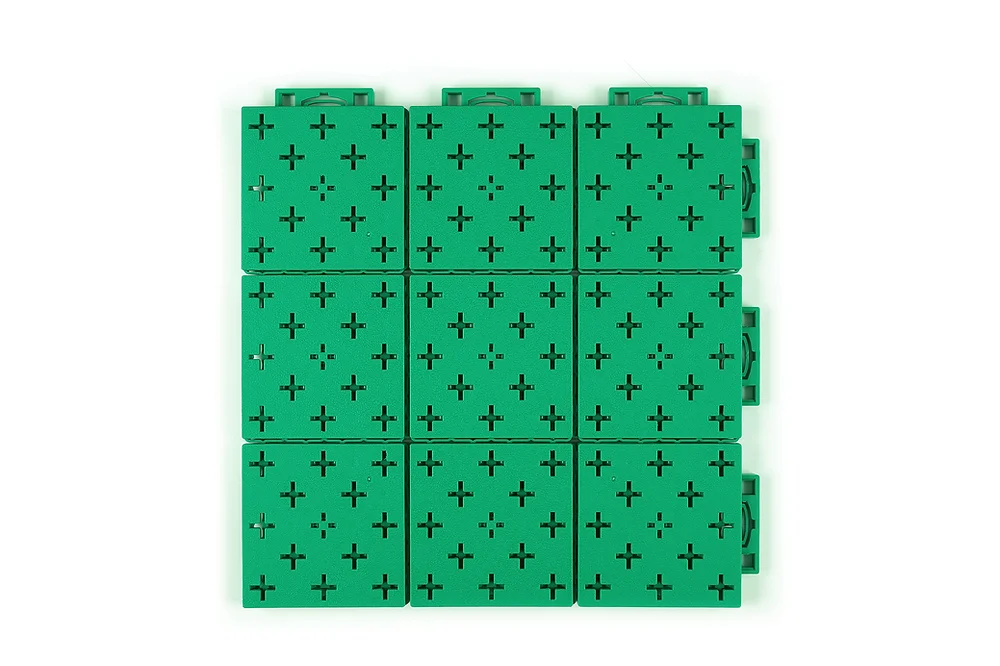
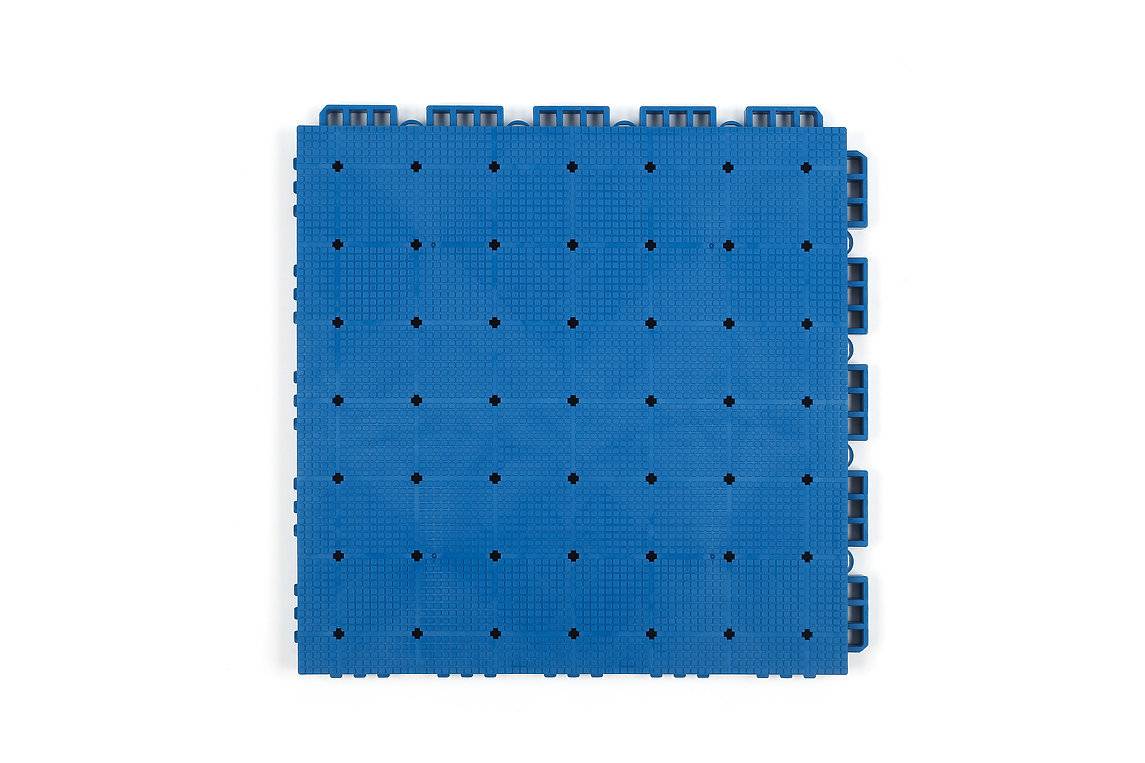
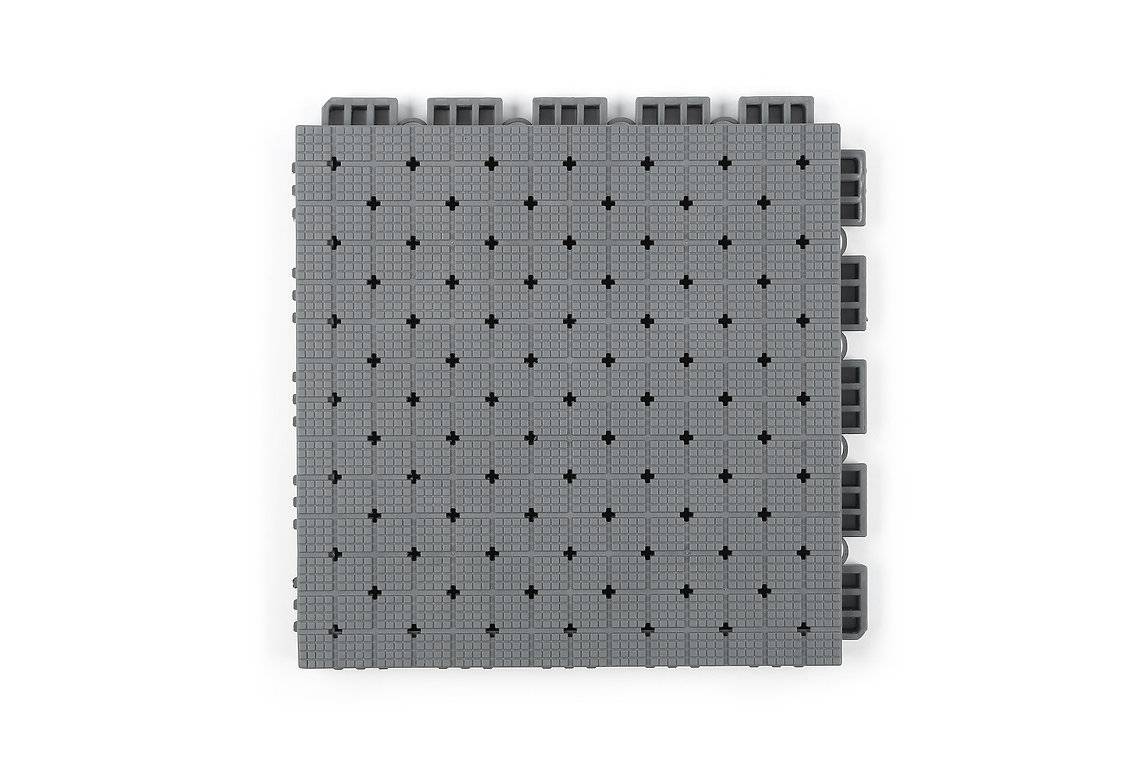


Tile formats available
| Tile | Dimensions | Note |
|---|---|---|
| Soft Connection I | 40 x 40 x 1.58 cm | FIBA and ITF references |
| Elastic Star | 34 x 34 x 1.55 cm | Elastic grid structure |
| Pearl Asterisk | 30.48 x 30.48 x 1.38 cm | Fine grain surface finish |
| SES Battle III | 30.1 x 30.1 x 1.6 cm | Elastic rubber basketball tile |
| SES Elite | 25 x 25 x 2 cm | Official FIBA 3×3 reference |
How an interlocking tile is built
Behind the look of a simple perforated plate, these tiles stack four functions. The surface, grooved in a square pattern, drains water and keeps grip in the rain. The reinforcing layer absorbs hard landings and evens out ball bounce across the whole playing area. The support layer stabilises the assembly and limits bad footing. Finally, the elastic connections between tiles absorb the expansion and contraction caused by temperature swings instead of passing them on to the edges of the court.
That construction is what separates a sports court tile from a terrace grating: it cushions vertical impacts as well as lateral push-offs, the ones that put the most strain on ankles and knees during changes of direction.
Where interlocking tiles are the right answer
Multi-sport courts, play areas, circulation zones, pool surrounds and temporary surfaces all suit the format. Because there is no adhesive, a court can be lifted, extended or relocated, which is decisive for schools, campsites and local authorities that reorganise their sites. Colour changes are made tile by tile, so lines and logos are built into the surface rather than painted onto it and repainted every season.
These are not the same product as rubber gym tiles. Polypropylene tiles are engineered for ball response, lateral grip and drainage; rubber tiles are engineered for impact absorption under dropped loads. Confusing the two produces a court that is either too soft to play on or too hard to train on.
What base is required?
A flat, stable and drained surface, typically concrete or asphalt. The tiles absorb minor irregularities but do not correct a slope or a broken slab.
Are lines included?
Court markings are produced with contrasting tiles laid to the relevant court dimensions and confirmed on the layout drawing. See also outdoor sports flooring and rubber gym flooring tiles.