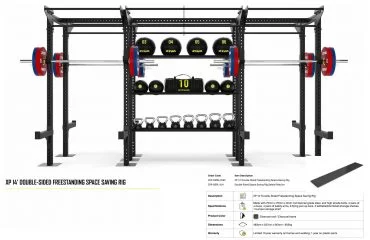
Professional CrossFit equipment for commercial gyms
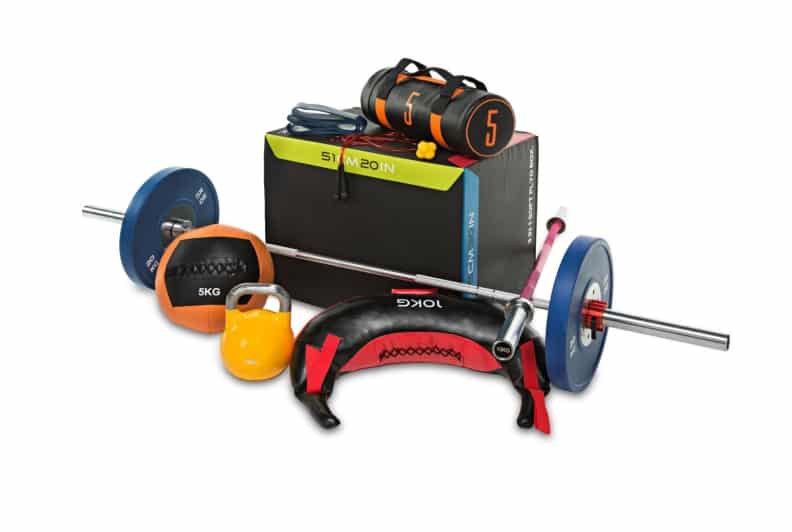
If you are sourcing professional CrossFit equipment for a commercial gym, the specification matters more than the shopping list. Equipment on a coached training floor is used by dozens of members a day, loaded and dropped repeatedly, and expected to last several years without becoming a hazard. Choosing higher grade equipment from the outset is what protects both safety and service life.
Olympic barbells
The barbell is one of the most important items on a CrossFit floor. It has to be robust and durable enough to withstand heavy, repeated movements while still offering a comfortable grip for the athlete. Higher grade bars with stainless steel construction and high precision bearings are generally the recommendation for optimal performance: the bearings determine how cleanly the sleeves spin under a clean or a snatch, and the knurl determines whether a member can hold the bar for a full set. A commercial floor needs several bars of the same specification so that a class works with consistent equipment rather than with whatever is free. The full range is grouped under Olympic barbells.
Bumper plates
Plates are another critical element. They have to be resistant to impact and wear while remaining accurate in weight so that members can track their progression reliably. High density rubber bumper plates are usually the recommendation, both for their durability and for their ability to reduce noise and vibration, which matters in a shared building or a facility with neighbours above or below. Buy them as a matched set: mixing plate families on the same floor produces inconsistent bar heights and uneven wear. See plates and bumpers.
Gymnastic rings
Rings are a staple of the discipline. They allow gymnastic work such as pull ups, dips and muscle ups, and they build grip strength and stability at the same time. Higher grade wooden or plastic rings are the usual recommendation for durability and for a comfortable grip. What decides their usefulness in a commercial setting is the rig above them: the anchor points must be positioned so that several pairs of rings can hang at once, at heights that suit both a tall member doing dips and a coach setting up ring rows for a beginner.
Squat racks and lifting cages
Finally, squat racks and lifting cages are essential for strength work. They have to be solid and stable enough to carry heavy loads and to give athletes maximum safety during squats, deadlifts and presses. Stability comes from the steel section, the base and the fixing method, and a rack that is stable when new should still be stable after several years of racking under load. Freestanding and bolted versions solve different constraints, which is why the choice is made against the room rather than against a catalogue photograph. See squat racks and power racks and the wider range of CrossFit and HYROX cages.
Standards for a commercial floor
Indoor equipment supplied to a commercial facility is built to EN ISO 20957-1 class S, the class intended for professional and supervised use. This is the reference to ask for when comparing quotations: it is what separates equipment designed for a coached class of fifteen from equipment designed for occasional individual use.
Frequently asked questions
How many barbells does a CrossFit floor need?
It depends on your maximum class size, since barbell work is usually performed simultaneously rather than in rotation. Give us your class sizes and we will size the order against them.
Are bumper plates necessary if the floor is already rubber?
Yes. The flooring absorbs the drop, but the plate itself has to survive it. Cast iron plates dropped from overhead damage both themselves and the floor underneath.
Wooden or plastic rings?
Both are used on professional floors. Wood is generally preferred for grip feel, plastic for resistance to humidity in a space that is washed down frequently.
Can racks and rigs be combined?
Yes, and on most floors they are. A rig carries the gymnastic and storage functions; separate racks add lifting stations without extending the main structure.
Equipping your floor
In summary, equipping a professional CrossFit facility means choosing higher grade Olympic barbells, impact resistant plates, solid gymnastic rings and squat racks or lifting cages that are stable and safe under load. Professional grade equipment is what gives your members the best possible training experience and gives you a floor that still looks credible three years in. Send us your floor plan, your class sizes and the disciplines you intend to programme, and we will come back with a configuration and a costed proposal: request a quote.