Marked Artificial Turf Track for Cross Training and CrossFit
Cross training and CrossFit demand a wide range of movements: running, jumping, lifting and gymnastics. For clubs and boxes that want to move part of that work outdoors, or to create a dedicated sprint and sled lane indoors, a marked artificial turf track is one of the most practical surfaces available. This article looks at what these tracks are, what they change for an operator, and how to specify one.
What is a marked artificial turf track for cross training and CrossFit?
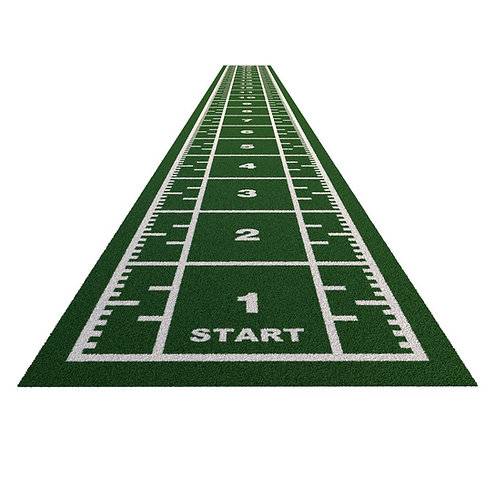
A marked artificial turf track is an engineered surface designed as an alternative to a conventional indoor training floor. The tracks are made from durable, weather-resistant synthetic fibres laid over a concrete or asphalt base. The markings printed or inlaid along the lane are there to structure the session: they define zones for sprints, jumps and lifting work, so a coach can run a whole group through the same sequence without measuring anything on the spot.
That marking is the difference between a piece of turf and a training tool. It gives every athlete the same reference distances, it keeps sled runs in a straight line, and it lets a coach call a distance instead of walking it out. Our range of numbered artificial turf tracks covers the widths and lengths normally used for cross-training lanes.
The benefits of a marked artificial turf track
Strength and durability
Marked artificial turf tracks are extremely hard-wearing. Unlike natural grass, synthetic turf does not fade or wear through under repeated use, which means the lane can be used session after session without being replaced or repaired. The fibres are weather-resistant, so outdoor training carries on when the ground is wet or it is raining, and the surface does not turn into mud the way a grass strip does after a fortnight of use.
Flexibility
A turf lane is also flexible in how it is used. Exercises can be repositioned along the track as the programme changes, and the lane gives enough room for group work, which suits team sessions and class formats. The same surface serves sled pushes, sprint intervals, carries and bodyweight circuits without any change to the setup.
Safety
A marked artificial turf track is safer than natural grass or bare concrete. Synthetic turf gives a softer support under the foot, which lowers the risk of injury during sprints and jumps, and the surface provides additional grip, which reduces the risk of slipping. For an operator, that combination is what makes it viable to run high-intensity work in a shared outdoor area.
Appearance
Turf tracks also look the part. Synthetic turf is available in a range of colours and the markings can be customised to the exercises you actually programme, so the lane can be adapted to your needs and becomes a genuinely attractive feature of the facility. A black or coloured lane running the length of a room reads immediately as a dedicated training zone, which helps members use it correctly. The 20 m black CrossFit turf track is a typical example of the format used in commercial boxes.
Frequently asked questions
Can a turf track be installed outdoors permanently?
Yes. The fibres are weather-resistant and the track is laid on a concrete or asphalt base, which is what gives it stability and drainage. The base preparation is the part that determines how well the installation lasts.
Indoor or outdoor: does the specification change?
The turf itself is the same. What changes is the base underneath and how the lane is fixed down. Indoors it usually sits on the existing floor or on a shock-absorbing underlay; outdoors it needs a prepared, free-draining base.
How much width does a lane need?
That depends on what you run on it. A single sled lane works in a narrow width; group sprint work and partner drills need a wider lane so two athletes can pass side by side. Tell us the exercises and we will size it.
Can the markings be customised?
Yes. Distance graduations, start lines, central sled lines and multi-lane layouts are all available, and the colour can be selected to match the rest of the facility.
Specifying your track
The right track comes from the exercises you programme and the space you have, not from a catalogue reference. Send us the dimensions of the area, the base you are laying on and the movements you want to run, and we will come back with the width, length and marking layout that fit. Request a quote and our team will prepare a costed proposal for your facility.