Strength training vs CrossFit: which is best for your goals?
La musculation développe la force et l'hypertrophie par groupe musculaire ; le CrossFit développe la capacité de travail générale sur des séances variées et chronométrées. Les deux méthodes n'appellent ni le même équipement ni la même surface : plateau de machines d'un côté, rig et espace libre de l'autre. Le choix dépend de l'objectif poursuivi.

Strength training builds force and hypertrophy muscle group by muscle group; CrossFit builds general work capacity across varied, timed sessions. The two do not call for the same equipment or the same floor area: a machine floor on one side, a rig and open space on the other. Which one is right depends entirely on the goal being pursued, and, for an operator, on which of the two your space and your members can actually support.
What each method actually is
Strength training
Traditional strength training concentrates on developing force and muscle mass. It works through controlled movements using machines, dumbbells and barbells.
Primary goals: hypertrophy, or increasing muscle size; maximal strength; physique.
Typical exercises: squat, bench press and deadlift; isolation work such as biceps curls and triceps extensions; machines for precise control of the movement path.
CrossFit
CrossFit combines strength, cardio and gymnastics work in intense, constantly varied sessions. The aim is overall physical capacity, with the emphasis on being good at everything rather than excellent at one thing.
Primary goals: functional endurance, all round physical capacity, and effective weight management.
Typical exercises: multi joint movements such as the clean and jerk and the snatch; intense cardio such as sprints and rowing; gymnastics such as pull ups and handstand push ups.
Side by side comparison
| Criterion | Strength training | CrossFit |
|---|---|---|
| Main goal | Hypertrophy, maximal strength | All round capacity, functional endurance |
| Equipment used | Dumbbells, machines, barbells | Kettlebells, Olympic barbells, plyometric boxes |
| Session structure | Sets with rest, targeted exercises | Fast sequences, circuits |
| Injury risk | Moderate, from poor form or overload | High, from explosive movements under fatigue |
| Adaptability | Easy to scale to any level | Can be demanding for beginners |
1. What strength training offers: force, hypertrophy and control
Strength training suits anyone who wants to build force, gain muscle mass and shape their physique deliberately. It is usually recommended for building muscle mass, since isolation exercises target each muscle precisely; for improving maximal strength, since compound movements such as the squat and the deadlift raise it considerably; and for control and safety, since machines constrain the movement path and reduce risk for beginners.
Example strength session
Squat, 4 sets of 8 repetitions. Bench press, 3 sets of 10. Barbell biceps curl, 3 sets of 12. Triceps extensions, 3 sets of 15.
Light In Fitness tip: to maximise hypertrophy, work at a load equivalent to 70 to 80 percent of your one repetition maximum.
| Exercise | Purpose |
|---|---|
| Squat | Quadriceps and glute development |
| Bench press | Chest strength |
| Biceps curl | Isolation and biceps development |
2. What CrossFit offers: variety, endurance and conditioning
CrossFit is designed to raise overall physical capacity, with the emphasis on endurance, functional strength and conditioning. Intense sessions raise cardiovascular endurance and VO2 max, they burn a large amount of energy including after the session through the excess post exercise oxygen consumption effect, and they combine strength, cardio and agility inside a single programme.
Example CrossFit session, a WOD or workout of the day
AMRAP, as many rounds as possible, in 15 minutes: 10 burpees, 15 kettlebell swings, 20 box jumps.
Light In Fitness tip: start with moderate loads and concentrate on form, particularly on explosive movements.
| Exercise | Benefit |
|---|---|
| Burpees | Endurance, cardio, agility |
| Kettlebell swings | Power, hip strength |
| Box jumps | Explosiveness, leg strength |
3. Risks and precautions
In strength training
Overload, where weights that are too heavy lead to joint injury, and poor execution, where form errors on compound lifts raise the risk. The precautions are simple: use a load matched to your level, and work with a coach until the movement is mastered.
In CrossFit
Extreme fatigue, where intense sessions raise the risk of overtraining, and explosive movements, where badly executed Olympic lifts can cause serious injury. Learn the movements before raising the intensity, and do not skip the warm up or the recovery.
What each method demands from the building
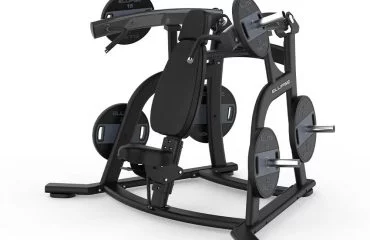
This is where the two diverge for anyone equipping a facility. A strength floor is built from stations: strength training machines, benches and racks, each occupying a fixed footprint, with circulation between them. Capacity is the number of stations, and the layout barely changes once installed.
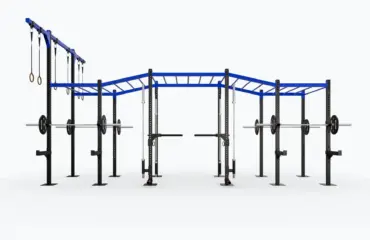
A CrossFit floor is built the other way round. A CrossFit or Hyrox cage concentrates the fixed equipment along one structure and leaves the rest of the room open, because open floor is what the sessions consume. Capacity is class size, not station count, and the room is reconfigured several times a day.
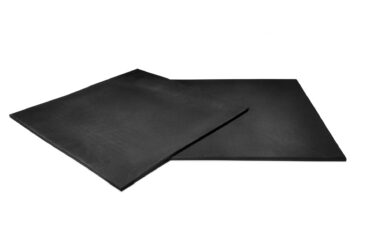
The floor itself follows the same split. A machine floor needs a durable, cleanable surface; a functional floor needs heavy rubber under the lifting zones capable of taking a dropped barbell, and an acoustic layer wherever there is a neighbour below.
Frequently asked questions
Which is better for a beginner?
Structured strength training is usually the easier entry point, because machines constrain the movement and the load is simple to scale. CrossFit can suit beginners too, but only where coaching is genuinely present.
Can a facility offer both?
Yes, and most successful clubs do. The practical constraint is space: the functional zone must keep its open floor rather than being filled with machines as the club grows.
Which needs more equipment budget?
A machine floor costs more per member served, because each station serves one person. A rig serves several athletes at once, but consumables such as balls, boxes, ropes and grips become an annual budget line rather than a one off purchase.
Equipping for the method you have chosen
The choice between strength training and CrossFit depends entirely on your goals. Choose strength training to build force and muscle mass progressively and precisely, which also makes it an excellent option for beginners and anyone who prefers structured sessions. Choose CrossFit if you like variety and intensity and want all round capacity and conditioning.
Light In Fitness supplies professional strength equipment and functional rigs for both. Tell us which method your facility is built around, your room dimensions and your expected numbers, and we will come back with a layout and a costed list. Request a quote to start.
Réalisations documentées
- Dalles et sols sportifs : livraisons documentées – plusieurs chantiers
- Sol sportif extérieur, square Georges-Vallerey – Taverny (95)