Container CrossFit Rigs: A Mobile Training Solution
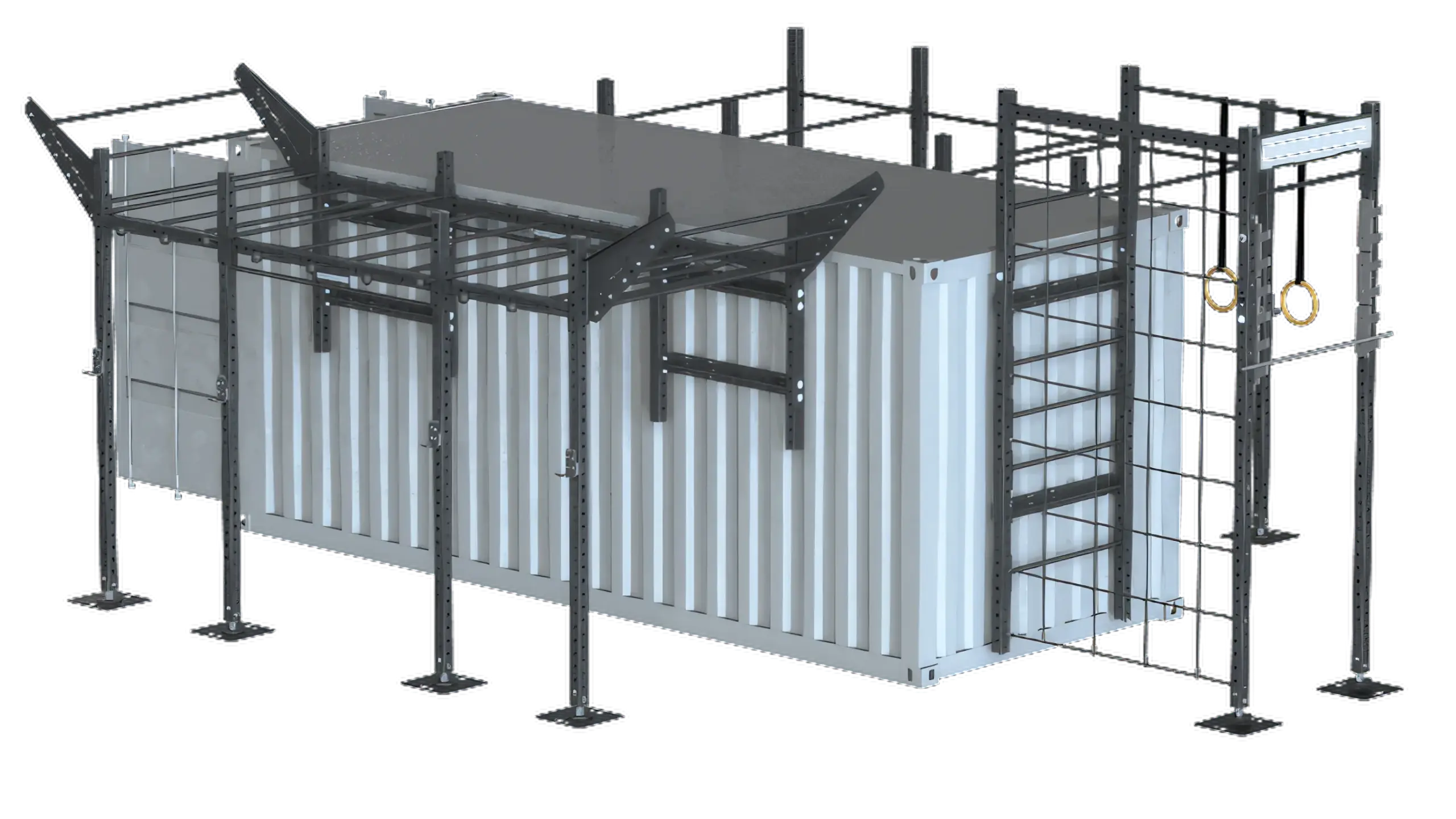
Container CrossFit rigs turn functional training into something you can put almost anywhere. Built to be transported and reconfigured, they convert any suitable surface into a working training area in minutes, and fold their own equipment away when the session ends. This guide covers what they are used for, how they are built, and where they beat a fixed rig.
Why choose a container rig
Container rigs answer a need shared by coaches, athletes and facility managers: a solution that performs like a permanent installation but does not commit a site forever. The main advantages are these.
- Mobility and flexibility: move and install the rig anywhere, outdoors or indoors.
- Modularity: configure the container around what you programme, from pull-up stations to dips and storage.
- Fast set-up: assembly in under two hours, without complex tooling.
- Strength and safety: galvanised steel construction, resistant to weather and to wear.
Where container rigs are used
1. Outdoor training on any site
A container rig creates an outdoor training area, which suits parks, sports events and bootcamps.
- Group training: enough stations for CrossFit or HIIT sessions with several athletes at once.
- Temporary events: competitions and demonstrations, set up and secured quickly.
- Versatile use: bodyweight work, dumbbells, kettlebells and resistance bands from the same structure.
2. Making urban space work harder
Container rigs are an efficient way to add sport to public and urban space.
- Upgrading public parks: one container adds a whole new activity for residents.
- Multi-use urban sites: ideal where space is tight, because equipment is stored securely inside the structure.
- Schools and universities: a training zone that does not take permanent space away from other sports.
3. Clubs and CrossFit boxes
Commercial facilities benefit from the same modularity and robustness.
- Space saving: the rig retracts into the container for storage.
- Full customisation: pull-up bars, squat stations, dumbbell and kettlebell storage, configured to your programme.
- Accessories: each container can be equipped with a complete accessory package for functional training.
Container rig or fixed rig
| Feature | Container CrossFit rig | Traditional fixed rig |
|---|---|---|
| Mobility | High, transportable anywhere | Fixed, requires anchoring |
| Modularity | Highly modular, configured to order | Limited to prefabricated structures |
| Installation | Fast, under two hours | Long, several days |
| Durability | Weather resistant | Vulnerable to wear outdoors |
| Storage | Integrated in the container | Requires a separate space |
If the structure stays indoors and never moves, a conventional rig from our CrossFit rigs and racks range is usually the better value. The container makes sense as soon as the site is outdoors, shared, temporary or short of storage.
What sets our container rigs apart
- Premium galvanised steel: corrosion and weather resistant, suitable for intensive outdoor use.
- Simple assembly: installed in under two hours with minimal tooling.
- Accessories included: pull-up bars, dip stations, dumbbell holders and integrated storage.
- Customisation: adaptable modules, configured around your programme.
- Warranty: the structural warranty is stated in your quotation, together with the maintenance conditions that apply to it.
Our full container gym range covers the same principle at different sizes, and combines naturally with outdoor gym equipment where a site is being developed as a whole.
Use and maintenance
To get the full service life out of a container rig, follow four simple habits.
- Clean regularly: wipe bars and supports after use to prevent corrosion.
- Check the fixings: retighten bolts periodically to keep the structure stable.
- Lubricate moving parts: light lubrication keeps mechanisms working smoothly.
- Use the storage: keeping weights and accessories in the integrated storage protects both them and the structure.
Frequently asked questions
Can a container rig stay outdoors all year?
Yes. The galvanised steel construction is designed for weather exposure and intensive use.
What service life should I expect?
With regular maintenance, the average service life is 10 to 15 years.
Do you offer custom configurations?
Yes, containers are configured to order around the stations, storage and accessories each site needs.
Talk to us about your site
Container rigs are a practical way to build a versatile, durable training space, whether outdoors, in an urban park or inside a commercial facility. Tell us where the container will stand, who will use it and what you programme, and we will come back with a configuration and a price. Request a quote and our team will size it with you.