Equipping a Cross-Training Box: Rigs, Layout and Specification
A cross-training box is a very particular kind of business. It sells coached group sessions rather than unsupervised floor access, it puts twelve to twenty people through the same workout at the same time, and it does that on equipment that is loaded, dropped and reloaded all day. Almost nothing about equipping one resembles equipping a conventional gym. This guide covers what the training model demands of a building, the equipment schedule that follows from it, and the specification points that decide whether a box still works in year five.
The training model, and why it changes everything
Cross-training as a discipline was created in 2000 by Greg Glassman, and it combines elements of gymnastics, weightlifting, cardiovascular conditioning and endurance work into constantly varied functional training. Sessions are built around a workout of the day, which changes daily to prevent monotony, and they are run in groups under a coach rather than performed individually.
Three features of that model drive every equipment decision that follows. Sessions are simultaneous: everyone starts together, so you need enough duplicate stations for the whole class rather than a broad variety of single machines. They are scalable: every movement is modified to suit the individual, so the load range must run from very light to genuinely heavy on the same equipment. And they are coached: a qualified coach supervises technique throughout, which is what makes it reasonable to put a beginner under a barbell at all.
That last point is worth dwelling on, because it is the commercial and safety foundation of the whole format. A box is accessible to all levels precisely because the coaching is there. Scale the class size beyond what one coach can actually see and the model stops working, whatever the equipment can support.
What the model demands of the building
Before any equipment is chosen, four building constraints decide what is possible.
Ceiling height. A rig with pull-up bars, and any overhead barbell work, needs genuine clear height above the bar, not the height of the room at its highest point. This is the constraint that most often rules out an otherwise ideal unit, and it needs checking before a lease is signed rather than after.
Floor and structure. Loaded barbells are dropped from overhead onto the floor, repeatedly, all day. The slab has to take it, the flooring has to absorb it, and if there is occupied space below, the structure needs assessing rather than assuming. A box on an upper floor of a mixed-use building is a structural and acoustic project, not a fit-out.
Anchoring. A rig is either bolted to the floor, braced against a wall, or specified as a freestanding structure that does not need either. Which one you can use depends on the slab and the landlord, and it changes the product entirely.
Circulation. A whole class moves between stations at once. You need working space around each athlete at full extension, plus a route through the room that does not cross the drop zone.
The equipment schedule for a box
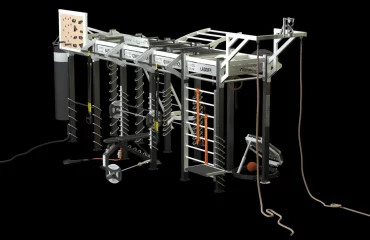
The rig. This is the backbone of the room and the single largest decision. It sets your class capacity, because the number of pull-up bars and squat stations is the number of athletes you can run at once. Configurations range from wall-mounted units where floor space is tight, through freestanding structures where the slab cannot be drilled, to large multi-bay rigs for a full class. Options across CrossFit rigs and freestanding rigs cover both cases; specify the rig around your intended class size, not the other way round.
Barbells and bumper plates. One bar per athlete in the largest class you intend to run, in both mens and womens specifications, with bumper plates in a range that lets a beginner load a technically correct bar at a light weight. Bumpers are not optional in a box: the training involves dropping loaded bars, and iron plates will destroy your floor and your bars.
Conditioning machines. Rowers, air bikes, ski ergometers and similar. Buy them in multiples, because they appear in workouts as a station the whole class rotates through. One of each is a display; six of one is a usable class format.
Functional accessories. Kettlebells, dumbbells, medicine balls, skipping ropes, resistance bands, plyometric boxes, sleds. High volume, high wear, and the category that quietly determines how varied your programming can be.
Storage. Every item above has to be put away by the class that used it, in under a minute, or your changeovers eat your timetable. Storage is not an afterthought in a box; it is the difference between running six classes a day and running four.
Flooring. Heavy-duty rubber in the lifting zones, with platforms where bars are dropped from overhead. This protects the slab, the bars and the plates, and it is the cheapest insurance in the building.
Specification points that matter
Build class. Indoor equipment in a supervised facility with unrestricted access is built and tested to EN ISO 20957-1 class S. Write it into the order. A box is one of the most demanding indoor environments there is, and it is not the place to accept a lighter class.
Rig steel and joints. Ask about the section and gauge of the uprights, the bolt pattern, and how accessories attach. A rig is a platform you will keep adding to for a decade, so the important question is not what it does on day one but what it will accept in year three.
Pull-up bar diameter and finish. Athletes hang from these for thousands of repetitions. Diameter affects grip and tearing, and the finish affects both grip and how quickly the bar wears.
Barbell specification. Shaft diameter, knurling, whip, sleeve rotation and load rating all differ between a general-purpose bar and one intended for repeated dropped Olympic lifts. Buying the wrong bar is an expensive mistake that shows up within months.
Corrosion and wear. A box is hot, humid and chalky. Finishes, bearings and fixings all age faster than in a conventional gym, and that should inform what you buy rather than surprising you later.
On the structural side our warranty runs up to 20 years on steel frames and for life on stainless steel, which is worth weighing against a cheaper rig that has to be replaced once in that period.
Coaching and safety: the actual product
The equipment is what a box owner buys, but coaching is what the members are paying for. A box works because a trained coach scales every movement to the individual, watches technique under fatigue, and stops an athlete before a rushed repetition becomes an injury.
That has practical consequences for how you set the room up. Sight lines matter: a coach must be able to see the whole class from anywhere in the room, which argues against solid storage walls in the middle of the floor. Introductory courses for beginners, teaching the fundamental movements before anyone joins a regular class, are both a safety measure and a good conversion tool. And a clear route to scale or substitute a movement should be built into the programming rather than improvised.
If you intend to trade under the CrossFit name specifically, rather than describing your business as cross-training or functional fitness, check the affiliation and trademark requirements directly with the relevant rights holder before you commit to signage and branding.
The movements your equipment has to support
A handful of foundational movements account for most of the loading in a box, and each one places a specific demand on the room.
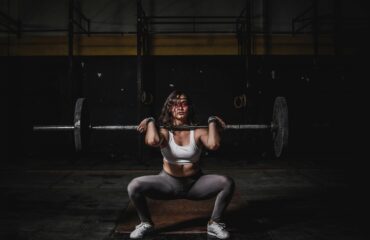
Squats. Front and back squat variations work the legs, glutes and trunk while developing mobility. They need squat stations at a range of heights, safety catches, and enough spacing that a rack of athletes can squat simultaneously without interfering.
Deadlifts. A whole-body movement loading the back, legs and arms, and typically the heaviest bar in the room. It needs floor that can take the load and bumpers that survive being set down hard.
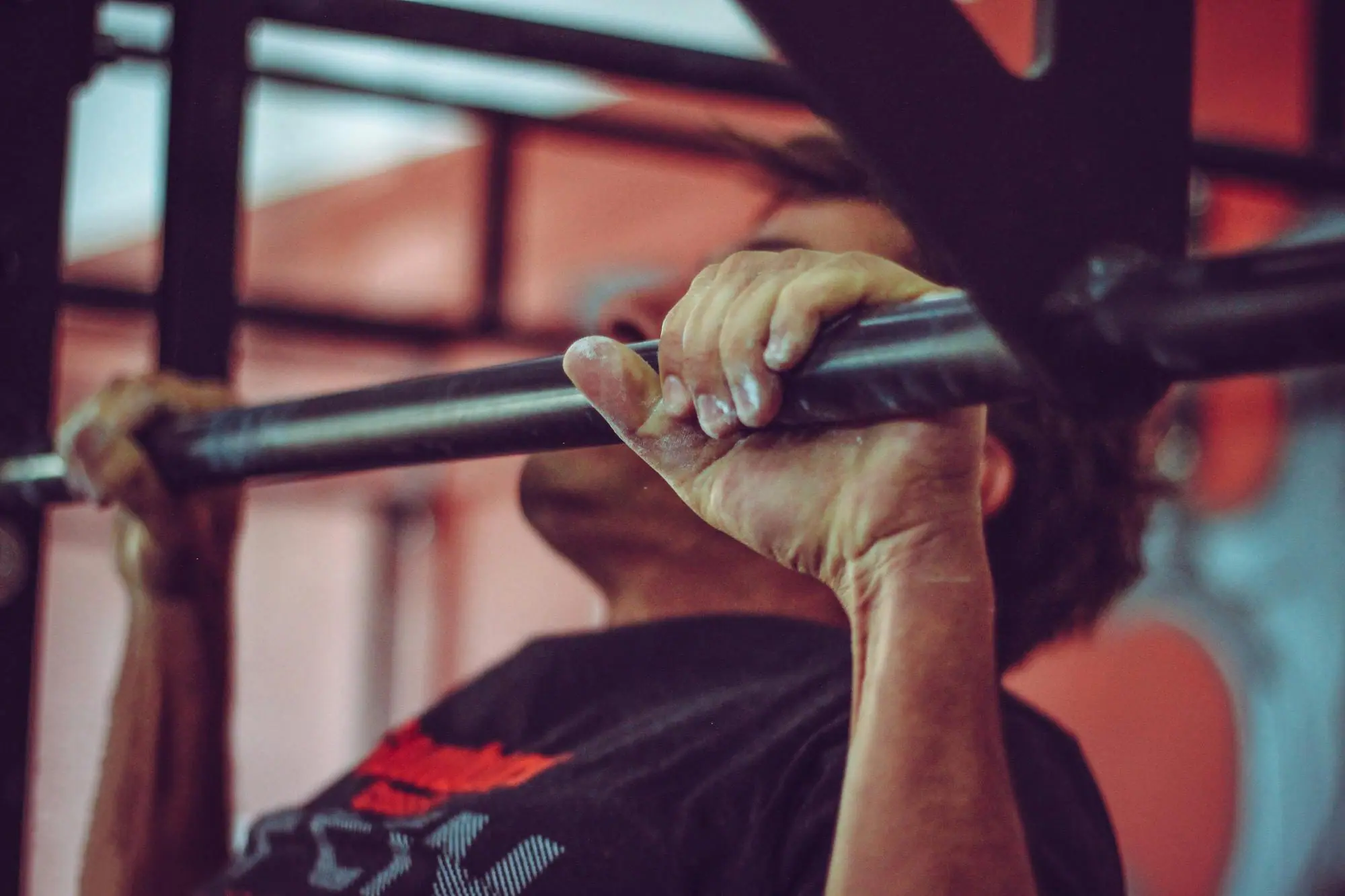
Pull-ups. The key upper-body movement for back, shoulders and arms, performed with varying grips and in high volume. Bar count is your class capacity, and band anchors or low bars for scaling are what let a beginner participate at all.
Beyond these sit the Olympic lifts, gymnastics movements and conditioning intervals that make up the rest of the programming. The pattern to notice is that almost all of it is done standing, loaded and in groups, which is precisely why a box needs rigs, bars and open floor rather than a circuit of machines.
Common mistakes when equipping a box
Buying variety instead of quantity. The most frequent error. One of each looks impressive and runs a class of four. Duplicate the stations that appear in every workout, and accept a narrower range.
Undersizing the rig. The rig sets your revenue ceiling, because class size sets your revenue. Extending a rig later is possible if you chose an extensible system, and impossible if you did not.
Treating flooring as a finish. It is structural protection and acoustic control, and retro-fitting it costs several times what specifying it correctly does.
Ignoring noise. Dropped barbells transmit through structure remarkably well. If you have neighbours, deal with it at the floor build-up and in the position of the lifting zone, before you open rather than after the first complaint.
Forgetting storage and changeover. A timetable that assumes instant changeovers will not survive contact with a full class.
Frequently asked questions
How large a rig do we need?
Work backwards from class size. Decide the maximum number of athletes you will coach in one session, then specify enough pull-up bars and squat stations for that number. It is the one decision that is genuinely hard to correct later, so choose an extensible system even if you start small.
Wall-mounted, freestanding or bolted down?
It depends on the building. Wall-mounted saves floor space where the wall can take it. Bolted rigs are the standard where the slab allows drilling. A freestanding rig is the answer where a landlord or a structural constraint rules out fixing, and it is also the option if you expect to move premises.
Can one space serve both classes and open gym?
Yes, and most boxes do. The constraint is not equipment but supervision: open gym hours put people on barbells without a coach watching, so agree who may train unsupervised and what they may do, and set the room up so the rig is visible from the desk.
What standard applies to this equipment?
EN ISO 20957-1 class S for indoor equipment. Name it in the order rather than asking for commercial grade in general terms.
How long does a box fit-out last?
The rig and the flooring should outlast several cycles of everything else. Bars, bumpers and accessories are consumables on a box timescale, so budget for their replacement from the beginning rather than treating each one as an unexpected cost.
Planning your box
Send us your floor plan with the clear ceiling height, the structural situation, whether you can drill the slab, and the class size you intend to run. We will come back with a rig configuration, a full equipment schedule, a layout and a costed proposal: request a quotation.
Réalisations documentées
- Functional Rig inox – installations sur trois continents
- iGreenMill, tapis de course extérieur – installations sur trois continents