How to Use a Half Rack to Maximise Training Performance

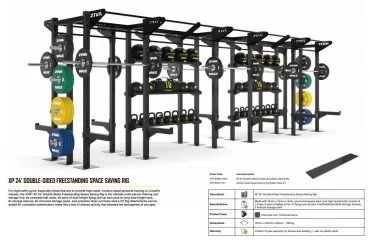
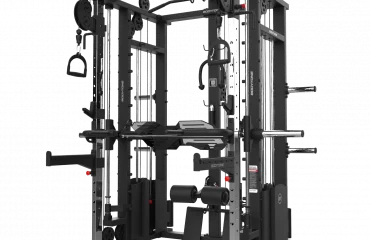
The half rack is a core piece of strength equipment for athletes and for the boxes, clubs and sports halls that train them. Its compact design allows a wide range of exercises in a small footprint, which is exactly why it earns its place on a busy floor. Built into a training routine it develops strength, and it also supports endurance and agility work.
Using a half rack fits into a broader approach to conditioning. The equipment allows functional movements that load several muscle groups at once. Whether the user is an experienced athlete or a beginner, the rack adapts to their requirements, which makes each session both effective and demanding.
The core exercises on a half rack
A half rack supports a range of fundamental lifts targeting different muscle groups. The most common are the squat, the bench press and the deadlift.
The squat is the key exercise for the legs and the trunk. With the bar on the rack supports, the height is adjusted so the lifter can unrack without reaching or dipping under awkwardly.
The bench press mainly targets the chest, shoulders and triceps. Performed inside the half rack, the safety bars catch the barbell if the lifter fails a repetition, which is what makes the movement safe to train close to a limit.
The deadlift is a whole-body exercise that loads the back and legs in particular. Together these three lifts build the foundation of strength and power that everything else is programmed on top of.
Adjusting the rack to the athlete
Setting the half rack up for the person using it is what keeps the movement correct and the injuries away. Start with the height of the safety bars and the J-cups. For squats, the bar should sit at a height the lifter can reach without leaning excessively, so that posture stays correct from the unrack onwards.
Width matters too. Some models offer lateral adjustment so the equipment can be matched to shoulder width, which keeps the alignment right on movements such as the bench press or the pull, and reduces the risk of injury. Setting the rack to the body dimensions of the user improves both comfort and performance.
Accessories worth having
| Accessory | What it is for |
|---|---|
| Pull-up bars | Pull-ups and hanging work |
| Bar supports | Barbell storage and setting up deadlift work |
| Resistance bands | Adding resistance to squats, bench press and leg extension work |
| Safety bars | Keeping the lifter safe when training with heavy loads |
Beyond those, Olympic barbells and free weights complete the setup. The bars carry the heavy movements such as the squat and the deadlift, while free weights add load to intensify the exercises.
Resistance bands are a strong addition to a half rack. They increase the difficulty of a movement or provide assistance on the more complex ones. Used on squats, for example, they let an athlete work on explosiveness while reinforcing stability. Combining these accessories with the rack diversifies the sessions and improves overall performance.
Programming around the rack
Several training approaches are built specifically around the half rack, typically split across strength, endurance and power.
A strength session concentrates on lifts such as the squat and the bench press with heavy loads and low repetitions, which develops muscular strength and improves performance on functional movements.
An endurance session runs circuits combining several exercises with lighter loads and high repetitions, which develops muscular endurance and cardiovascular capacity. Alternating these two types of session keeps the athlete progressing and keeps engagement high.
Why the half rack earns its place
Its main advantage is functional strength. By allowing compound exercises that recruit several muscle groups, the rack supports balanced development across the body. That carries into other sports and activities, because it strengthens coordination and balance alongside the muscles themselves.
The second advantage is flexibility. Maximal strength work or muscular endurance, the same station fits into either programme. And because the design is inherently safe, users can train with confidence and concentrate on the lift rather than on what happens if they miss it.
Precautions before every session
The half rack is a valuable tool, but it demands some discipline. First, confirm before every session that the equipment is correctly assembled and stable, and check the safety bars and the supports regularly. This is what prevents the accidents that do happen.
Second, start light and master the technique before adding weight progressively. Poor execution can cause serious injury, particularly on complex movements such as the squat and the deadlift.
Third, train with a partner or under the supervision of a qualified coach whenever the load is close to a limit. Observing these precautions is what lets a user get the full benefit of the rack while keeping the risk where it belongs.
Specifying a half rack for a facility
For an operator, the questions are different from the ones an individual asks. Indoor strength equipment for a facility with public access is specified to EN ISO 20957-1 class S. Beyond that, check the steel section and the welds, the depth and adjustment range of the safety bars, whether the rack is floor-fixed or freestanding, and how the accessories mount to the uprights.
Compare the options across our squat racks and power racks and the wider racks and cages range, and plan the floor protection under the loading zone at the same time.
Conclusion
A half rack gives a training floor squat, bench and deadlift capability in a small footprint, with safety bars that let athletes work close to their limits. Set it up to the athlete, add the accessories that widen the programme, and check the assembly before every session.
Light In Fitness supplies professional racks, barbells and accessories, with layout advice, delivery and installation. Send us the room dimensions and the number of stations you need, and we will return a layout and an itemised quotation: request a quote.