How to Choose Professional Sports Flooring for Your Facility
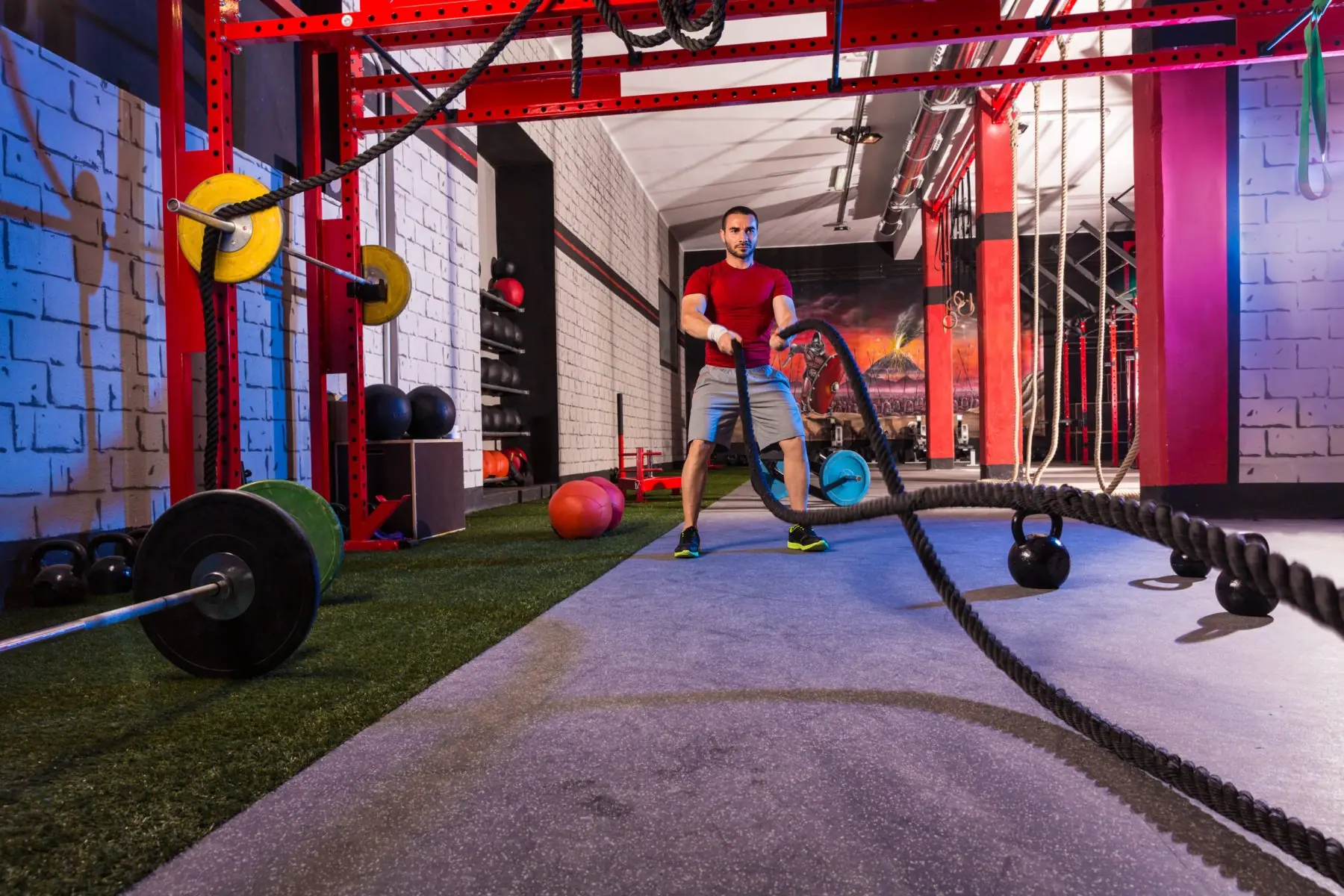
Sports flooring is the one line of a fit-out budget that touches every other line. It decides how the equipment behaves, how long it lasts, how the room sounds, how quickly it can be cleaned and, in the end, whether users get injured on it. Whether the project is a school sports hall, a commercial gym, a hotel wellness room or an outdoor pitch, the choice is made the same way: start from the use, then work down to the material.
Start with the use, not with the material
The single most common mistake in a flooring specification is choosing a product first and checking the use afterwards. Different activities place completely different demands on a surface. A hall used for basketball or volleyball needs controlled ball rebound and area elasticity. A free weights zone needs point load resistance and impact absorption for dropped bars. A functional training area needs grip and abrasion resistance. A cardio floor needs dimensional stability under static machines. An outdoor court needs weather resistance and drainage before anything else.
Write the use down before you talk to a supplier: sports practised, hours of use per week, whether weights are dropped, whether the room is shared with non-sporting activities, whether there is a floor below that needs acoustic protection, and how the floor will be cleaned. Every technical question that follows depends on those answers.
The main families of professional sports flooring
Solid wood
Solid timber remains the reference for indoor court sports. It combines shock absorption with the ball rebound that basketball, volleyball and handball require, and it gives players consistent grip. Installation tolerance matters more than with any other family: an out-of-level subfloor shows up immediately in play and cannot be corrected afterwards. Timber also needs a maintenance programme, with periodic sanding and resealing, and finishes chosen for the traffic the hall actually takes.
Rubber tiles and rolls
Rubber is the most versatile family and covers the largest share of commercial fitness projects. It absorbs impact, resists abrasion, keeps its grip when wet and takes point loading from heavy machines without marking. Tiles are the practical choice where a zone has to be laid, extended or replaced piece by piece; rolls give fewer joints across a large open floor. Thickness is driven by the discipline: a cardio line and a functional area do not need the same build-up as a platform where loaded bars are dropped. Our range is set out in the rubber gym flooring tiles category.
Synthetic turf
Synthetic turf is the usual answer outdoors and for indoor sled tracks. Compared with natural grass it removes mowing, watering and fertiliser, it gives a uniform surface without the irregularities that cause ankle injuries, and it keeps the same appearance across the seasons. Integrated drainage systems now allow play to resume quickly after heavy rain, which is what makes the investment work for clubs and schools with limited indoor capacity.
Vinyl and other resilient sheet
Resilient sheet floorings, vinyl among them, are used indoors where comfort, cleaning and appearance carry more weight than ball rebound: multipurpose rooms, group class studios, rehabilitation rooms. They are quick to clean and available in a wide range of finishes, but they are a different product family from turf and should never be specified as an outdoor surface.
How to judge the quality of a sports floor
Once the family is settled, quality is assessed on measurable properties rather than on appearance. Ask the supplier for the declared values, in writing, for each of the following.
| Property | Why it matters |
|---|---|
| Shock absorption | Protects joints and reduces injury on impact activities |
| Ball rebound | Decisive for court sports, irrelevant for a weights room |
| Slip resistance | Grip when dry and when wet, including near entrances |
| Abrasion resistance | Determines how the surface looks after several seasons |
| Point load resistance | Prevents permanent marking under static machines and racks |
| Acoustic performance | Impact noise transmitted to rooms below, a frequent cause of complaints |
| Reaction to fire | Reproduce the classification exactly as declared, smoke index included |
Where the floor sits above occupied space, treat acoustics as a separate specification rather than a property of the finish: an acoustic underlay under the visible surface usually does more than any change of top layer.
Standards to name in the specification
Certification is what turns a supplier claim into a verifiable one, so name the applicable standard in the tender document instead of asking for a product that is simply described as professional.
- Indoor training equipment installed on the floor falls under EN ISO 20957-1 class S, the class for professional and commercial use. Class I is the professional class covering inclusive access, a different scope rather than a level above class S.
- Outdoor fitness equipment for adults falls under EN 16630, which covers permanently installed outdoor training equipment.
- Children playground equipment falls under EN 1176-1, and the impact attenuating surfacing under it under EN 1177. These are two separate standards and neither replaces the other. EN 16630 never applies to childrens equipment.
For the surface itself, ask for the test reports behind each declared value, not only the summary datasheet.
Environmental impact of the materials
Environmental performance has moved from a nice-to-have to a scored criterion in public tenders, and it is now worth building into the specification from the start. Three levers carry most of the weight. Certified timber, FSC among the recognised schemes, documents the origin of a wood floor. Recycled content, common in rubber surfaces made from reclaimed material, reduces the demand for virgin raw material. End-of-life recyclability decides what happens when the floor is replaced, which for a busy hall is a question that comes round sooner than most operators expect.
The energy needed to manufacture and install the surface belongs in the same calculation. A product that is heavier to transport, or that needs adhesive, curing and ventilation on site, carries a cost that does not appear on the quotation. Loose-laid and interlocking systems generally score well here because they can be lifted and reused.
Installation and maintenance costs
A professional floor is a significant commitment, and the initial installation price varies widely between families, from solid timber at the top end to rubber and synthetic turf. The purchase price alone is a poor guide, because the families differ just as much in what they demand afterwards.
Rubber and synthetic turf are essentially routine cleaning: sweeping, washing with a neutral product, and for turf periodic brushing and infill checks. Solid timber needs planned intervention, with resealing and repair of worn sections at intervals that depend on traffic. Vinyl sits between the two. When you compare offers, compare them over the intended life of the floor and include preparation of the subfloor, which is where unplanned cost most often appears.
Getting the best value
Value comes from matching the specification to the real use rather than from buying the highest declared performance everywhere. Most fitness projects are best served by zoning: a heavier build-up where bars are dropped, a standard thickness across the cardio and machine areas, turf on the sled track, and an acoustic layer only where there is occupied space below. Ask a specialist to survey the site before you commit, and to price the zones separately so you can see what each one costs.
Frequently asked questions
Which flooring suits a mixed-use sports hall?
A hall shared between court sports and general activity is usually built around a timber or resilient sheet surface, with removable protection where non-sporting events are held. If free weights are used in the same room, that zone should get its own rubber build-up rather than a compromise across the whole floor.
Can rubber flooring be used outdoors?
Specific rubber ranges are formulated for outdoor exposure and drainage; indoor tiles are not. Ask for the outdoor version explicitly and check the declared UV and weather behaviour. Our outdoor sports flooring category lists the products intended for that use.
How long does a professional sports floor last?
Service life depends on traffic, discipline and maintenance far more than on the family of product, so no single figure applies across projects. Ask each supplier for the declared service life under your stated hours of use, and for the warranty that backs it.
Do we have to close the facility during installation?
It depends on the system and the state of the subfloor. Loose-laid and interlocking systems can often be installed zone by zone; bonded systems and timber need the area free and, for some finishes, a curing period. Agree the phasing before the order, not after.
Get your sports floor specified and quoted
Send us the surface area, the disciplines practised, the hours of use, what sits below the room and any acoustic or fire requirement from the building, and we will come back with a zoned specification and a priced proposal. Start with our quote request form.
Réalisations documentées
- Dalles et sols sportifs : livraisons documentées – plusieurs chantiers
- Sol sportif extérieur, square Georges-Vallerey – Taverny (95)