10 mm Rubber Gym Tiles: Uses, Limits and When to Step Up to 15 mm
La dalle caoutchouc 10 mm convient aux zones cardio, aux cours collectifs, à la rééducation et aux home gyms sans charges lourdes, à 17 EUR excl. VAT per m2. Elle protège la chape et atténue les pas, mais n'absorbe pas l'impact d'une barre ou d'une kettlebell lâchée : dès qu'une charge libre peut toucher le sol, passer à 15 mm, puis 20 mm pour les barres chargées. En étage, associer une sous-couche 10 mm à une dalle 15 ou 20 mm.
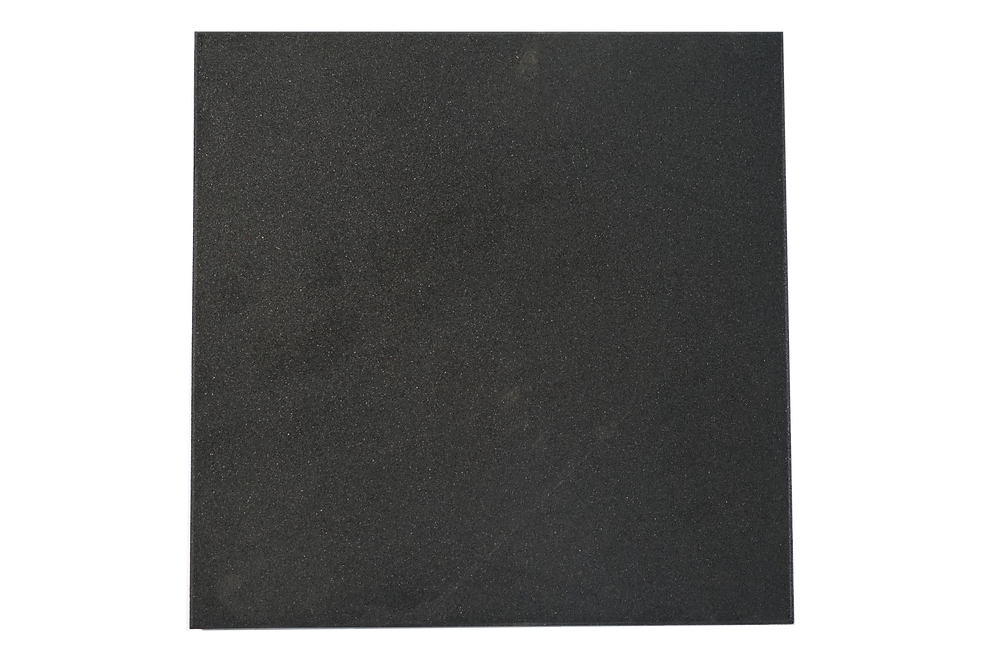
The 10 mm rubber tile is the thinnest gauge in the range and one of the most specified: it covers cardio zones, studio and group exercise rooms, rehabilitation floors and residential building gyms without heavy free weights, at 17.00 EUR excluding VAT per square metre. This guide sets out what it does well, what it does not do, and when to step up to 15 or 20 mm.
What a 10 mm tile does, and what it does not
Ten millimetres of rubber is enough for three things: protecting the screed from scratching and from machine vibration, providing a consistent non-slip surface, and damping footfall and cardio noise. It is not enough to absorb the energy of a loaded bar or a dropped kettlebell – the impact passes through and reaches the substrate. A thin tile is a floor covering, not a load absorber. That single distinction settles most specification questions.
| Use | 10 mm | Recommendation |
|---|---|---|
| Cardio zone (treadmills, bikes, cross trainers) | Suitable | 10 mm, laid edge to edge |
| Group exercise, stretching, yoga, pilates | Suitable | 10 mm, firm and stable surface |
| Physiotherapy practice, care home, exercise referral | Suitable | 10 mm, easy to clean, secure footing |
| Selectorised and guided machines | Suitable | 10 mm under the machines, 15 mm if dumbbells are nearby |
| Dumbbells and kettlebells set down | Borderline | 15 mm preferable |
| Deadlifts, loaded barbells | No | 20 mm minimum |
| Weightlifting, dropped bars | No | 40 mm or a dedicated platform |
| Upper-floor or apartment building installation | Partial | 10 mm underlay plus a 15 or 20 mm tile |
10 mm as a surface or 10 mm as an underlay: two different products
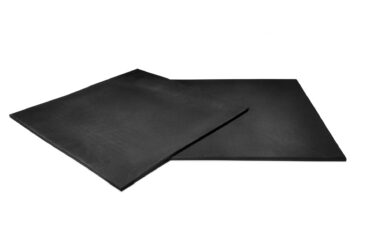
The 10 mm gauge exists in two forms that are regularly confused. The Training rubber gym tile in 10 mm black, 100 by 100 cm, is a finished surface: visible, non-slip, washable. A shock-absorbing underlay in the same 10 mm gauge, supplied as sheets or as a roll, goes underneath another covering to add cushioning and acoustic isolation, and a composite polyurethane foam underlay board performs the same role in a different material.
Specifying one when you needed the other is the most common and most expensive mistake on a flooring order. The surface product is what people stand on; the underlay is what they never see. See the acoustic underlay range for the densities and the combinations available.
When to move up to 15 or 20 mm
The rule is short: as soon as a free weight can reach the floor, 10 mm is no longer the right answer.
Dumbbells and kettlebells: 15 mm. Loaded barbells set down, or deadlifting: 20 mm. Dropped bars in weightlifting: 40 mm or a dedicated platform. There is no intermediate reading of this – a thin tile under a dropped load transmits the impact to the screed, and the damage is to the building rather than to the tile.
Substrate condition is the second trigger. On an uneven base a thin tile telegraphs every defect and ages badly at the high points. Where the floor is not flat, 15 mm is considerably more forgiving, and levelling the substrate first is better than either.
Laying, setting out and cleaning
The substrate must be flat, clean and dry. Lay edge to edge, starting from the longest wall, and trim the perimeter with a knife. Loose laying is fine where the area is closed in by walls or machines; bond the tiles in circulation routes and across large open areas.
Clean with warm water and a neutral detergent – no solvents. The smell of new rubber clears within a few days of ventilation, which is worth telling the client before they call about it.
If the 10 mm tile is out of stock
The 15 mm black fine-grain rubber tile, at 22.00 EUR excluding VAT per square metre, covers every use of the 10 mm Training tile with additional absorption margin. For an underlay, the 10 mm roll and the polyurethane board are interchangeable, and the choice comes down to the area to be covered.
Frequently asked questions
Does a 10 mm rubber tile protect the floor from weights?
From dumbbells and kettlebells set down, yes. From dropped loaded barbells, no: the impact energy passes through a thin tile and reaches the screed. For deadlift and weightlifting areas the reference remains 20 mm minimum, and 40 mm for repeated dropped bars.
Can a 10 mm tile be laid directly over ceramic tiling?
Yes, on a flat, clean, dry substrate. The 100 by 100 cm tile lays edge to edge, loose or bonded depending on the area and the use. On an uneven substrate a thin tile shows the defects: level the floor first or specify a greater thickness.
Is 10 mm enough to reduce noise to the floor below?
For footfall, cardio and bodyweight work, 10 mm gives a noticeable improvement. For weight impacts, no. The solution on an upper floor is a two-layer system: 10 mm shock-absorbing underlay, then a 15 or 20 mm tile.
Is the 10 mm tile right for cardio zones and group exercise rooms?
That is its primary application: it stabilises machines, protects the screed from vibration, gives a non-slip surface and stays firm enough for the dynamic footwork of group classes and stretching.
How do we calculate the quantity?
Take the area, add a cutting allowance for the perimeter, and divide by the tile size. Send us the room dimensions and we will confirm the count and the price before you order.
Specifying your floor
The 10 mm tile is the right answer for a large share of a professional floor and the wrong answer wherever free weights land. Light In Fitness has supplied sports flooring to professional facilities since 2013. Send us the zones and their uses and we will specify the thickness zone by zone – request a quote.
Réalisations documentées
- Dalles et sols sportifs : livraisons documentées – plusieurs chantiers
- Sol sportif extérieur, square Georges-Vallerey – Taverny (95)