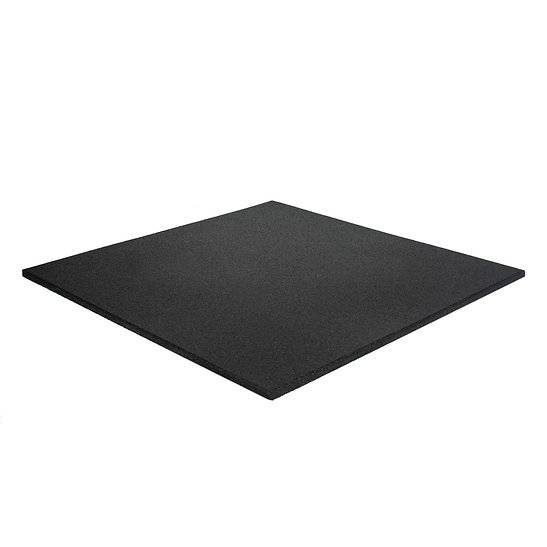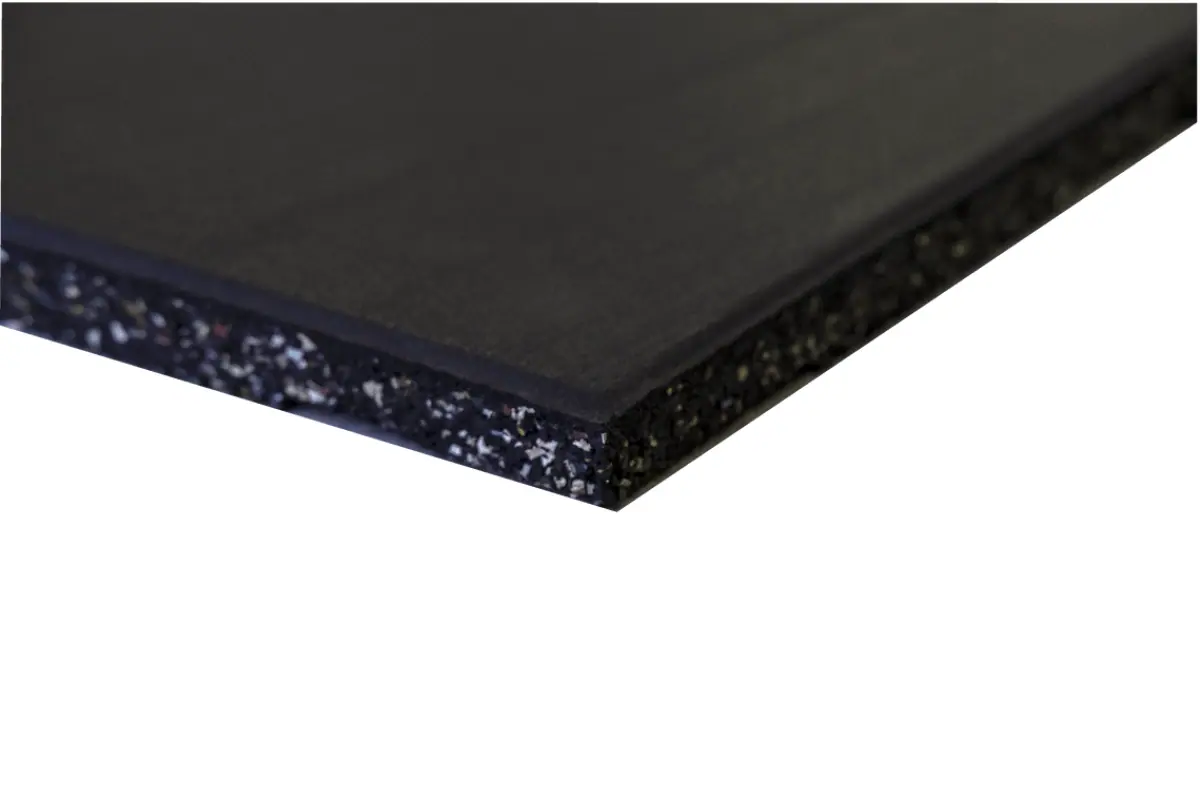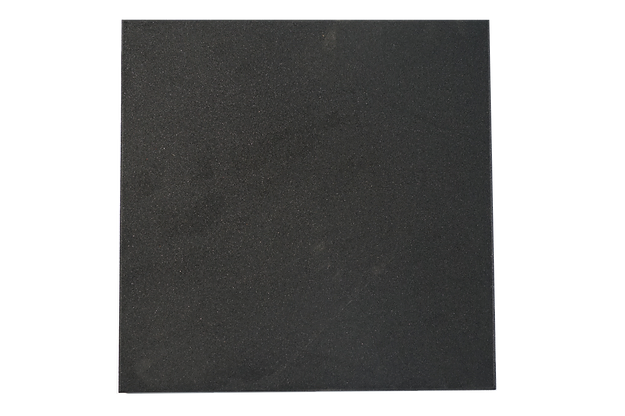
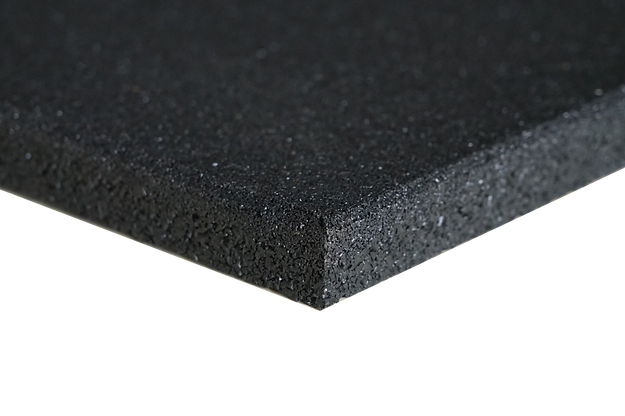

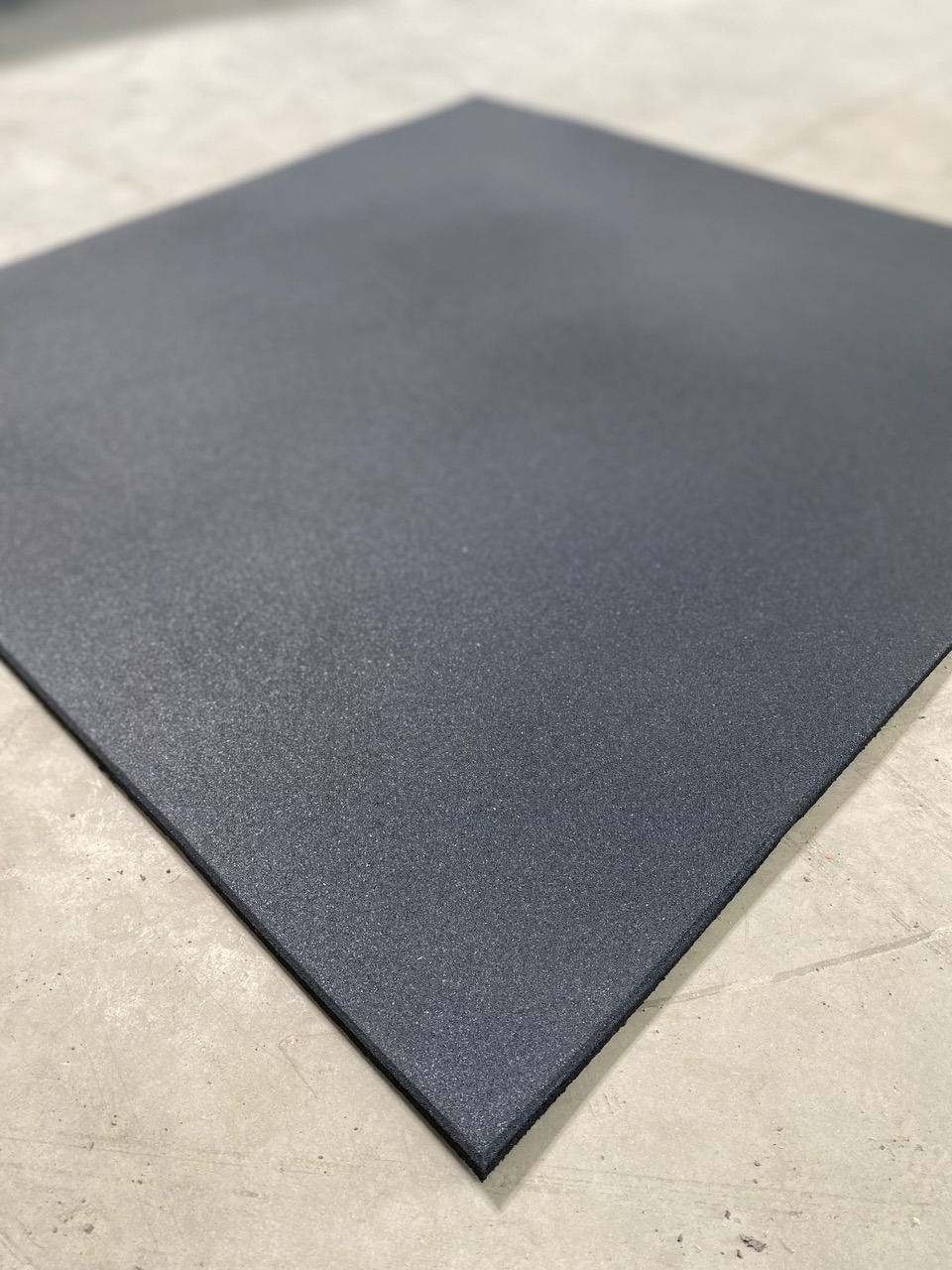
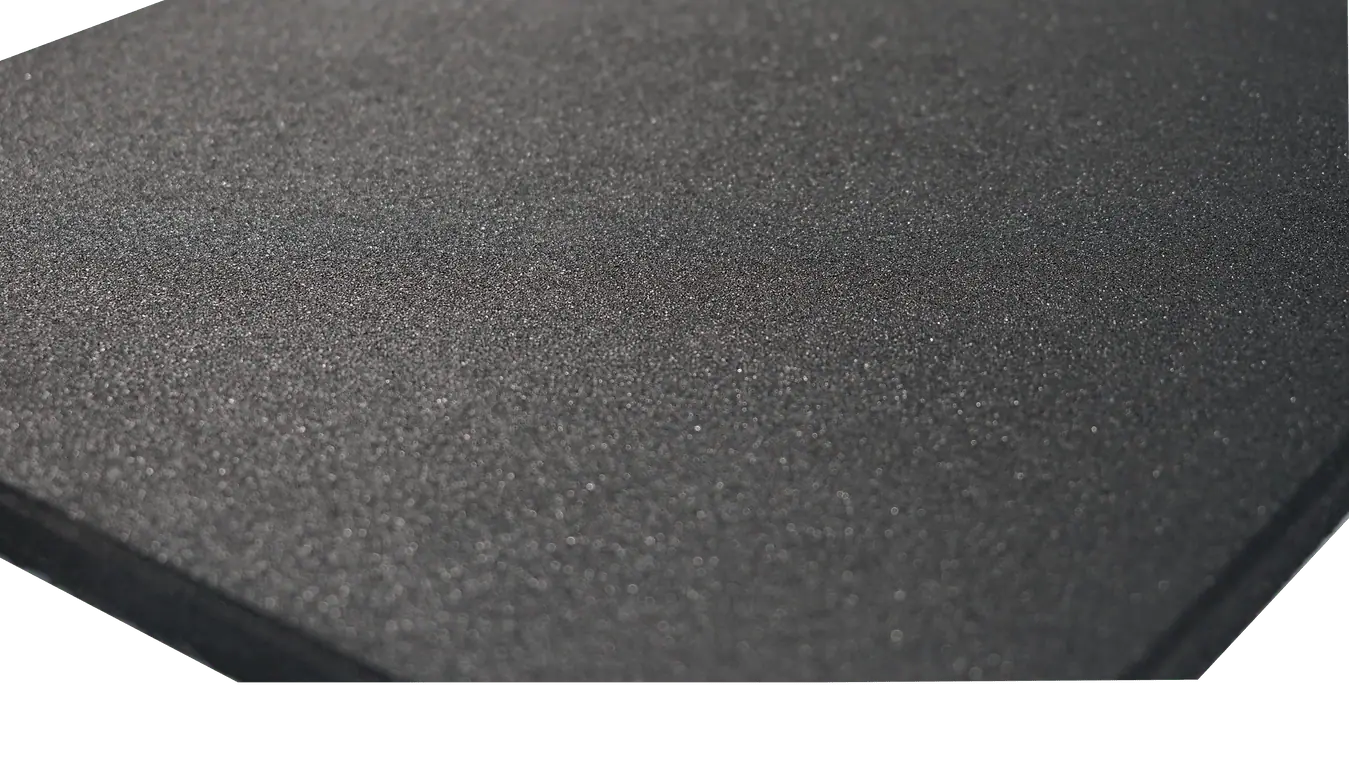
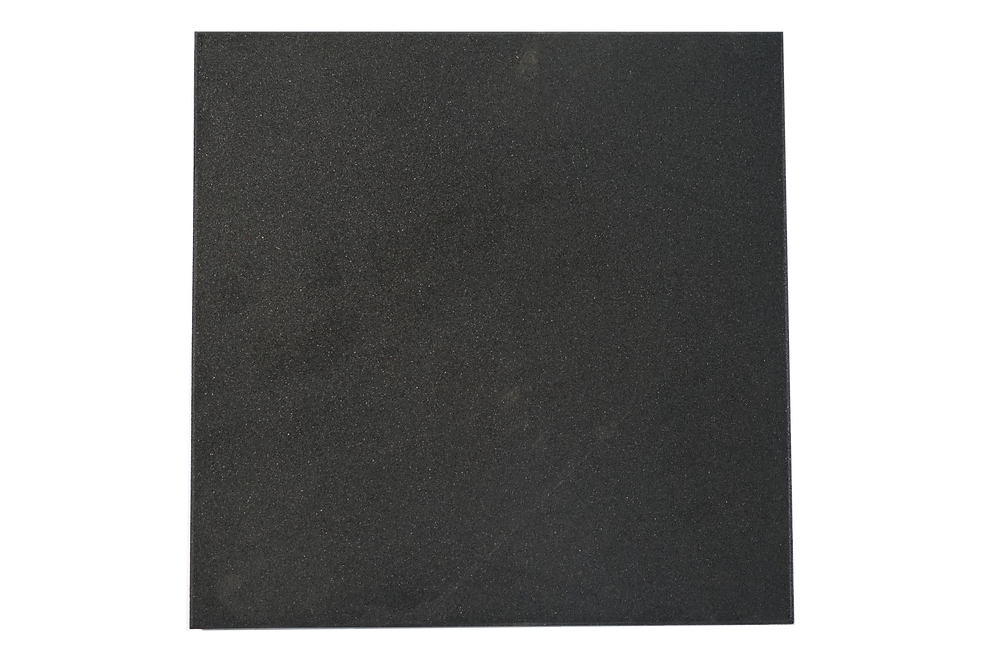
Black rubber tile 15 mm, fine grain
Black rubber tile 15 mm, fine grain : rubber gym flooring tiles, marque Light In Fitness, 22,00 EUR excl. VAT. Encombrement 100 × 100 × 1,5 cm, masse 13,5 kg. Size : 100 x 100 cm. Thickness : 15mm. Fire classification : EFL. Delivery and installation priced on quotation across Europe.
22.00 € excl. VAT
i.e. 26.40 € TTC selon la destination de livraison
Shipping quoted separately The shipping cost is confirmed before you approve the order.
Black rubber tile 15 mm, fine grain. Format: 100 × 100 cm, thickness 15 mm. One tile covers 1 m².
€22 excluding VAT per tile of 1 m². Quantities, technical documents and delivery confirmed in the quote.
Quotation = itemised pricing with delivery, installation and trade discounts, within 24 business hours. No commitment. Our commitments
Conformity: the acoustic values and fire classification shown on this page are declared by Light In Fitness on the basis of its suppliers’ tests; the corresponding certificate is supplied on request with the quotation.
Warranty: specified in the quotation for each reference — details of our warranties.
Description
In brief — Black rubber tile 15 mm, fine grain: dimensions 100 × 100 × 1.5 cm, weight 13.5 kg, thickness 15 mm, fire rating Efl, price 22.00 € excl. VAT.
Black rubber tile 15 mm, fine grain. Format: 100 × 100 cm, thickness 15 mm. One tile covers 1 m². Compare this reference for cardio, fitness or controlled placement of training accessories. Check machine contact points, loads and the existing substrate before selecting the floor.
Technical details
| Material / finish | Recycled SBR rubber, fine grain |
|---|---|
| Catalogue mass | 13.5 kg |
| Declared density | 900 kg/m³ |
| Declared reaction to fire | Efl |
| Installation | Loose-laid or bonded only as permitted by the reference-specific instructions and substrate. |
| Declared warranty | 5 years as stated in the catalogue, subject to the applicable warranty terms. |
Use and documentation
Thickness alone does not establish a load limit, drop height or acoustic result. For weights or impacts, specify the load, drop height and frequency. Request applicable test documents for fire, acoustics or impact performance and check their installation scope. A fire class does not certify the whole premises.
Prepare the substrate and check thresholds, doors and circulation routes. Follow the reference-specific instructions for fixing, joints and edges. Underlay does not replace repair of an uneven substrate. Confirm underfloor-heating compatibility for the complete assembly.
Quantity and supply budget
Catalogue price recorded on 17 October 2026: €22 excluding VAT per tile of 1 m².
For 50 m² before cutting allowances: 50 units, €1100 excluding VAT for supply only. Divide the area by 1 m², round up, then adjust for the layout and offcuts. Transport, substrate preparation, accessories and installation are additional items to specify.
Request a project quote
Send the area, a plan or substrate photos, equipment, delivery location, access conditions and required documents. The quote confirms quantities, packaging, accessories, delivery timing and selected services.
Frequently asked questions
Are delivery and installation included?
The figures cover supply only. Delivery, preparation, accessories and installation are specified separately in the project quote.
Additional information
| Weight | 13.5 kg |
|---|---|
| Dimensions | 100 × 100 × 1.5 cm |
| Size | 100 x 100 cm |
| Thickness | 15mm |
| Fire classification | EFL |
Delivery and installation
Lead times are confirmed in the quotation according to the product, available stock and destination.
Access requirements and delivery appointments for heavy equipment are agreed before dispatch.
Installation is included when stated for the product or in the quotation; otherwise it is quoted separately.
You may also like…
-
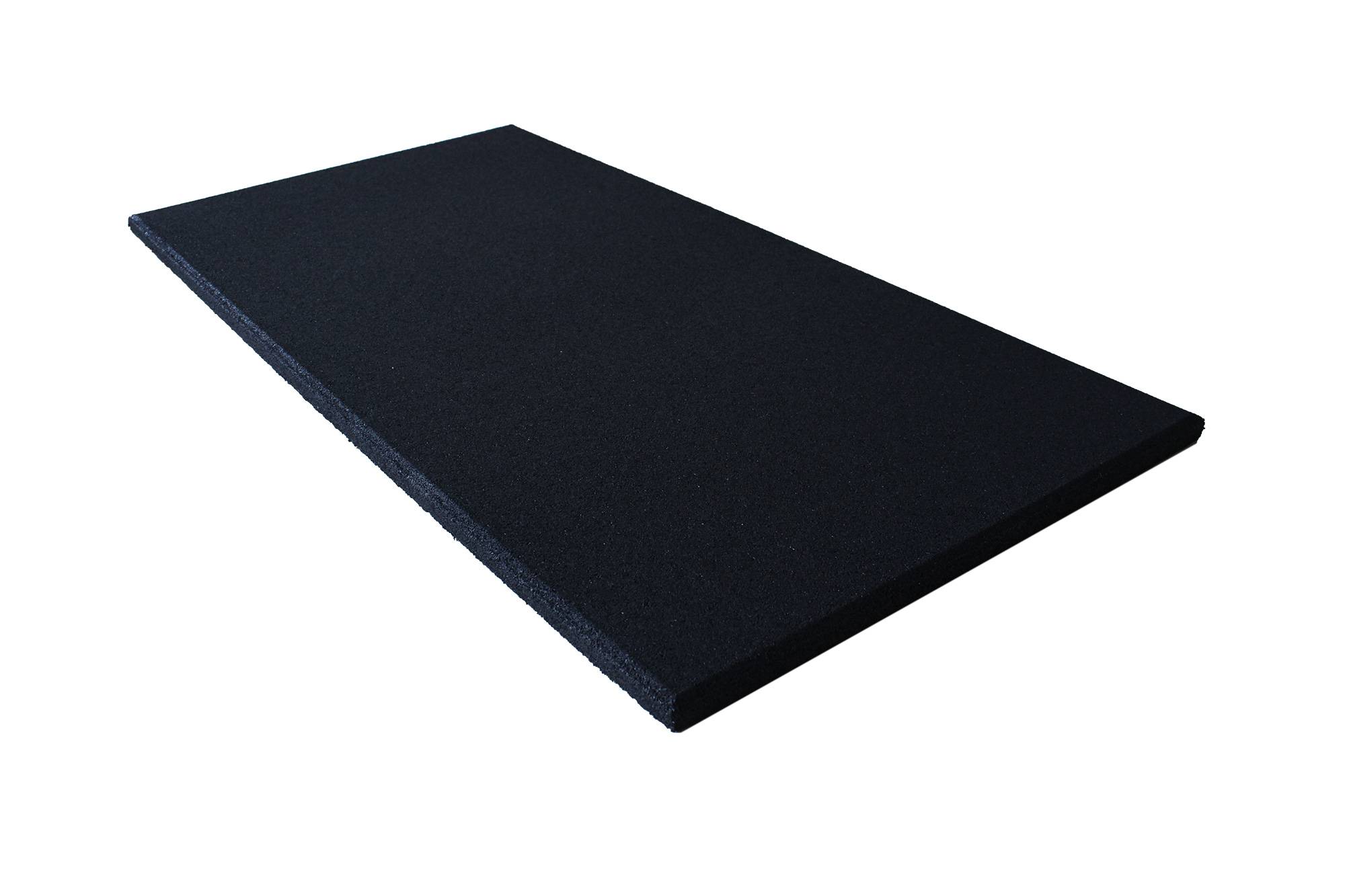
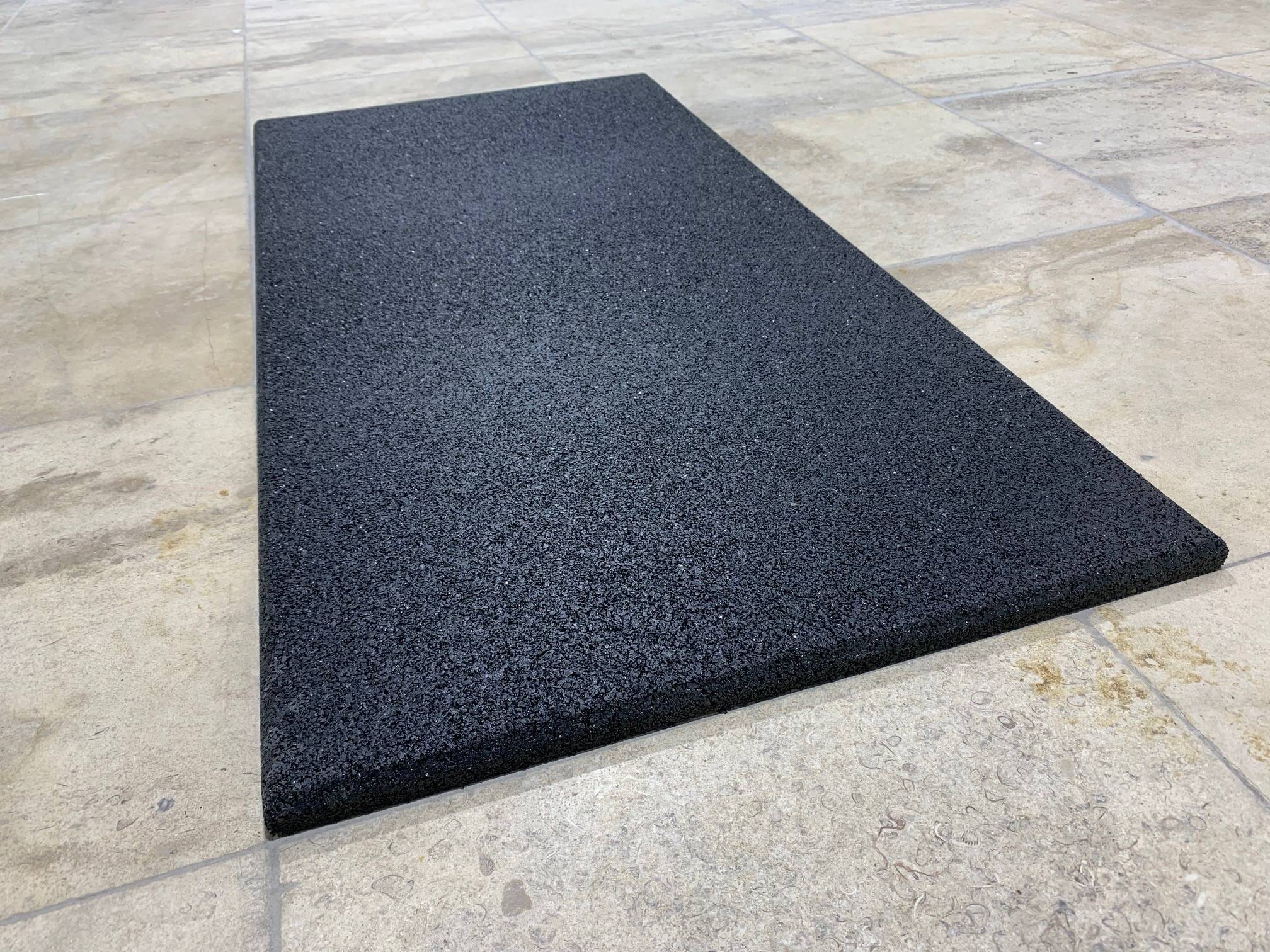
Rubber Gym Tile 50 x 100 cm — 20 mm Collection Series, Black to Pinterest (opens in a new window)Save on Pinterest : Rubber Gym Tile 50 x 100 cm — 20 mm Collection Series, Black
 Add to cartMORE INFO
Rubber Gym Tile 50 x 100 cm — 20 mm Collection Series, Black
18.50 € excl. VAT -
Rubber gym flooring tile 15 mm, black mottled 100 x 100 cm to Pinterest (opens in a new window)Save on Pinterest : Rubber gym flooring tile 15 mm, black mottled 100 x 100 cm
![Rubber gym flooring tile 15 mm, black mottled 100 x 100 cm]() Add to cartMORE INFO
Add to cartMORE INFORubber gym flooring tile 15 mm, black mottled 100 x 100 cm
27.00 € excl. VAT -
25 mm rubber gym tile, 100 × 100 cm to Pinterest (opens in a new window)Save on Pinterest : 25 mm rubber gym tile, 100 × 100 cm
![25 mm rubber gym tile, 100 × 100 cm]()
 Add to cartMORE INFO
25 mm rubber gym tile, 100 × 100 cm
32.00 € excl. VAT -
Black Training rubber tile 40 mm, 100 × 100 cm to Pinterest (opens in a new window)Save on Pinterest : Black Training rubber tile 40 mm, 100 × 100 cm
![Black Training rubber tile 40 mm, 100 × 100 cm]() Add to cartMORE INFO
Add to cartMORE INFOBlack Training rubber tile 40 mm, 100 × 100 cm
38.50 € excl. VAT -
Black Training rubber tile 10 mm to Pinterest (opens in a new window)Save on Pinterest : Black Training rubber tile 10 mm
![Black Training rubber tile 10 mm]() Add to cartMORE INFO
Add to cartMORE INFOBlack Training rubber tile 10 mm
17.00 € excl. VAT

Related products
-
Fire rated rubber gym tile 40 mm, Dfl-S1 to Pinterest (opens in a new window)Save on Pinterest : Fire rated rubber gym tile 40 mm, Dfl-S1
![Fire rated rubber gym tile 40 mm, Dfl-S1]() Add to cartMORE INFO
Add to cartMORE INFOFire rated rubber gym tile 40 mm, Dfl-S1
58.00 € excl. VAT -
Premium Lock 20 mm rubber gym flooring tile with clip system to Pinterest (opens in a new window)Save on Pinterest : Premium Lock 20 mm rubber gym flooring tile with clip system
![Premium Lock 20 mm rubber gym flooring tile with clip system]()
 Add to cartMORE INFO
Premium Lock 20 mm rubber gym flooring tile with clip system
35.00 € excl. VAT -
Multiflex Sports Flooring — Vinyl Roll for Sports Halls to Pinterest (opens in a new window)Save on Pinterest : Multiflex Sports Flooring — Vinyl Roll for Sports Halls
![Multiflex Sports Flooring — Vinyl Roll for Sports Halls]() View product
View productMultiflex Sports Flooring — Vinyl Roll for Sports Halls
Price on request