Professional Cardio Equipment for Fitness Centres: How to Choose and Equip Your Floor
Un parc cardio professionnel se choisit sur la capacité à fonctionner en continu, la disponibilité des pièces d'usure et le coût de maintenance annuel. Tapis, vélos, elliptiques et rameurs n'ont ni la même durée de vie ni le même coût d'exploitation. Light In Fitness sélectionne ses gammes sur ces critères et assure livraison, montage et SAV.
A professional cardio fleet is chosen on three things: the ability to run continuously, the availability of wear parts, and what the fleet costs to maintain over a full year. Treadmills, exercise bikes, rowers, climbers and cross trainers do not share the same service life or the same running costs, and the cheapest line on a quotation is rarely the cheapest machine after three seasons. This guide sets out how professional buyers specify a cardio floor that stays open: gym operators, hotel and resort groups, municipalities, clubs, rehabilitation centres, schools and corporate sites.
Cardio is the busiest area in the building
In almost every commercial facility, cardio machines log more hours than anything else on the floor. Members arrive, warm up, run an interval session and leave. The machines are used back to back through peak hours, by users of very different weights and abilities, and frequently without supervision. That single fact drives every specification decision that follows.
A machine in a staffed studio may run a few hours a day. The same machine in a round-the-clock club, or in a hotel gym with no reception cover, absorbs an entirely different duty cycle, with nobody on hand to notice a worn belt before it fails. Cardio also carries the commercial promise of the site: a treadmill left out of order while a part is sourced is not a technical incident, it is a visible one. Members photograph it, review it and cancel over it.
What separates professional cardio from consumer machines
Equipment intended for unsupervised commercial use falls under EN ISO 20957-1 class S. Class S is the professional class: it assumes intensive, repeated use by unknown users in a public setting, and it is what a gym, a hotel, a school or a municipal facility should be buying. Consumer-grade machines are built for a different reality, occasional use by one household, and putting them on a commercial floor is a false economy that surfaces as failed motors, cracked frames and warranties that no longer apply.
In practice the difference shows up in four places.
- Frame and deck. Heavier gauge steel, wider running surfaces, decks designed to be turned or replaced rather than discarded with the machine.
- Drive train. Motors and resistance units rated for continuous duty rather than for short bursts followed by long cooling periods.
- Serviceability. Panels that open, parts that are catalogued and held in stock, consoles that report running hours so servicing is planned instead of reactive.
- Console and connectivity. Training programmes, heart-rate handling and media connection that members now expect, built on hardware that survives hundreds of different users.
The five families of professional cardio equipment
A balanced cardio floor almost always mixes families rather than doubling down on one. The table below summarises what each family contributes to a commercial specification.
| Family | What it delivers | Typical brief |
|---|---|---|
| Treadmills | Walking through to running, the widest intensity range, the strongest perceived value on the floor | Commercial gyms, hotels, performance and testing areas |
| Upright and indoor cycling bikes | Low-impact cardio and interval work, compact footprint, straightforward maintenance | Dense floors, group cycling studios, corporate gyms |
| Recumbent bikes | Seated, back-supported cycling with easy step-through access | Rehabilitation, senior programmes, care homes, inclusive facilities |
| Rowing machines | Full-body effort, high output in a narrow footprint, stores upright | Functional areas, cross-training boxes, circuit rooms |
| Cross trainers and climbers | Joint-friendly continuous effort, and vertical work for high-intensity formats | Mixed-ability floors, hotels, mid-size clubs |
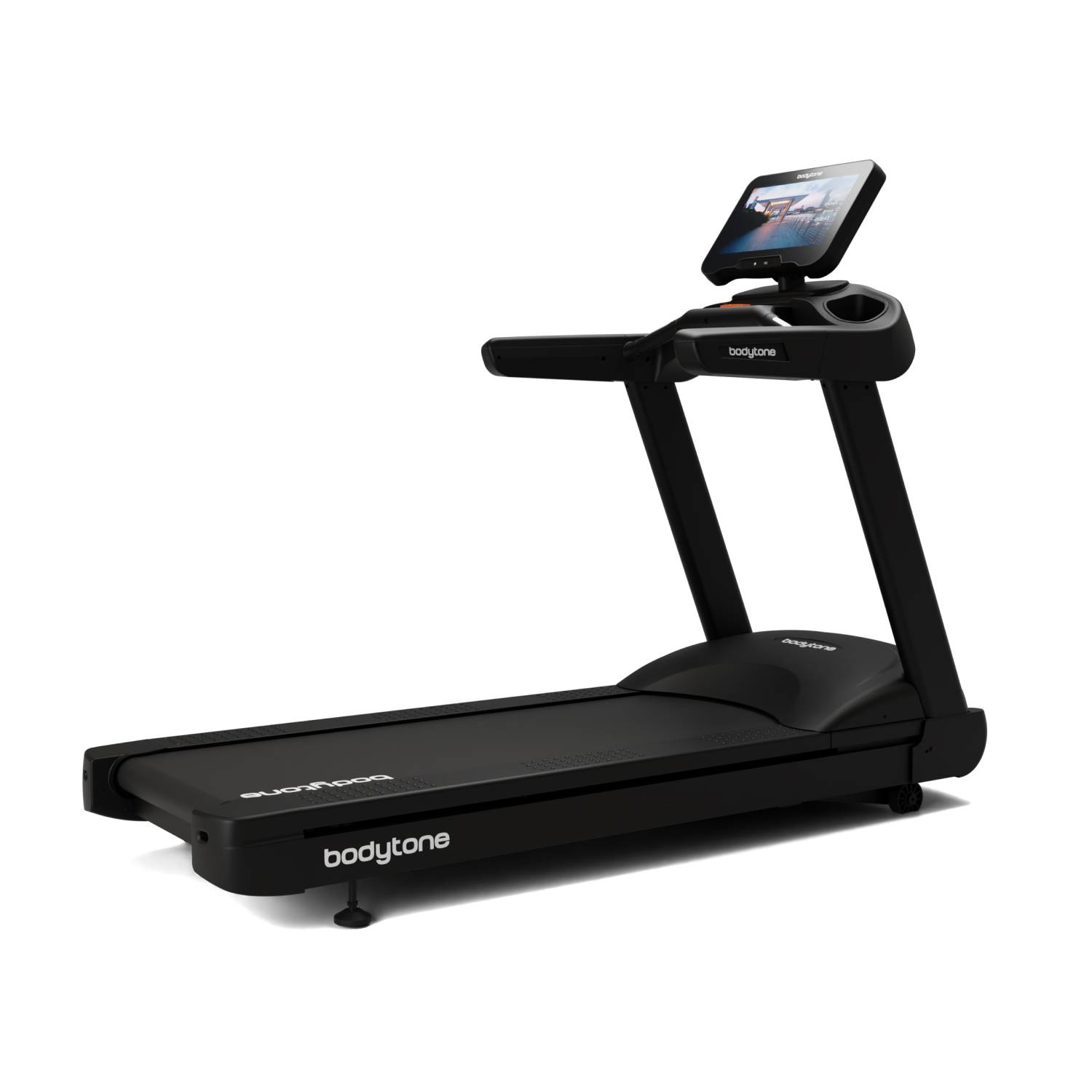
Treadmills are the reference purchase and the most demanding one. They carry the highest mechanical load, they are the first machine a prospective member tries, and they are the family where the gap between a professional and a consumer build is widest. Specify running surface, deck construction and belt supply together, because those are the items a busy site consumes.
Exercise bikes are the workhorses. They take the least floor area per training position, they tolerate heavy use with modest servicing, and they suit almost every population, from a first session to a structured interval class. Recumbent bikes extend that reach: the seated position and the step-through frame make them the default choice for rehabilitation programmes, senior sessions and any facility with an inclusive access brief.
Rowers deliver a full-body effort in a narrow footprint and can usually be stored upright, which makes them efficient in rooms where floor area is the constraint. Climbers reproduce a sustained vertical climbing action; they are a high-output, low-impact option for interval formats, not a substitute for climbing walls or bouldering equipment. Cross trainers sit between the bike and the treadmill, offering continuous joint-friendly effort for members who cannot or will not run.
Matching the fleet to the venue
Commercial gyms and clubs. Volume and variety both matter. Expect long opening hours, unsupervised periods and a wide mix of abilities, so favour machines with a documented parts supply and consoles that log usage.
Hotels and resorts. A compact fleet has to cover every guest profile with no instructor present. Reliability, quiet running and simple interfaces outrank exotic programming. Our guidance for hospitality projects starts from the same cardio ranges used in clubs, scaled to the room available.
Municipal and community facilities. Shared use across clubs, schools and open sessions means the equipment is never idle and rarely supervised by the same staff twice. Robustness and inclusive access carry more weight than console features.
Rehabilitation and senior care. Low starting resistance, precise increments, step-through access and stable handrails or seat backs are the specification, and recumbent bikes usually anchor the room.
Cross-training and functional venues. Rowers, air bikes and ski ergometers are programmed as part of the workout rather than as a warm-up zone, which means several identical units so a whole class can work at once.
Sizing the purchase: objectives, floor area, budget
Three questions settle most cardio specifications.
What is the room for? A weight-management and general fitness offer needs breadth: a mix of families so every member finds a machine they will use twice a week. A performance or testing brief concentrates on fewer, better machines. A rehabilitation brief prioritises accessibility and fine resistance control over top-end capability.
How much usable floor do you have? Usable area is not total area. Each machine needs its own safety clearance, circulation between rows and access for servicing, and treadmills need more of all three than bikes. Where floor area is tight, bikes, rowers and climbers deliver more training positions per square metre than treadmills.
What does the budget have to cover? The purchase price is one part of it. Delivery, installation, flooring under the machines, electrical supply for powered treadmills and the first years of servicing all belong in the same envelope. A fleet specified without that envelope tends to be replaced early, which is the most expensive outcome of all.
The costs that appear after the invoice
Cardio equipment is bought once and paid for continuously. Belts, decks, rollers, pedals, straps, bearings and consoles all wear, and the difference between a well-run fleet and a troubled one is usually not the brand on the frame, it is whether parts arrive quickly and whether servicing is scheduled.
Ask three questions before signing: are wear parts catalogued and held in stock, how long does a part take to arrive, and who performs the service. A machine that is cheap to buy and slow to repair costs more per open hour than a machine that costs more and never leaves the floor. Browse the full cardio equipment range to compare builds, or look specifically at professional treadmills, where the running-cost gap is widest.
Frequently asked questions
What does professional cardio equipment actually mean?
It means equipment designed and classified for commercial, unsupervised, intensive use, class S under EN ISO 20957-1. It is not a marketing tier above consumer equipment, it is a different design brief: continuous-duty drive trains, heavier frames, catalogued spare parts and serviceable construction. Terms such as semi-professional or home use describe equipment that does not belong on a commercial floor.
Which machines should a new gym buy first?
Most operators start with treadmills and upright bikes, because those two families cover the widest span of members, then add rowers and cross trainers as the programme develops. If the site has a rehabilitation, senior or inclusive-access brief, a recumbent bike such as the H-PRO recumbent bike belongs in the first order rather than the second.
How many cardio machines does a facility need?
That depends on peak attendance, opening hours and the programme, not on floor area alone. The workable method is to count the training positions needed at your busiest hour, then check that number against usable floor and circulation. Send us your floor plan and target attendance and we will size the fleet against them.
Planning your cardio floor
A cardio fit-out is a long-term commitment: the machines you choose now will define the member experience for years and will keep drawing on your maintenance budget the whole time. Specify for continuous duty, insist on a real parts supply, and balance the families around what your members will genuinely use.
Light In Fitness has been supplying professional fitness equipment since 2013 and can take a project from layout study through supply, installation and after-sales support. Send us your room dimensions, your opening hours and your target audience, and request a quote for a cardio fleet built around them.