
Aller au contenu
Light In Fitness
  • Strength training
    • Selectorised
      • Strength training
      • Selectorised
      • Smith machines
      • Bodytone Forza
      • Forza FH
      • Gold Line
      • Lexco
      • Bodytone SRX
      • Power Line
      • Authentique range
      • Strong Line
    • Plate loaded
      • Plate loaded
      • Gold Line
      • Etenon Olympic
      • Etenon R8
      • Lexco plate loaded
      • Solid Rock
      • O Live Pro
      • Etenon PC series
      • TITAN range
      • Shock range
      • Lexco LSP series
      • Chest press machines
    • Benches
      • Benches
      • Racks and cages
      • Squat and power racks
      • Barbells
      • Coloured barbells
      • Booty Area
      • Power sleds
      • Multi station gyms
      • Multi station gyms
      • Vertical leg press
      • Cable stations
    • Accessories
      • Accessories
      • Kettlebells
      • Gym storage
      • Special offers
      • Double power racks
      • EVOM4 multi station
      • MT6 indoor cycling
  • Cardio equipment
    • Treadmills
      • Cardio equipment
      • Treadmills
      • Professional treadmills
      • Bodytone treadmills
      • Etenon treadmills
      • Lexco treadmills
      • Outdoor treadmills
    • Exercise bikes
      • Exercise bikes
      • Upright bikes
      • Bodytone bikes
      • Recumbent bikes
      • Lexco seated bikes
      • Cycling bikes
    • Cardio machines
      • Cardio machines
      • Lexco cardio
      • Cross trainers
      • Lexco cross trainers
      • Rowers
      • Ski ergometers
      • Stair climbers
      • Xebex
  • Wellness
    • Cold plunge baths
      • Wellness
      • Cold plunge baths
      • Portable baths
      • Fixed baths
      • Chillers
    • Sauna, steam and spa
      • Sauna, steam and spa
      • Sauna and steam room
      • Outdoor saunas
    • Acrylic and rigid spas
      • Acrylic and rigid spas
      • Zodiac pools
      • Pool surfacing
      • Aquatic and wellness
    • Pilates
      • Pilates
      • Inflatable air tracks
  • CrossFit and Hyrox
    • CrossFit rigs
      • CrossFit and Hyrox
      • CrossFit rigs
      • Freestanding rigs
      • Wall mounted rigs
      • Functional rigs
      • Cross training cages
      • Cross training stations
      • Portable structures
    • Ziva
      • Ziva
      • Container gym
      • Parkour and CrossFit parks
    • Floor level MMA cages
      • Floor level MMA cages
      • Podium MMA cages
      • Punch bag rails
      • Tatami mats
      • Roll out mats
    • Standards
      • Standards
      • Prices
  • Street workout
    • Calisthenics cages
      • Street workout
      • Calisthenics cages
      • Street workout parks
      • Custom configurator
      • Uruk parks
      • Street workout parks
      • Hexagon range
      • Mini outdoor cages
      • Calisthenics cages
      • Stainless workout cages
      • Stainless equipment
      • Outdoor wall bars
    • Stainless steel outdoor
      • Stainless steel outdoor
      • Stainless machines
      • Outdoor gym
      • Steel4Fit
      • TRAINER OutdoorStart
      • TRAINER OutdoorFit
      • TRAINER sets
      • Outdoor strength machines
      • Compact 3 in 1 stations
    • Fitness trail
      • Fitness trail
      • OUTDOOR FITNESS I
      • Adapted and rehabilitation
      • Accessible outdoor
      • TRAINER accessible
      • Galvanised range B
      • Wooden trail
      • Fitness trail stations
      • Obstacle courses
    • Ninja Warrior
      • Ninja Warrior
      • Toroz Ninja and OCR
      • Outdoor Ninja structures
      • Warped walls
      • Parkour
      • Obstacle trail modules
      • Pump tracks
  • Playground
    • Rope play modules
      • Playground
      • Rope play modules
      • Rope play sets
      • Combined rope structures
      • Complex play systems
      • Rope climbing pyramids
      • Rope climbing nets
      • Rope structure parts
    • Diamond Collection
      • Diamond Collection
      • Tubular play structures
      • Play towers
      • Elevated playhouses
      • Bespoke playgrounds
    • Swing sets
      • Swing sets
      • Spring riders
      • Playground roundabouts
      • Playground furniture
      • Children sports parks
      • Kids outdoor fitness
      • Kids cardio machines
      • Mobility wheels
      • Kids balance stations
    • Playground surfacing
      • Playground surfacing
      • Wood chips
      • Operator duties
      • Inspections
  • Rubber flooring
    • Rubber flooring
      • Rubber flooring
      • Weightlifting tiles
      • Fire rated tiles
      • Coloured tiles
      • Wood effect tiles
      • COV A tiles
    • Interlocking tiles
      • Interlocking tiles
      • Basketball court tiles
      • Pickleball surfacing
      • Rubber rolls
      • Sports court rolls
      • Floor underlay
    • Outdoor flooring
      • Outdoor flooring
      • Turf sled tracks
      • Artificial turf tiles
      • Stable matting
    • Multi-sport courts
      • Multi-sport courts
  • By facility type
    • By facility type
      • By facility type
      • Public sector
    • Buying sports equipment through public tender
      • Buying sports equipment through public tender
      • Supplier file
      • Specification template
      • Specification clauses
      • Funding
    • Case studies
      • Case studies
      • References
    • Standards
      • Standards
      • Warranties
      • After sales
      • Glossary
      • Blog
  • FREN
  • No products in cart.
  • Home
  • Expert guides on professional fitness equipment
  • Cardio
  • Running a profitable spin studio: sizing, wear parts and operations

Running a profitable spin studio: sizing, wear parts and operations

by Michaël Galy / Wednesday, 11 March 2026 / Published in Cardio, Vélos spinning

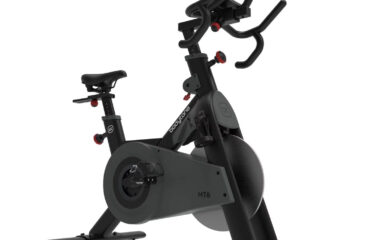
The profitability of a spin studio is decided by three operational variables, not by the bikes alone: how many classes the timetable can realistically fill, how quickly worn parts are replaced before they cancel classes, and whether the room itself makes members come back. Equipment selection is covered in our indoor cycling studio equipment guide; this article deals with what happens after the bikes arrive — sizing by timetable, the wear parts that actually fail in studio duty, and the operating mistakes that quietly erode margins.

On this page

  • Size the studio by the timetable, not the floor area
  • The wear parts that decide whether classes run
  • A maintenance rhythm a studio team can actually keep
  • The three mistakes that kill spin studio margins
  • Revenue model in one table
  • The room itself: layout, air and atmosphere
  • Filling the first ninety days
  • Frequently asked questions
  • Plan your studio with Light In Fitness

Size the studio by the timetable, not the floor area

The most common planning error is to fill the available room with bikes. The right method works backwards from demand:

  1. Count your sellable slots. A realistic commercial timetable runs 15 to 30 classes per week: two or three peak slots on weekday evenings, one or two morning slots, weekend mornings.
  2. Estimate fill rate honestly. Mature studios average 60 – 80 percent occupancy across the week; new studios start at 30 – 40 percent. Peak classes fill; the 14:00 slot does not.
  3. Derive the bike count. If your best weekly demand forecast is 250 attendances over 20 classes, that is an average of 12–13 riders per class: a 16-bike room covers peaks with headroom. A 30-bike room would burn capital and floor area for empty saddles.
  4. Reserve one spare bike per 10 to 15 installed. A bike under repair must never reduce sellable capacity.

Space planning follows: allow 2 to 2.5 m² per bike including circulation, plus the instructor podium. A 16-bike room therefore needs roughly 40 – 50 m² — small floor area, high revenue density, which is precisely why the format works.

The wear parts that decide whether classes run

Studio bikes take hundreds of hours of standing sprints per month, under sweat. The failure pattern is consistent across brands:

Wear item Typical interval (studio duty) Indicative cost per bike Early warning sign
Pedals and cleat plates 6 – 12 months 30 – 80 EUR excluding VAT Play or clicking under standing load
Saddles and grips 12 – 18 months 25 – 60 EUR excluding VAT Torn covers, exposed foam
Drive belt 2 – 4 years 60 – 150 EUR excluding VAT Slipping or squeal under sprint load
Bottom bracket / crank bearings 2 – 4 years 80 – 200 EUR excluding VAT Grinding felt through the pedals
Seat and handlebar sliders Ongoing Minimal (cleaning and lubrication) Stiff adjustment, corrosion from sweat

Sweat is the studio’s specific enemy: it corrodes fasteners, seizes adjustment sliders and destroys resistance pads on friction systems. Magnetic-resistance, belt-driven bikes remove the two most sweat-sensitive assemblies entirely — the trade-offs are analysed in our guide to indoor cycling resistance and drive systems.

A maintenance rhythm a studio team can actually keep

  • After every class: riders or staff wipe frames and handlebars; disinfectant, not solvent.
  • Weekly: torque pedals (the single most preventable failure), check saddle and bar clamps, wipe and lubricate sliders.
  • Monthly: belt tension check, resistance calibration across the fleet (riders notice when bike 7 feels harder than bike 12 at the same level), inspect cleats.
  • Annually: full technician service — bearings, belt, frame fasteners — scheduled in your lowest-attendance month.

Budget 3 to 5 percent of fleet value per year. The wider facility routine is set out in our cardio machine maintenance schedule.

The three mistakes that kill spin studio margins

  1. Buying bike count instead of bike quality. Twenty-four entry-level bikes look better on opening day than sixteen studio-grade ones; eighteen months later, half the cheap fleet is creaking and the timetable is shrinking. Specify EN ISO 20957-1:2024 class S studio bikes and size the room honestly.
  2. Underinvesting in the room. Members do not rebook a bike; they rebook an experience. Controlled lighting, a proper distributed sound system at safe volume, ventilation sized for 20 riders at maximal effort, and vibration-damping flooring under every bike are what separate a studio from a storage room with bikes in it.
  3. Treating instructors as interchangeable. Attendance follows instructors more than schedules. Pay for your best coaches’ regular slots and protect them; an empty 18:30 class with a weak instructor costs more per year than the pay gap ever would.

Revenue model in one table

Scenario (16 bikes) Classes / week Average fill Attendances / week Revenue at 10 EUR / ride
Launch phase 15 40% 96 ~960 EUR / week
Established 20 65% 208 ~2,080 EUR / week
Mature, strong coaching 25 75% 300 ~3,000 EUR / week

Figures are illustrative planning estimates; plug in your own pricing and demand data. The point the table makes is structural: the difference between the first and last rows is operations and coaching, on exactly the same equipment investment.

The room itself: layout, air and atmosphere

Studio experience is a physical design problem before it is a coaching one. Lay bikes out in arcs or offset rows so every rider sees the instructor; allow 1 m between handlebars and keep a 1.2 m circulation path to the door — riders arrive late and leave early, and they should not cross the instructor’s sightline to do it. Ventilation is the most under-specified system: twenty riders at threshold produce heat and humidity that a standard comfort-cooling spec cannot clear, so size air handling for the class load, not the room volume, and place extraction high. Acoustically, treat the room like the small concert venue it is: absorbent panels on the rear wall and ceiling tame the mix, a distributed speaker layout keeps volume safe, and vibration-damped flooring stops the bass and the standing climbs from reaching the yoga studio next door. Finally, controllable lighting — dimmable zones or simple scene presets — is the cheapest component of the “boutique” feel that justifies premium class pricing.

Filling the first ninety days

  1. Open with a founder offer limited in number and time — a discounted first-term pass that seeds every class with a base of regulars.
  2. Programme fewer classes than you plan to run. Twelve full classes convert walk-ins; twenty half-empty ones do the opposite. Add slots only when waitlists prove demand.
  3. Put your best instructor on the hardest slots. The 18:30 Tuesday class is your shop window; staff it accordingly.
  4. Capture the second visit. A follow-up message with a recommended next class within 48 hours of a first ride is the single highest-leverage retention action a studio takes.
  5. Review fill data weekly and kill or move failing slots monthly — a timetable is a living product, not furniture.

Frequently asked questions

How many bikes does a spin studio need?

Work backwards from a realistic timetable and fill rate, then add one spare per 10 – 15 bikes. Most independent studios land between 12 and 24 bikes; more than that requires chain-level marketing to fill.

How long do studio bikes last?

Quality class S studio bikes run 8 – 12 years with the maintenance rhythm above; the frame outlives several generations of pedals, saddles and belts. Entry-level bikes in studio duty often need replacing within 2 – 3 years.

Do we need vibration-damping flooring under spin bikes?

Yes — 15 – 20 mm rubber flooring or individual damping mats protect the slab, cut transmitted noise to neighbouring rooms and stop bikes walking during standing efforts.

Should a small club build a dedicated spin room at all?

Only if the timetable analysis supports at least 12 – 15 filled classes per week. Below that, virtual classes or a shared group-exercise room deliver better revenue per square metre.

Plan your studio with Light In Fitness

Light In Fitness equips cycling studios across Europe — bikes, flooring, layout and installation. Request a quotation and we will model bike count, room layout and a maintenance plan against your real timetable.
Tagged under: cardio, guide, maintenance, salle de sport

About Michaël Galy

Michaël Galy est fondateur et directeur de Light In Fitness, expert en équipements de fitness et musculation professionnels depuis 2013. Fort de plus de 15 ans d'expérience dans l'équipement sportif professionnel, il accompagne les salles de sport, box CrossFit, hôtels, collectivités et établissements de santé dans leurs projets d'aménagement fitness de A à Z. Consultant reconnu en France et en Europe, Michaël Galy a équipé plus de 500 établissements professionnels. Il partage régulièrement son expertise sur les tendances fitness, les normes de sécurité et les meilleures pratiques d'aménagement des espaces sportifs professionnels.

What you can read next

Les 5 meilleurs conseils pour optimiser votre entraînement sur tapis de course
Tapis de course professionnel EVOT Bodytone
Cardio Training pour Professionnels du Fitness
tapis roulant professionnel– lequel est le meilleur types de tapis roulants, paramètres les plus importants, modèles recommandés
Tapis roulant professionnel– lequel est le meilleur ? Types de tapis roulants, paramètres les plus importants, modèles recommandés
TOP
This website uses cookies to improve your experience. We assume you are happy with this, but you can opt out if you wish. Cookie settingsAccept
Privacy policy

Privacy policy

This website uses cookies to improve your browsing experience. Cookies classified as necessary are stored in your browser because they are essential to the basic operation of the site. We also use third party cookies that help us analyse and understand how you use this site. These cookies are stored in your browser only with your consent. You can also disable these cookies. Disabling some of them may affect your browsing experience.
Necessary
Always Enabled
Necessary cookies are essential for the website to work properly. This category only covers cookies that provide the basic functionality and security features of the site. These cookies do not store any personal information.
Non-necessary
Cookies that are not strictly necessary for the site to work et qui sont utilisés spécifiquement pour collecter des données personnelles via des analyses, des publicités ou d\'autres contenus intégrés sont qualifiés de cookies non nécessaires. Il est obligatoire d\'obtenir le consentement de l\'utilisateur avant d\'exécuter ces cookies sur votre site web.
SAVE & ACCEPT
Ma demande de devis 0