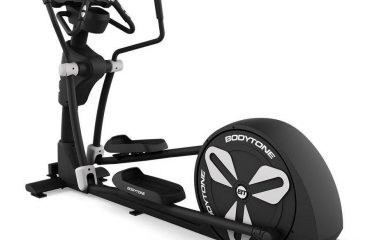
Comparing professional indoor cycling bike brands for studios
Le choix d'une marque de vélo de spinning engage la rentabilité d'un studio pour cinq à huit ans, avec des écarts de prix de 1 à 4 entre les gammes. Les critères discriminants sont le type de résistance, la transmission, la disponibilité des pièces d'usure et le coût de maintenance annuel. Ce comparatif traite Keiser, Stages, Bodytone, Lexco et les autres gammes distribuées en France.
The brand you choose for a studio cycling fleet sets your cost base for the next five to eight years, and the criteria that actually separate the options are the resistance system, the transmission and the spare parts model rather than the badge on the frame. Unit prices across the professional category span a factor of three or four, while the differences in what a participant feels are far narrower. This guide sets out the comparison framework we use with studio operators, the verified prices of the bikes we supply, and the fleet arithmetic that decides total cost rather than purchase cost.
The eight criteria that decide a fleet decision
| Criterion | What to ask for | Why it matters over five years |
|---|---|---|
| Resistance system | Magnetic or friction, number of magnets | Friction pads are a recurring consumable and a recurring service call; magnetic braking removes both |
| Transmission | Belt type and stated service life, or direct drive | A reinforced belt lasting 36 to 48 months halves the change frequency of a basic belt |
| Flywheel | Mass or equivalent mass in kg | Below roughly 18 kg equivalent, low cadence pedalling feels rough and generates complaints |
| Power measurement | Integrated watts, stated accuracy | Determines whether you can run structured power based classes and league boards |
| Adjustment | 4D, with quick release levers | 10 to 15 seconds between participants is the difference between a class starting on time and not |
| Pedals | Combined SPD and cage | 60 to 70 per cent of participants in a general studio have no cycling shoes |
| Q factor | Stated in mm | Narrower stance reduces knee loading over long classes |
| Spare parts and service | Parts availability commitment, response time | A bike out of service for six weeks costs more than the parts |
Where the main brands sit
The professional category divides into three groups. American names such as Keiser, Stages and Schwinn, and the Life Fitness and ICG ranges, occupy the premium tier: long frame warranties, integrated power measurement, distribution through approved dealers and quotation based pricing. European manufacturers, including Bodytone in Spain and the Lexco range, target the same duty cycle at materially lower unit prices with direct distribution. Below both sits a consumer tier that should be excluded from a commercial specification entirely, because domestic class equipment under EN ISO 20957 is not built for six to eight hours of daily use.
Two practical consequences follow. First, purchase price differences of 1,000 EUR or more per bike multiply immediately: on a 20 bike studio that is a 20,000 EUR swing, which is often the whole sound, lighting and flooring budget. Second, the premium tier’s advantage is concentrated in power measurement accuracy and frame warranty length, so it is worth paying for when your proposition is power based training and much less so when your proposition is a music led group class.
Verified prices for the bikes we supply
All prices excluding VAT, from our current catalogue. Published articles have quoted the Bodytone MT6 at 880 EUR; the correct catalogue price is 1,425.40 EUR excluding VAT and that is the figure any quotation will carry.
| Bike | Positioning | Price excluding VAT |
|---|---|---|
| Bodytone MT6 professional indoor cycling bike | Studio workhorse, magnetic resistance | 1,425.40 EUR |
| Etenon ION8 indoor cycling bike | Studio bike with console | 1,950 EUR |
| Bodytone MT10 indoor cycling bike | Higher specification studio bike | 2,731.80 EUR |
What the Bodytone MT6 actually offers
It is the bike we install most often in French studios, so its specification is worth stating precisely. Magnetic braking using two neodymium magnets means there is no friction pad to replace, which on a 20 bike fleet removes an estimated 20 to 40 service interventions a year and 600 to 1,200 EUR of consumables and labour, according to our own after sales records. The Poly-V reinforced belt has a service life of 36 to 48 months under intensive use, roughly double a standard belt. The aluminium flywheel gives an equivalent inertia of 20 kg, above the threshold at which low cadence pedalling starts generating comfort complaints. Adjustment is 4D with quick release levers, pedals are combined SPD and cage, and the Q factor is 213 mm. Our recorded failure rate at 24 months, excluding consumables, is 4.1 per cent.
Fleet arithmetic over five years
Compare fleets, not bikes. The table below shows the purchase side of a 20 bike studio at catalogue prices, which is the number that should sit alongside your consumables and service assumptions.
| Fleet, 20 bikes | Purchase price excluding VAT | Notes |
|---|---|---|
| Bodytone MT6 | 28,508 EUR | No friction consumables, belt change at 36 to 48 months |
| Etenon ION8 | 39,000 EUR | Console equipped |
| Bodytone MT10 | 54,636 EUR | Higher specification frame and console |
To that add the recurring lines: belt replacement across the fleet at three to four year intervals, saddle and pedal replacement driven by hours rather than years, and console batteries or power supplies where fitted. A fleet with friction resistance adds pad replacement several times a year per bike, which is the single largest avoidable maintenance cost in this category.
Specification points people forget
Confirm the noise level, because a studio adjacent to a treatment room or a residential wall lives or dies by it and magnetic systems are considerably quieter. Confirm the sweat protection on the frame and console, since corrosion at the seat post and handlebar stem is the most common cosmetic failure. Confirm that the console, if any, is available as a separate spare, because a fleet with a discontinued console becomes unsellable. Finally, confirm the connectivity protocol in writing if you plan to run third party apps or leaderboards; app compatibility changes faster than the hardware.
Frequently asked questions
Do we need power measurement on every bike?
Only if your programming uses it. Power based classes and leaderboards require it on every bike, since a partially equipped fleet creates two classes of participant. If your classes are music and cadence led, the money is better spent on sound, lighting and flooring, all of which participants notice more.
Magnetic or friction resistance?
Magnetic for any commercial fleet. Friction is cheaper to buy and more expensive to own, because pads wear, wear inconsistently across a fleet and need replacing during opening hours. Magnetic systems are also markedly quieter, which matters in shared buildings.
How many bikes for a studio?
Typically 8 to 30, set by the room area and the sightlines to the instructor rather than by demand. Allow roughly 2 m2 per bike including circulation, and check that the back row can see and hear before fixing the number.
What warranty should we expect?
Our ranges carry 2 to 5 years depending on the range, with 20 years on steel structures. What matters as much as the headline is what counts as a wear part, since consumables are excluded from every manufacturer warranty in this category. Ask for the exclusion list in writing before comparing terms.
Can studio bikes be used in a hotel or corporate gym?
Yes, and the duty cycle is far gentler than a studio, so a mid specification bike is usually sufficient. What changes is the induction problem: unsupervised users need clear adjustment markings and combined pedals, since no one will be there to set the saddle for them.
Specify your cycling studio fleet
Light In Fitness has equipped more than 2,500 customers since 2013 from Tours, France, including cycling studios across the country, and quotes fleets with sound, lighting and flooring in a single document. Send us your room dimensions and target class size and you will receive a costed configuration within 24 working hours. Stock items ship in 5 to 10 working days to France, Belgium, Switzerland and Luxembourg, with export quoted per project. See indoor cycling bikes and the Bodytone MT6 spin bike, or request a quote.
Réalisations documentées
- Functional Rig inox – installations sur trois continents
- iGreenMill, tapis de course extérieur – installations sur trois continents
À lire aussi sur le même thème
- Aquabike fleet ROI: a three year model for aquatic centres
- Indoor cycling bike resistance systems: magnetic or friction, belt or chain
- Equipping a professional indoor cycling studio: bikes, flooring and room specification
- AC vs DC Treadmill Motors: Which Drive for a Commercial Gym?
- Which Cross Trainer (Elliptical) for a Commercial Gym?