
Smith Machine vs Power Rack: A Guide for Gym Operators
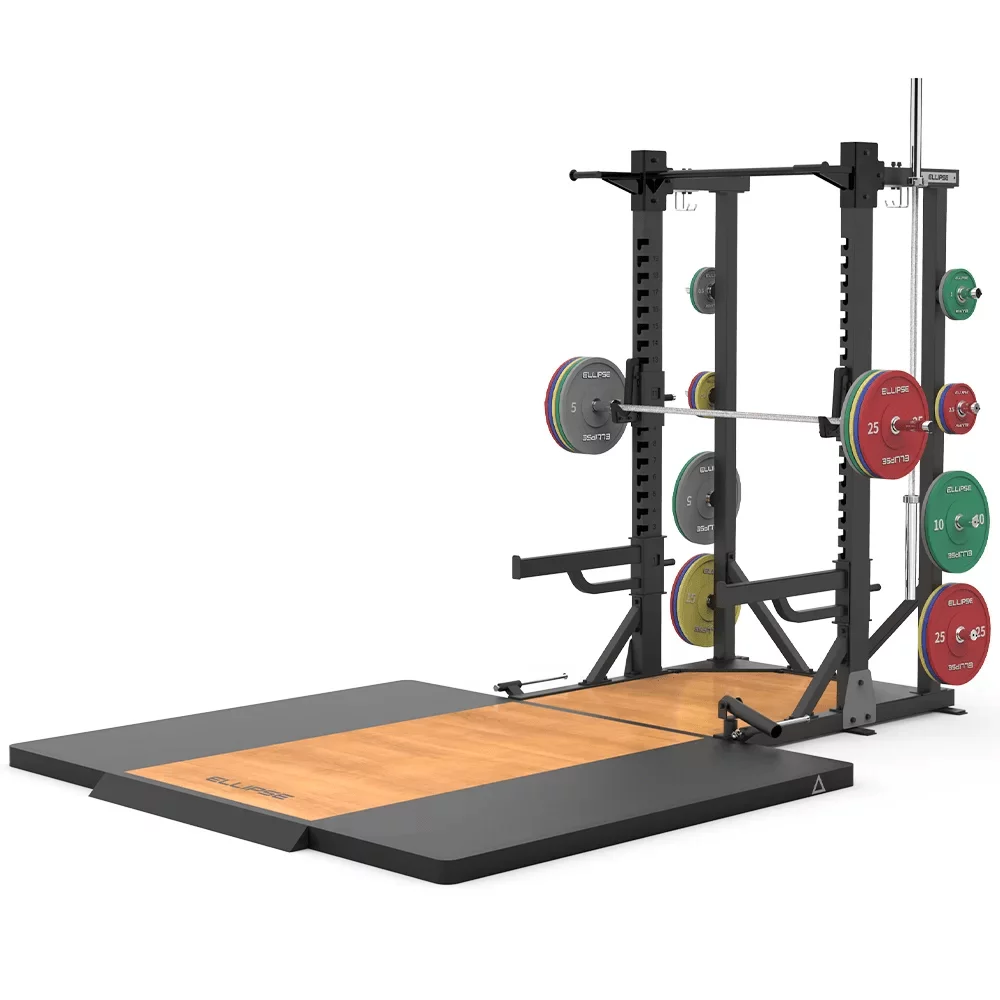
Smith machines and power racks have become fixed points on almost every commercial gym floor plan. Both are steel structures built around a barbell, both exist to make loaded training safer, and both are regularly specified side by side. They do not, however, do the same job. This guide sets out how each one works, which exercises it supports, and what a gym operator, club manager or hotel fitness manager should check before ordering.
The Smith machine: guided barbell work for the whole body
A Smith machine is a rigid frame in which the barbell travels along two vertical rails. A catch mechanism stops the bar from dropping, and the user can hook it back onto the rail at any point in the movement. Because the bar rests in its start position on the rails, plates can be loaded without anyone holding the weight.
That combination makes the guided barbell the natural entry point for members who are new to strength training: the movement path is fixed, the load is caught if the set fails, and the injury risk falls sharply. Paired with a flat or incline bench, a single Smith machine covers most of the classic barbell exercises a general-fitness programme needs.
The operational argument is just as strong. Guided stations need less floor supervision than an open free-weight area, which matters in hotel gyms, corporate facilities and residential fitness rooms that are not permanently staffed. Our professional Smith machines are built for continuous commercial duty rather than occasional use.
The power rack: heavy free-weight training without a spotter
Power racks are box-shaped steel cages, sometimes simply called cages, inside which free-weight exercises can be performed in safety. Spotter arms and cross bars adjust individually along the uprights, so the bar is caught at whatever height the exercise requires. A member can squat, press or pull heavy without relying on a training partner or a member of staff standing by, which is decisive for clubs with a strength-focused membership.
A rack is also a platform. With a barbell alone it already covers the classic compound lifts, and pull-up bars, dip handles and storage attachments turn a single footprint into a complete strength station. Add a bench inside the cage and the full bench-press range comes with it. The wider squat racks and power racks range covers single stations through to the double power rack, which serves two lifters in one footprint.
Which one belongs in your facility
In practice the question is rarely one or the other. A commercial floor that serves beginners, general members and strength athletes usually needs both: the guided station as a safe on-ramp and a supervision-light option, the rack as the heavy end of the room. Where budget or space forces a choice, the deciding factors are the membership profile, the level of staffing on the floor and the ceiling height available above the structure.
Before ordering, check four things: the frame section and steel gauge, because commercial duty cycles are unforgiving; the adjustment increments of the safety arms; the anchoring requirement, since many racks must be bolted down or ballasted; and the flooring underneath, which has to absorb dropped loads without transmitting them to the slab.
Frequently asked questions
Is a Smith machine only for beginners?
No. The fixed bar path is what makes it accessible to beginners, but it also lets experienced members work close to failure without a spotter and makes controlled tempo work straightforward. In a commercial setting it is a general-purpose station, not a training-wheels one.
Can a power rack replace a Smith machine?
It covers the same lifts, but not the same use case. The rack still requires the member to control the bar path themselves. Facilities with unsupervised opening hours or a high proportion of newcomers generally keep at least one guided station.
How much space should be planned around a rack?
Enough for the barbell to be loaded and unloaded on both sides and for the user to step back out of the cage, plus the manufacturer clearance stated for the specific model. Ceiling height is the constraint people underestimate, because pull-up work happens at the top of the frame.
Specifying the right structure
The right answer depends on your floor area, your membership and how your room is staffed. Send us the layout and the intended use and we will come back with a configuration, the anchoring and flooring requirements, and a costed proposal: request a quote.
