Lexco LS-203 Power Rack: The Versatile Squat Cage for Your Gym
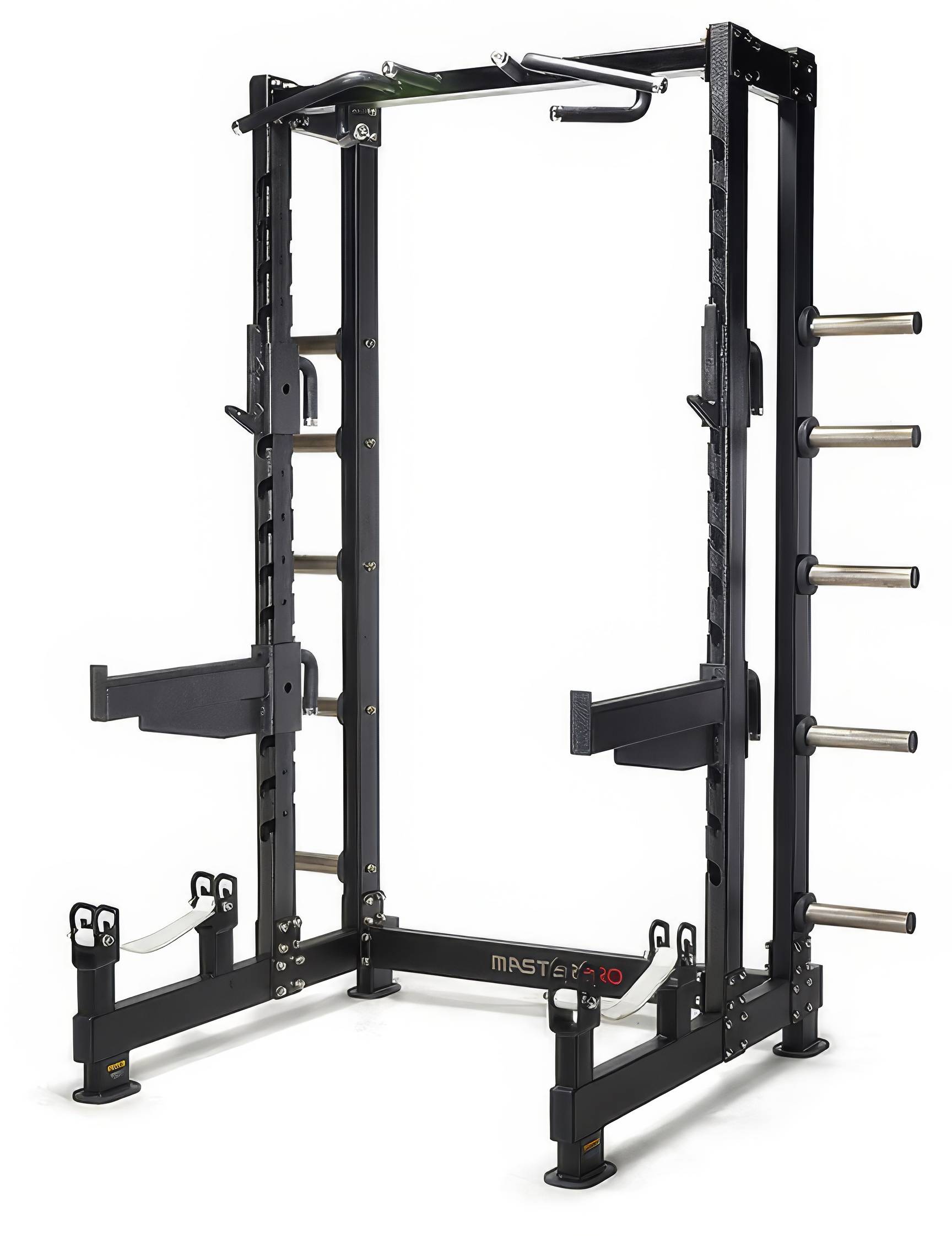
A squat cage is the busiest square metre of any strength floor. It has to hold heavy loads without moving, protect a lifter training alone, and earn its footprint by supporting far more than squats. The Lexco LS-203 power rack was designed around exactly that brief: a rigid four-post cage with an integrated pull-up bar that covers lower body, pressing and upper body pulling work in a single station. This guide looks at what the rack does, how to run it safely and where it belongs in a professional facility.
What a power rack actually gives you
A power rack is not simply a frame for squatting. It is a self-spotting system. The uprights carry adjustable J-hooks for the barbell and safety arms set below the working depth, so a lifter who fails a repetition can set the bar down instead of dumping it. That single feature is what allows a member to train heavy without a partner, and it is why insurers and operators treat a full cage differently from an open squat stand.
The Lexco LS-203 is built on that principle: heavy-gauge steel uprights, a wide and stable base, and a construction that stays quiet and square under load. Stability is the whole point. A rack that flexes teaches bad technique because the lifter compensates for the equipment instead of trusting it.
Design and features of the Lexco LS-203
The rack is made from high-quality materials and assembled into a structure that stays rigid session after session. Its layout gives you a clear working area inside the cage, adjustable catch positions and enough room to bring a bench in and out without dismantling anything.
The integrated pull-up bar is the feature that changes how the station is used. It turns a lower body rack into a genuine full-body station: back, shoulders and arms from the bar, legs and glutes from the squat work below it. For a facility counting stations rather than square metres, that is a meaningful gain in throughput.
The exercises it covers
Inside the cage, the obvious work is squatting, and the rack rewards variation. Back squats, front squats and different stance widths all bias the quadriceps, hamstrings and glutes differently, which is how you build balanced lower body development rather than one dominant movement.
Beyond squats, the same station handles lunges, deadlifts and, with a bench brought inside the uprights, bench pressing. Add the pull-up bar and one rack covers most of a full-body programme. For a club, that versatility is what justifies the floor space; for a hotel or corporate gym with a single strength zone, it may be the entire strength offer.
If you need a bench to complete the station, a professional weight bench designed for use inside a rack is the right companion piece rather than a folding home unit.
Safe use and daily checks
Safety with a power rack comes down to two habits. The first is the pre-use check: confirm the rack is correctly assembled and stable, and that every safety device is in place and pinned at the right height before the first set. Catch arms set too high stop the movement short; set too low they do not catch anything. That check belongs in your opening routine, not in the member induction alone.
The second is technique. Members should keep the back straight, track the knees over the feet and descend under control until the thighs are parallel to the floor. Nobody should be loading a bar beyond the weight they can control with clean form, and joint pain is a stop signal, not something to push through. Posting a short technique reminder on the upright is a cheap way to raise the standard on a busy floor.
How it compares with other squat cages
Squat cages on the professional market differ mainly in three things: the rigidity of the frame, the range of accessory positions and whether pulling work is built in. The Lexco LS-203 competes on build quality and on that integrated bar, which many open squat stands and lighter racks do not offer at all.
The honest comparison, though, is with the rest of your floor plan. A single cage suits a facility where one strength station has to do everything. A larger club with several lifters at peak hours is usually better served by multiple stations, and the wider racks and cages range covers wall-mounted, freestanding and multi-bay configurations for that situation.
Getting more out of the station
A few operating habits make the difference between a rack that is used all day and one that becomes a coat hook.
- Vary the movement: rotate squat stances and add lunges and deadlifts so the station trains the whole lower body rather than one pattern.
- Progress the load gradually: start light, build as technique and strength improve, and let form set the ceiling.
- Use the pull-up bar: programme upper body pulling into the same block so the station is never idle between sets.
- Work to a structured programme: a coach or a written plan gets far more out of a rack than free-form training does.
If the cage is the anchor of your strength zone, plan the surrounding space at the same time. Loading and unloading plates around a rack calls for suitable flooring and clear circulation on all four sides. Our squat racks and power racks range includes configurations sized for different footprints.
Frequently asked questions
What is the difference between a squat rack and a power rack?
A squat rack is an open stand holding the barbell at height. A power rack is a four-post cage with safety arms inside it, so the lifter is protected on a failed repetition and can train heavy without a spotter.
Can you bench press in the Lexco LS-203?
Yes. With a bench positioned inside the uprights and the safety arms set at chest height, the rack handles pressing as well as squatting.
Is a power rack suitable for beginners?
It is one of the safest ways for a beginner to learn barbell work, provided the safety arms are set correctly and the first sessions are supervised. Load comes after technique.
How much space does a power rack need?
Plan for the footprint of the cage plus clear working space on every side for loading plates and for the pull-up bar. Confirm the exact dimensions of the model on its product page before you finalise the layout.
Specifying a rack for your facility
The right cage depends on how many people use it at once, what else sits around it and how much space you can give it. Light In Fitness supplies and installs professional strength equipment for clubs, hotels, municipalities, schools and rehabilitation centres, from the layout study to commissioning on site. See the full specification of the Lexco LS-203 power rack, or tell us about your floor and we will build the list around it: request a quote.
À lire aussi sur le même thème
- Smith Machine Exercises: The Essential Guide for Gym Operators
- Élevez vos épaules avec style : Développé à la Smith machine
- Hex Press on the Smith Machine: Technique and Equipment
- Améliorez vos entraînements : Matériel de qualité en Musculation avec Light in Fitness
- Rowing haltères. L’exécution est tout !