Progressive Overload: How to Apply It on a Gym Floor

Progressive overload is the one training principle that decides whether a member still sees results in month six. The idea is simple: muscle adapts to a demand it has already met, so the demand has to keep rising. Applying it on a commercial gym floor is less simple, because progression depends on equipment that allows small, repeatable increases and on a way of recording what was lifted last week. This guide sets out how to make progressive overload work as a standard part of your club offer rather than as something only your experienced members manage on their own.
What actually has to increase
Load is the obvious variable but it is not the only one, and a programme that only ever adds weight stalls quickly. Four levers are available: the load itself, the number of repetitions at that load, the number of working sets, and the density of the session as rest periods shorten. A member who cannot add another plate this week can still add a repetition, and that is still progression.
This matters for equipment selection. A weight stack with coarse increments forces a jump that a beginner or a returning member cannot make, so they repeat the same weight for weeks and conclude the programme does not work. Machines with fine increments, or with add-on weights that split the jump, keep progression continuous. It is one of the least visible specification decisions and one of the most consequential for retention.
Build the structure before the progression
A structured programme comes first. It should cover the whole body across the week: chest, back, shoulders, arms, trunk, quadriceps and glutes, built around compound patterns such as squats, presses, pulls and bodyweight movements rather than around isolation work. Progression applied to a badly balanced programme just produces a stronger imbalance.
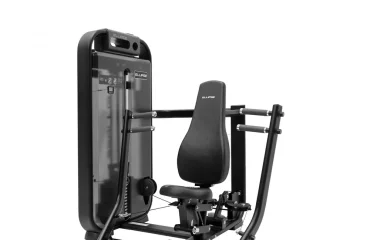
Start new members deliberately light. The first two or three weeks exist to let connective tissue and technique catch up with enthusiasm, not to establish a maximum. Clubs that push load in week one collect their injuries in week four. On selectorised machines that induction is quick, because the movement path is fixed and the load can be set precisely without a spotter.
Rest periods are part of the prescription
One to two minutes between sets is the usual working range for hypertrophy-oriented training, long enough to repeat the set with good technique and short enough to keep the session within the hour your members have. Strength-focused work needs longer, and circuit-style conditioning needs less. The point for an operator is that rest is prescribed rather than left to whoever is looking at their phone, because rest length changes both the training effect and how many members your floor can serve per hour.
You cannot progress what you do not record
The single biggest failure of progressive overload in a commercial setting is that nobody writes anything down. A member who does not know last week’s load cannot beat it and defaults to what feels comfortable. Whether you use an app, a card at reception or a printed sheet on the machine matters far less than that the habit exists and that staff ask about it.
A record also gives your instructors something concrete for the eight-week review, and it gives you the evidence that the club is producing results, which is the argument that renews memberships.
Nutrition supports the progression, it does not replace it
Training creates the stimulus; food supplies what the body rebuilds with. General guidance is defensible and useful: protein intake in the region of 1.5 to 2 grams per kilogram of bodyweight per day for members training for muscle gain, from meat, fish, dairy, eggs or a protein supplement; complex carbohydrates such as wholegrains, rice, pasta or potatoes to fuel sessions and restore muscle glycogen; and dietary fats from sources such as avocado, nuts, seeds and oily fish as a necessary part of a balanced diet.
Be careful with the claim that eating more fat raises testosterone and therefore builds muscle. Very low fat intake is not advisable, but adding dietary fat is not a growth strategy, and the hormonal fluctuations around a training session do not drive hypertrophy in the way popular articles suggest. Anything more specific than general guidance belongs to a registered dietitian, and referring out protects both the member and your club.
Supplements follow the same rule. Gainers, branched-chain amino acids, creatine and vitamin products are supplements to a diet, used responsibly and according to individual need, not a substitute for the diet or for the training.
What this means for your equipment mix
A floor that supports genuine progression needs three things: guided stations with usable increments for the majority of members, free-weight capacity for those who have outgrown them, and enough duplication at the popular stations that nobody skips a planned set because of a queue. Weight benches and racks and cages cover the second of those, and the balance between the three is what an equipment plan is really deciding.
FAQ
How often should load increase?
For a beginner, often small weekly increases are achievable; for an experienced member, progression may take several weeks and may come through repetitions rather than load. What matters is that the direction is consistent and that it is documented.
Can progressive overload be applied on machines only?
Yes, and for most members it should be. The limitation is the size of the increment on the weight stack, not the machine itself. Check the increment before specifying, especially for a facility with many beginners or rehabilitation users.
What standard should the equipment meet?
Indoor equipment in a facility open to third parties is specified to EN ISO 20957-1 class S, the professional class. Class S is the requirement for commercial use.
Does this apply to older or deconditioned members?
The principle is the same and the starting load is lower. Fine load increments matter more here than anywhere else, which is why guided stations dominate in rehabilitation and senior programmes.
Specifying a floor that lets members progress
If your members plateau on the same stations every year, look at the load increments before you look at the programme. Send us your floor plan, your member profile and the stations you already have, and we will come back with a configuration and a priced proposal. Start with our quote request form.