Professional Cable Machines for Gyms and Studios
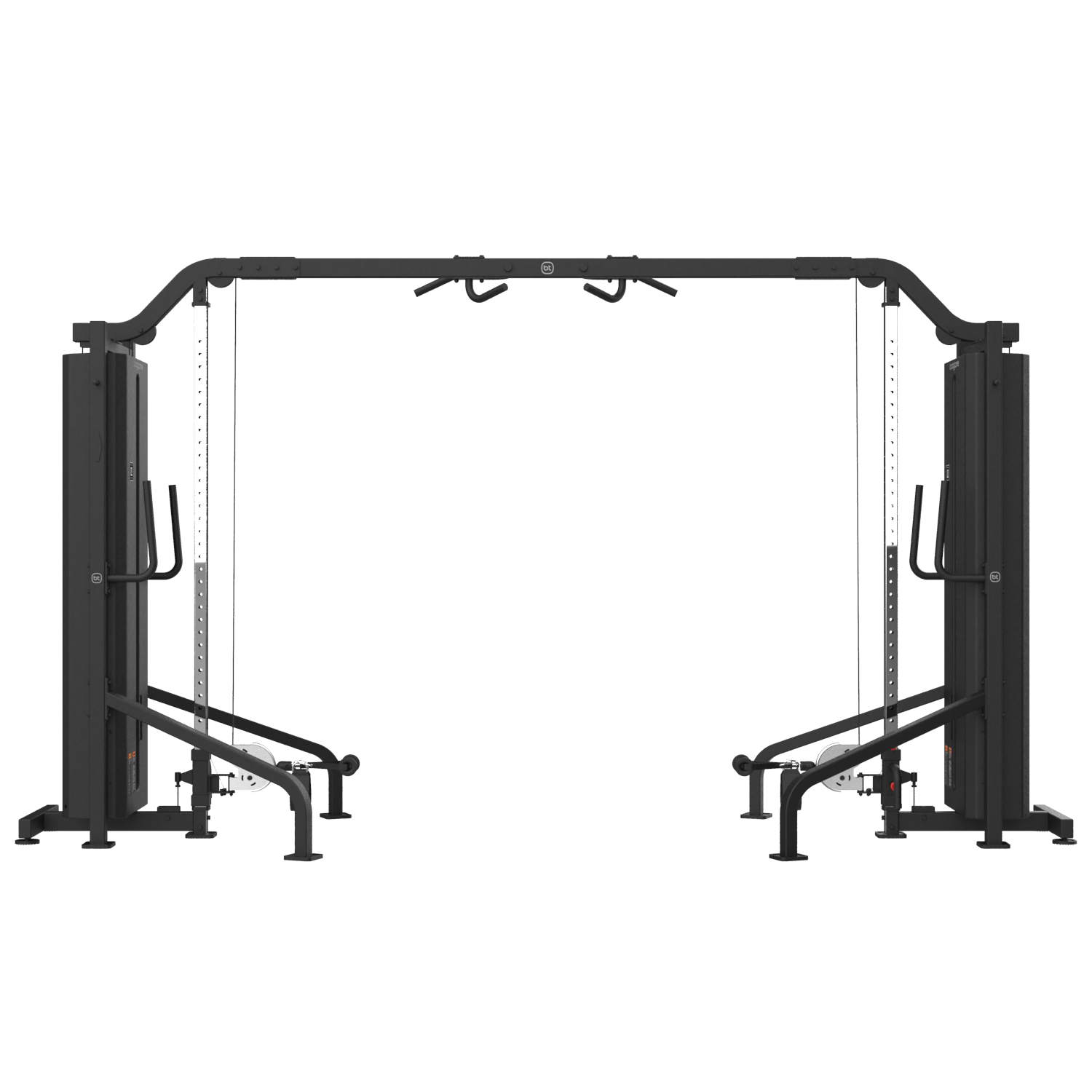
Ask any gym operator which single machine returns the most training value per square metre and the cable station is usually near the top of the list. A cable machine turns one footprint into a full-body training tool: the line of pull can be set high, low or horizontal, resistance is adjustable in seconds, and one frame serves beginners in a small group class and experienced lifters on the same afternoon. Light In Fitness supplies professional cable machines and crossover stations to clubs, studios, hotels and sports centres across Europe.
Why a cable station earns its floor space
Free weights and plate-loaded machines each solve part of the training programme. A cable station solves several at once. Because the load runs through a pulley system rather than a fixed lever, the user chooses the movement path instead of following one imposed by the frame. That single property is what allows a coach to programme pressing, pulling, rotation and rehabilitation work on the same equipment.
For an operator, the consequence is commercial rather than technical. A machine that covers many exercises reduces the number of single-function stations needed to fill a room, shortens queues at peak hours, and keeps the training floor usable when the club is busy. It also suits personal training, where a coach needs to move quickly between exercises without walking a client across the gym.
The Light In Fitness cable range
The catalogue covers the full spread of professional configurations, from compact dual-pulley personal trainer units to multi-station crossovers designed for large clubs. Browse the cable stations category for the full overview, or look at the Bodytone cable crossover line if you are specifying a central station for a large training floor.
A compact reference such as the Bodytone FCPT personal trainer cable station shows what a two-pulley unit delivers in a personal training studio: adjustable resistance on both sides, a small footprint and a frame built for continuous commercial use.
How to specify the right machine
Four questions settle most specifications:
- What is the training programme? Group classes, personal training, rehabilitation and strength work put very different demands on the number of pulleys and the range of attachments.
- How much space is available? A crossover needs clear width for both users plus circulation. Measure the usable area, not the room.
- How many users at peak? The number of simultaneous training positions determines whether one multi-station unit or several smaller units is the better answer.
- What is underneath? Cable stations are heavy and are usually bolted or ballasted. The flooring and the slab specification belong in the same conversation as the machine.
Ceiling height is the constraint most often missed. High pulley work and overhead attachments need clearance above the frame, and a room that looks generous on plan can be ruled out by a low soffit or a service duct.
Maintenance: cables and pulleys
Cable machines are mechanically simple and last a long time, provided the moving parts are inspected on a schedule. Build three checks into your routine:
- Inspect the cables for fraying, flat spots and stiffness, particularly where the cable enters a pulley.
- Check that pulleys turn freely and that the guides are clean, so the cable is not running against an edge.
- Keep the moving parts lubricated according to the manufacturer documentation, and record each inspection.
A cable is a wear part. Replacing one on schedule costs a fraction of the downtime caused by a station taken out of service in the middle of a busy week. Our after-sales team supports operators with maintenance guidance and replacement parts for the equipment we supply.
Frequently asked questions
Can one cable station replace several machines?
It can cover a wide range of movements, which is why it is often the anchor of a functional zone. It does not replace heavy barbell work or the specific loading of dedicated plate-loaded machines, and most clubs use both.
Is a cable machine suitable for rehabilitation work?
Cable resistance is easy to adjust in small increments and lets the user control the movement path, which is why cable stations are widely used in rehabilitation and reconditioning settings. Programming should of course follow the clinician in charge.
How much clearance should be planned around the machine?
Allow working space for a user at each training position plus a circulation route behind them. We check this against your floor plan before confirming a configuration.
What documentation is supplied?
Assembly and maintenance documentation ships with the machine, and the applicable warranty is confirmed on the quotation for each reference.
Request a configuration and a quotation
Send us your floor plan, the disciplines you programme and the number of users at peak hours, and we will propose a cable configuration with a costed breakdown. Start here: request a quote.