Converging Chest Press Machine: The Professional Guide for Gym Operators
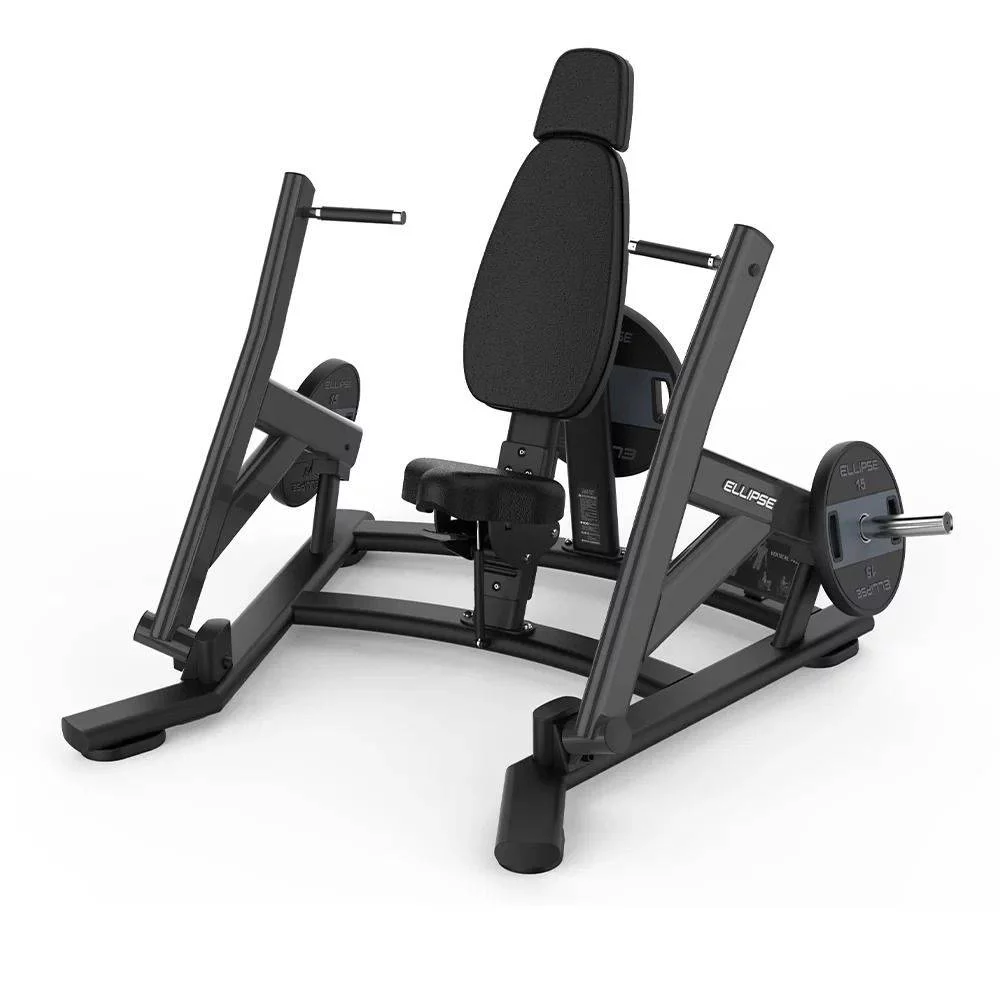
The converging chest press is one of the few strength stations that almost every commercial facility ends up buying. It targets the pectorals through a pressing path that converges as the arms extend, reproducing the natural arc of the shoulder joint instead of forcing a fixed straight line.
What converging actually means on the gym floor
On a conventional press, the two handles travel on parallel rails. On a converging machine, they move towards each other as the movement finishes. That single design choice changes the exercise: the inner portion of the chest is recruited at the end of the range, the shoulders stay in a safer position, and the member feels a movement close to a free-weight bench press without needing a spotter.
For an operator, this matters commercially. A converging press is one of the stations that beginners can use unsupervised on day one, and that experienced members keep in their programme. It rarely sits idle, which is exactly what you want from equipment occupying two square metres of leased floor space.
Plate-loaded resistance: why commercial floors prefer it
Our converging presses use plate-loaded resistance rather than a selectorised stack. Discs are added or removed on the loading pins, so the increment is decided by the member and the plates you stock, not by a fixed pin ladder. Three consequences follow.
First, progression is finer: a member can add a small disc rather than jumping a whole stack increment. Second, maintenance is simpler, because there is no cable, no pulley path and no weight stack guide rod to align — the loads act directly on the lever arm. Third, the perceived value is higher; plate-loaded stations read as serious training equipment, and that shapes how a prospect judges your gym during a trial visit.
The full family is grouped in the Gold Line converging range, and the pressing stations specifically in the chest press machines category.
The details that decide a ten-year purchase
Padding is the first wear item in any club. Seat and back pads are upholstered for sustained daily use, and the handles are padded for grip comfort when hands are chalked or damp. Adjustable footrests give a stable starting position, which is what allows a shorter member and a tall member to use the same station without either of them losing back contact.
Integrated disc storage horns are not a cosmetic feature. They keep loose plates off the floor, which removes the most common cause of trip incidents and of scratched flooring around a station, and they cut the time a member spends walking to the plate tree between sets.
Where it sits in a full strength line-up
A converging chest press is a horizontal pushing station. To build a balanced floor you pair it with a pulling station and a lower-body station, so that a member can complete a full session without queueing on one machine. Facilities that run circuit-style programming usually place the press next to the row and the lat pulldown, keeping the pushing and pulling pair within a few steps of each other.
Frequently asked questions
Is a converging press suitable for beginners?
Yes. The guided path is the main reason it is recommended for new members: the machine controls the trajectory, so the risk of an uncontrolled bar over the chest does not exist.
Plate-loaded or selectorised for a commercial club?
Both are professional solutions. Selectorised stacks suit high-turnover circuits where speed of adjustment matters most; plate-loaded suits strength-oriented clubs and cross-training gyms where members already handle discs.
How much space should I plan around the station?
Plan clear access on both sides for loading and unloading plates. The exact footprint and clearance figures are given on each product sheet, and our team checks them against your floor plan before quoting.
Specifying your chest press
Choosing a pressing station is a decision about your whole strength area, not about one machine. Send us your floor plan, your member profile and your target number of stations, and we will come back with a configuration and pricing: request a quote.