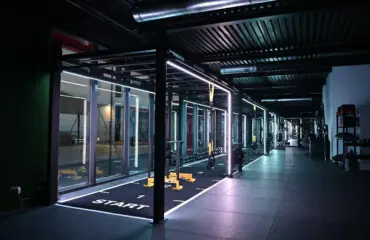
Professional Gym Accessories FAQ: Choice, Safety, Durability and Budget
Le petit matériel détermine autant la durée de vie perçue d'une salle que les machines : c'est lui qui casse, s'use et se remplace le plus souvent. Le choix porte sur les revêtements, les coutures et les points de fixation, pas sur la variété des références. Cette FAQ traite le choix, la sécurité, la durabilité et le budget des accessoires fitness, CrossFit et HYROX.
Small equipment and accessories are usually what separates a facility that ages well from one that wears out fast. Chosen properly they improve safety, member progression and session variety – and they protect the margin, because less breakage means fewer complaints, fewer emergency replacements and members who stay. This FAQ covers what makes an accessory professional, what to buy first, the technical criteria that actually matter, the specific requirements of cross-training and HYROX, flooring, storage, maintenance and purchasing strategy.
1. What does professional actually mean?
How does a professional accessory differ from a consumer one?
A professional accessory is designed for four conditions that a private setting never imposes:
- High rotation – many different users, several times a day, with no shared sense of ownership.
- Impact – drops, abrasion, knocks against other equipment.
- Frequent cleaning – surfaces and coatings that survive daily disinfectant.
- Serviceability – spare parts, replaceable wear items and a supply chain that still exists in three years.
That last point is the one most often forgotten at purchase and most often regretted afterwards. Start from a robust, expandable base rather than from the cheapest line item: the professional fitness accessories range is built for that.
Why do accessories weigh so heavily on member satisfaction?
Because they are the objects people touch constantly: handles, grip, stability, weight accuracy, plate rebound, the state of the wall balls, whether the ropes still turn. Members rarely comment on the specification of a machine; they comment immediately on a dumbbell whose head is loose or a rope whose handle rattles. A stock that looks clean and solid changes perception faster than any new machine.
2. Equipment families: what to buy first
The essential list
- Dumbbells and their racks – never buy the dumbbells without the rack.
- Kettlebells – a coherent progression, not a random set of weights.
- Barbells and plates, including bumpers wherever drops are allowed.
- Benches, with the safety accessories that go with them.
- Bands, tubing and handles – cheap, heavily used, and consumable.
- Wall balls and medicine balls.
- Skipping ropes.
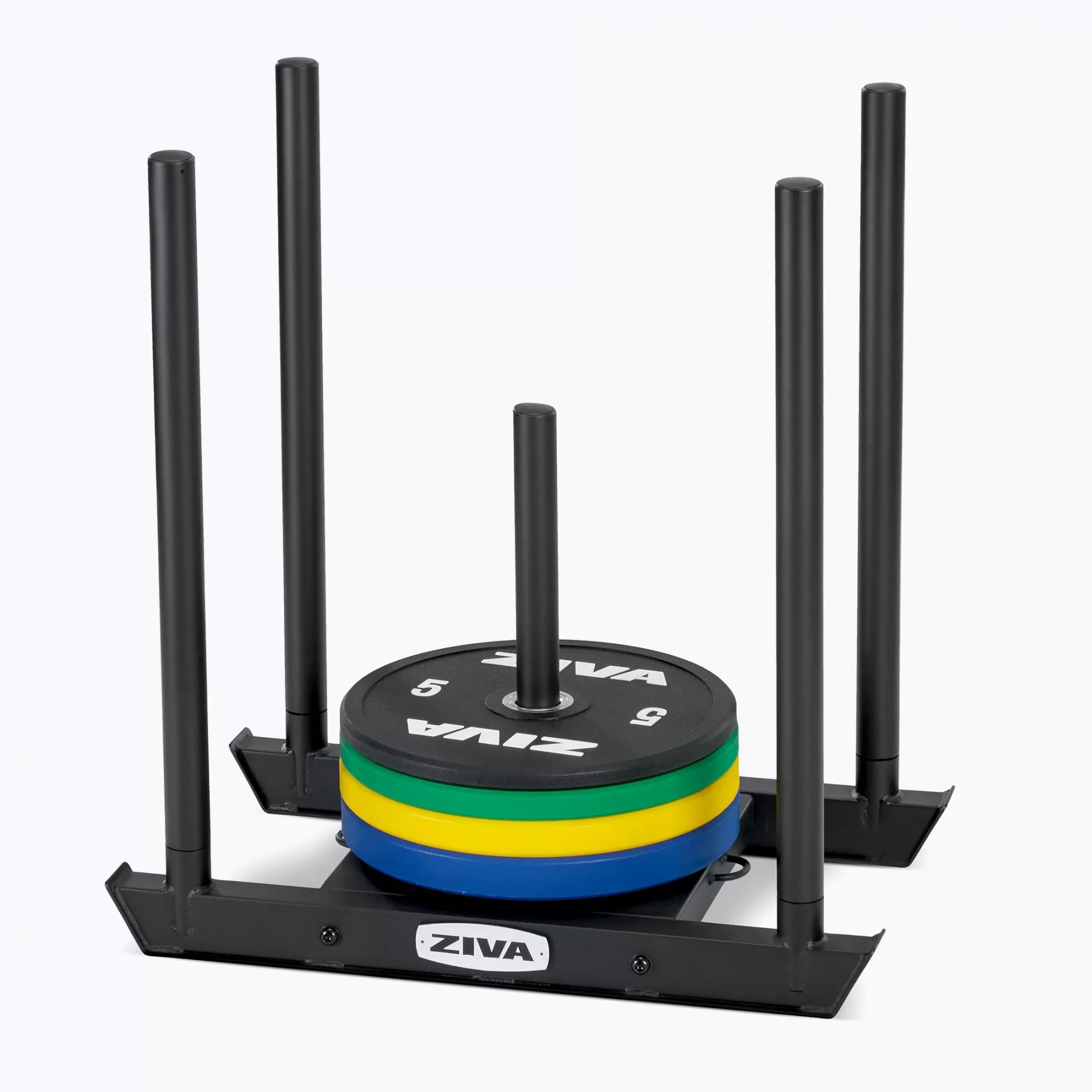
- Sleds, harnesses and pulling ropes for conditioning and HYROX formats.
- Sandbags for carries, lunges and circuits.
- Storage – racks, plate trees, hooks, bins. It belongs in the first order, not the second.
The second wave
- plyo boxes, gymnastic rings, suspension straps, pull-up grips
- farmer handles and other carry implements
- ab mats, exercise mats, foam rollers and mobility tools
- wall clocks, interval timers and counters, depending on the concept
For a structured functional zone rather than a pile of kit, the starting point is a rig: see the CrossFit and HYROX cages range.
3. Technical criteria that actually matter
Dumbbells
- Type: hex or round, urethane or rubber, fixed or professional adjustable.
- Weight tolerance: decisive in a professional setting, where the same pair is used by dozens of people who track their loads.
- Impact resistance: head, handle and above all the junction between them.
- Handle: knurling and grip, diameter, corrosion-resistant finish.
- Storage: a stable rack. An unstable rack produces both breakage and injuries.
Kettlebells
- Smooth, even handle with no casting ridge – this is what decides whether a snatch tears a hand.
- Stable base.
- Clear weight marking, ideally colour-coded.
- Durable finish that survives cleaning products.
- A coherent range so progression is continuous rather than a jump from one bell to the next.
Olympic barbells
- Steel and tensile strength – a bar that does not take a permanent bend under normal club use.
- Sleeves – bushings or bearings, with even rotation.
- Knurling – grip without being aggressive enough to shred hands in a group class.
- Coating – corrosion protection matters more than most buyers expect, particularly in humid rooms and near pools.
- Intended use – weightlifting, powerlifting or multipurpose. Mixing the three in one inventory guarantees that none of them is right.
Plates: bumper, steel, fractional
- Bumpers: controlled rebound and durability, essential wherever drops happen.
- Steel: compact and suited to heavy loading, but far harder on the floor.
- Fractional plates: fine progression, and one of the cheapest ways to keep members progressing.
Plate choice is inseparable from floor choice: see the rubber gym flooring tiles range before ordering either.
Skipping ropes: why do some die so quickly?
Low-grade cable, fragile handles, an adjustment that loosens in use, and an abrasive floor. In a professional setting a rope is an intelligent consumable: budget for replacement, store it off the floor, and give it a surface it can survive.
Wall balls and medicine balls
Reinforced stitching, a surface that cleans easily, shape retention over time, consistent weight and legible marking. Buy the structure and the targets before buying balls in volume.
Bands and tubing
Stable resistance, appropriate width and length, and storage away from UV and damp. Bands left on the floor have a fraction of their normal life; hooks and dedicated bins solve the problem at negligible cost.
4. Cross-training and HYROX: the minimum viable kit
Cross-training core
- barbells, bumpers and collars
- a rig with pull-up bars and rings
- kettlebells and dumbbells
- wall balls
- skipping ropes
- plyo boxes
- sandbags
- an interval timer and a simple whiteboard
- flooring specified for the heavy zones
HYROX-oriented facilities
HYROX formats are built around stations, so the inventory has to be fluid and impact-resistant above all:
- ski trainer, rower or air bike, depending on the concept
- sled push and sled pull with the corresponding loads
- a running or pushing lane compatible with sled work and sprints
- heavy kettlebells for carries and sandbags for lunges
- wall balls and targets, mounted on the structure rather than improvised
5. Flooring and protection
Which floor for a strength or drop zone?
- Thick rubber tiles across the heavy zones.
- Dedicated lifting platforms wherever drops are routine rather than occasional.
- Protection under racks, rigs and storage feet, where point loads concentrate.
Noise and vibration
Adequate thickness in the heavy zones, drops confined to designated areas rather than allowed everywhere, storage that prevents dumbbells and plates falling in the first place, and a correctly specified underlay. Noise complaints from neighbouring tenants are a floor problem long before they are a members problem.
On fire performance: flooring in a public building has to meet the reaction-to-fire classification required by the regulations that apply to your building and its use. That classification is set locally and must be confirmed for your project rather than assumed from a catalogue; ask for the classification report with the technical data sheet.
6. Storage: the underestimated lever
Why storage is a performance purchase
Because it reduces breakage (bars falling, plates hitting each other), injuries (cluttered floor space) and wasted time for both members and coaches. It is the single line most often cut from a first order and most often added within the year.
One simple rule: every object has a place
- Dumbbell racks inside the dumbbell zone, not across the room.
- Plate trees next to the barbell stations they serve.
- Hooks for bands and ropes.
- Bins for small items – collars, grips, straps – which otherwise disappear.
7. Maintenance routines
Daily
- Wipe handles, bars and dumbbells.
- Return everything to its storage position; nothing sleeps on the floor.
- Quick visual inspection: wall ball stitching, rope cables, loose collars.
Weekly and monthly
- Check collars, pins and the tightness of all fixings.
- Inspect bars for rotation, play and corrosion.
- Deep clean tiles and platforms.
- Sort the consumables and remove what is past its life: bands, ropes, grips.
8. Budget and purchasing strategy
Why do prices vary so much?
- materials, manufacturing tolerances and finishes
- impact resistance
- traceability, after-sales service and parts availability
- warranty terms and the intensity of use they actually cover
A strategy that works
- Buy heavy-duty on everything that takes impact: bars, bumpers, dumbbells.
- Standardise – the same formats and the same ranges, so replacement is trivial.
- Invest in storage and flooring at the same time as the equipment, not afterwards.
- Add the options later: carry implements, advanced accessories, specialist tools.
| Package | Objective | Priority contents |
|---|---|---|
| Essential functional | Circuits and personal training | Dumbbells, kettlebells, wall balls, bands, storage |
| Strength base | Strength and progression | Bars, plates, racks, benches, safety, platforms |
| Cross-training | Group versatility | Rig, bars and bumpers, wall balls, ropes, sandbags |
| HYROX-ready | Stations and flow | Ski or rower, sled, kettlebells for carries, sandbags, marking and storage |
9. Delivery, acceptance and warranty
On delivery
- Count the items and check them against the order references.
- Inspect condition and photograph anything that is not right, before signing.
- Test the critical items: bar rotation, wall ball stitching, rack stability.
- Archive the documentation – instructions, warranty terms, maintenance schedule.
What to read in a warranty
- The exclusions for wear items, which is where most disputes start.
- The maintenance conditions that keep the warranty valid.
- Service response times and spare parts availability.
10. Quick answers
Which accessory delivers the most visible improvement?
Usually dumbbells, kettlebells, bands and wall balls – with clean storage. The storage is not an afterthought in that list; it is what makes the rest look and stay professional.
Can cross-training or HYROX formats run without heavy equipment?
They can, but session quality and safety rise sharply with a properly sized inventory: flooring, storage and clearly defined stations.
What is the worst enemy of professional equipment?
Disorder. Good storage plus enforced tidying rules extend the life of everything else on the floor.
Building a coherent inventory
The objective is not to accumulate references; it is to build an inventory that is coherent across real usage, safety, storage, flooring and maintenance, so the equipment lasts and the space keeps flowing. Send us your floor area, your class sizes, your concept and your floor and noise constraints, and we will return a prioritised purchase list – request a quote.
Réalisations documentées
- Dalles et sols sportifs : livraisons documentées – plusieurs chantiers
- Sol sportif extérieur, square Georges-Vallerey – Taverny (95)