Machines vs Free Weights: Which Training Works Better?
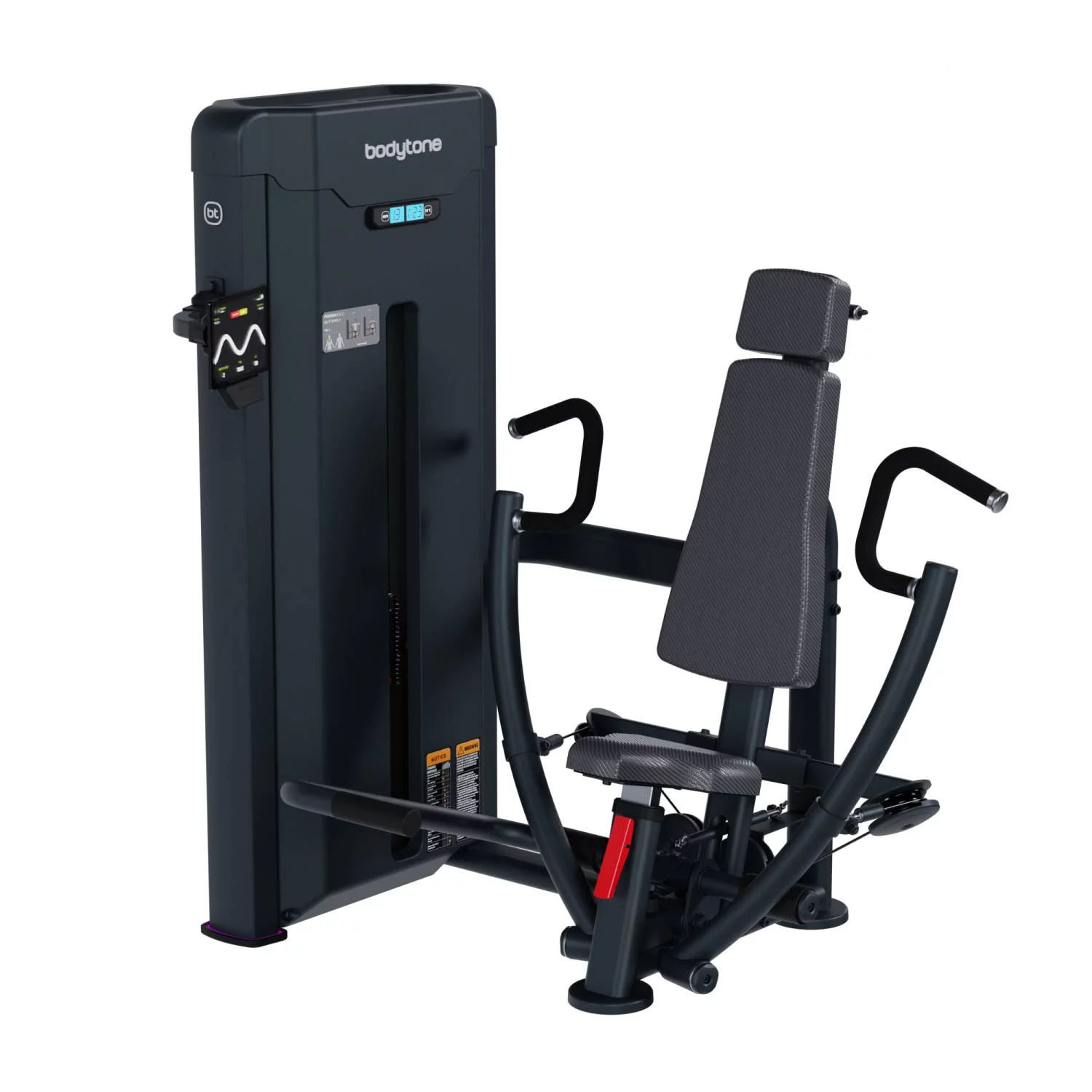
A large share of beginners train exclusively on selectorised machines and walk straight past the barbells and dumbbells. The chest press is by far the most popular machine on any floor: it is simple, it is rewarding, and it is fairly generous about the load the chest is really moving. Members have been known to spend twelve months in a gym without ever training their chest with a barbell or a pair of dumbbells. The result is not worthless – but compare the two methods on the same muscle group and the differences are hard to ignore.
The chest press
Sit down, set the load, take the handles and push forward with the arms. Bring the handles back towards the chest and repeat. All things considered the exercise is not a bad one: the chest gets a reasonable stimulus and the shoulders and triceps are recruited along the way. The seat holds the trunk, the path is fixed, and the user cannot lose the load.
That is exactly why the machine works for a mixed membership. It is the safest way to put a deconditioned or unsupervised member under real load, which is why chest press machines sit near the entrance of most commercial floors rather than at the back.
The flat bench press
Lying on the bench, take the bar, lift it clear of the rack and hold it over the chest. The shoulder and chest muscles contract to hold the bar in position, and the arms have to work to keep it perfectly level and balanced.
Lower it slowly towards the chest and stop when the elbows form a 90 degree angle. Press it back up using the arms in tandem with the chest so the bar stays level and centred over the chest. Then repeat.
What is the actual difference?
The difference between the two methods is which muscles are called on:
- The chest press recruits the chest, the arms and the shoulders.
- Free weights recruit the chest, the arms, the shoulders, the back and, on top of all that, balance.
The bench was designed to involve the chest and triceps only, but there is no denying the involvement of other muscles such as the shoulders and the back. With free weights the whole upper body has to work together to keep the weight balanced, level and in the right position.
It is precisely that phase of adapting to a free, suspended load that increases the number of muscles used to execute the movement correctly. The visible aesthetic results will still show up in the pectorals and triceps, but every small stabilising muscle involved in balancing the weight builds strength through continued flat bench pressing.
Over time the entire upper body will have gained more strength than it would have developed on the machine, because machine work only loads the muscles directly involved in the movement.
What this means when you equip a floor
Read as a purchasing question rather than a training one, the answer is not machines or free weights but the ratio between them and where each sits. A machine area that is too small pushes beginners into free weights before they can control a bar; a free weight area that is too small caps the progress of everyone who has outgrown the machines, and they leave.
In practice that means budgeting for weight benches and racks at the same time as the selectorised line, not in a second phase that never happens. An olympic bench such as the Bodytone FBC08 olympic bench press covers the free weight side of the same movement the chest press covers on the machine side, and the two are complementary rather than redundant.
Frequently asked questions
Are machines a bad choice for beginners?
No. They are the safest way to load a beginner and they produce real results. The mistake is staying on them exclusively for a year.
Why does the chest press feel easier than the bench?
Because the machine removes the stabilising work. The trunk is supported and the path is fixed, so the number displayed on the stack does not correspond to what the same person would press with a free bar.
Should a commercial gym buy machines or free weights first?
Both, in a ratio that matches the membership. A beginner-heavy club leans towards machines; a club with an athletic or cross-training membership needs bar and bench capacity from day one.
Getting the mix right
If you want better results from your training, increase the share of free weight work: it will make the muscles stronger and more evenly developed. And if you are specifying a floor rather than a programme, the same logic applies to the equipment list. Request a quote with your floor area and member profile and the machine and free weight zones can be planned together.
À lire aussi sur le même thème
- Le Squat Bulgare avec Haltères : comment révolutionner votre entraînement des fessiers et des quadriceps
- Dumbbell Triceps Exercises for the Gym Floor
- Rowing haltères. L’exécution est tout !
- The Leg Extension Machine: A Complete Guide to Training the Quadriceps
- Professional Sports Equipment Supplier for B2B Projects