Functional training and CrossFit equipment: everything you need to know
L'équipement fonctionnel se compose de quatre familles : rigs et structures, charges libres, accessoires de conditionnement et cardio sans moteur. Ces éléments occupent peu de surface fixe et libèrent l'espace au sol, indispensable au travail fonctionnel. Le sol doit encaisser les charges lâchées sur les zones de levée.
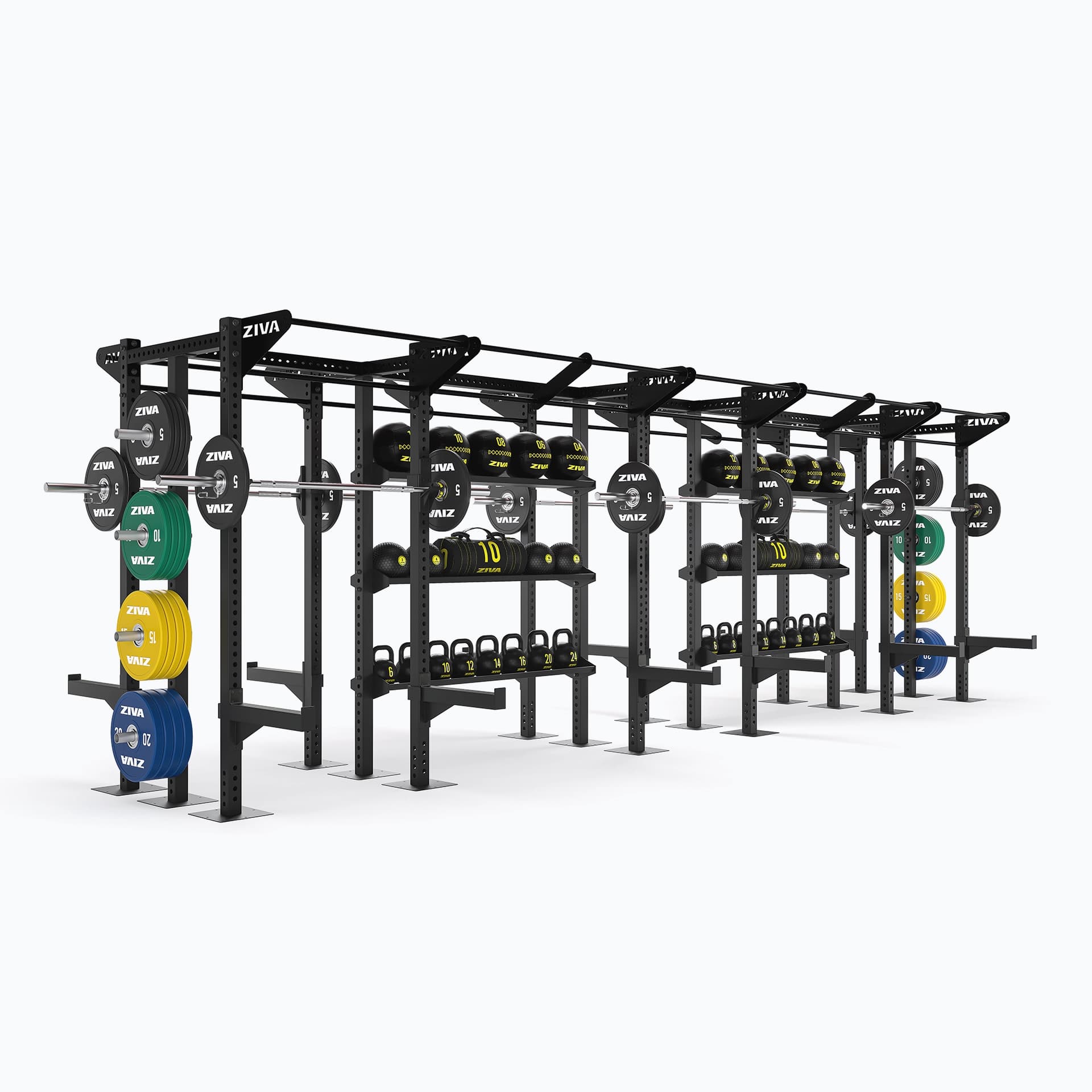
Functional equipment falls into four families: rigs and structures, free weights, conditioning accessories and non motorised cardio. Between them they take up very little fixed footprint and leave the open floor that functional work depends on. The one condition is the floor itself, which has to absorb loads dropped in the lifting zones. This guide runs through the families, what each is for, and what an operator should specify before ordering.
Why functional zones earn their space
A functional area serves several people at once with a small number of assets. A rig that occupies the footprint of two selectorised machines will hold six to eight athletes through a class, and the accessories that go with it can be stored vertically. For a box, that ratio is the whole business model. For a conventional gym, it is the cheapest way to add capacity at peak time without extending the building.
It also broadens what you can programme. A single space can run a coached class, an open gym session and a rehabilitation circuit at different hours, which is difficult to achieve with fixed machines alone.
Family one: rigs and structures
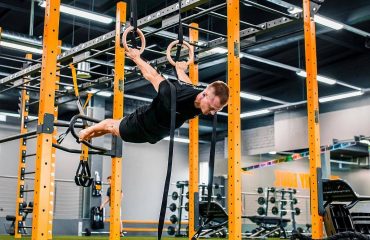
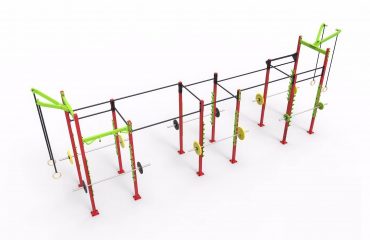
The rig is the backbone of the zone. It carries pull up bars, monkey bars, dip stations, rope anchor points, storage for barbells and plates, and increasingly the squat and rack functions too. Because it is anchored to floor or wall, it turns an empty area into a defined training zone without cluttering it.
When specifying a rig, work from station count rather than from length. Decide how many athletes must train simultaneously at peak, then size the structure so each has a full working envelope, including the swing of a kipping pull up and the landing space in front of a wall ball target. Free standing, wall mounted and full perimeter configurations solve different room shapes, and the choice is usually driven by ceiling fixings and wall construction rather than by preference. Our range of CrossFit and Hyrox cages covers those configurations.
Family two: free weights
Barbells, bumper plates, dumbbells and kettlebells make up the loaded side of the zone. Kettlebells suit swings, cleans, snatches and carries; dumbbells cover unilateral work and everything a barbell cannot reach; Olympic barbells and bumper plates carry the lifting itself.
Specify the increments, not just the range. A commercial kettlebell set that jumps in steps that are too large forces half your members onto the wrong bell, and a dumbbell rack that stops short leaves your strongest members without a working load. Bumper plates matter for a different reason: they let athletes drop the bar safely, and the plate is what protects both the bar and the floor.
Family three: conditioning accessories
This is the family that turns a rig into a programme. Medicine balls and wall balls for throws and rebounds, plyometric boxes at graduated heights for jumps and step ups, climbing ropes for pulling work, battle ropes, abdominal wheels, and suspension trainers anchored to the rig for bodyweight work at any level.
These items are cheap individually and expensive collectively, so buy them by class size. A class of twelve needs twelve of anything used simultaneously, and half a set turns a session into a rota. Storage is part of the specification too: accessories left on the floor are the single most common cause of injury claims in a functional area.
Family four: non motorised cardio
Rowing machines, ski ergometers, air bikes and sleds carry the conditioning load. They are called non motorised for a reason: with no motor there is no power supply to plan for, positioning is free, and maintenance falls to a fraction of a treadmill. Rowing machines in particular work the legs, back, arms and trunk in one movement, which is why they appear in almost every functional programme and in every Hyrox format.
Plan storage for these as well. Rowers that stand upright between sessions release a large amount of floor area, and sleds need a defined push lane rather than a parking spot.
The floor is part of the equipment
Functional zones fail on the floor more often than on the equipment. Lifting areas need heavy rubber capable of absorbing dropped barbells without transmitting the shock into the structure, while the surrounding area can take a thinner specification. Weightlifting rubber tiles exist precisely for this, and specifying them at the same time as the rig is far cheaper than retrofitting after the first complaint from the floor below.
Acoustics deserve the same attention. In a mixed use building, an acoustic underlay under the lifting zone is usually what keeps a functional area viable with neighbours above or below.
Standards and safety
Indoor equipment for commercial use is covered by EN ISO 20957-1 class S, the class intended for supervised and commercial installations. Ask for it in writing, per reference, and be specific about rigs: anchoring calculations and the fixings themselves are part of the safety case, not an installation detail.
Where a functional area is installed outdoors for adult use, EN 16630 applies instead. Children play equipment is a separate world governed by EN 1176-1 with EN 1177 for the surfacing beneath it, and neither ever applies to an adult rig.
Frequently asked questions
What does a functional zone need as a minimum?
A rig sized to your class, barbells with bumper plates, a kettlebell and dumbbell range with usable increments, medicine balls and plyometric boxes to class size, one or two non motorised cardio machines, and a floor specified for dropped loads.
How much floor area should be reserved?
Size from the number of athletes training simultaneously at peak, and allow a full working envelope per athlete rather than a nominal square. The open floor between stations is what the zone is for, so it is not spare space to be filled later.
How do you choose between rig configurations?
Room shape and structure decide most of it. Free standing rigs suit open spaces and avoid loading the walls; wall mounted rigs recover floor area where the wall build up allows it; perimeter configurations suit long narrow rooms. Send us a plan and we will propose the configuration that fits the building.
What maintenance should be planned?
Periodic inspection of rig fixings and anchor points, checks on rope and strap wear, and replacement of consumables such as grips and pull up bar knurling as they wear. Accessories are consumables and should be budgeted as an annual line, not as a one off purchase.
Specifying your functional area
The order matters: define your class size, then the rig, then the loads, then the accessories, then the floor. Working in that sequence avoids the two classic mistakes, a rig too small for the class and a floor that cannot take what the class drops on it. Send us your room dimensions, your ceiling and wall build up and your class format, and we will come back with a configuration and a costed list. Request a quote to start.