How to Choose the Right CrossFit Rig for Your Box
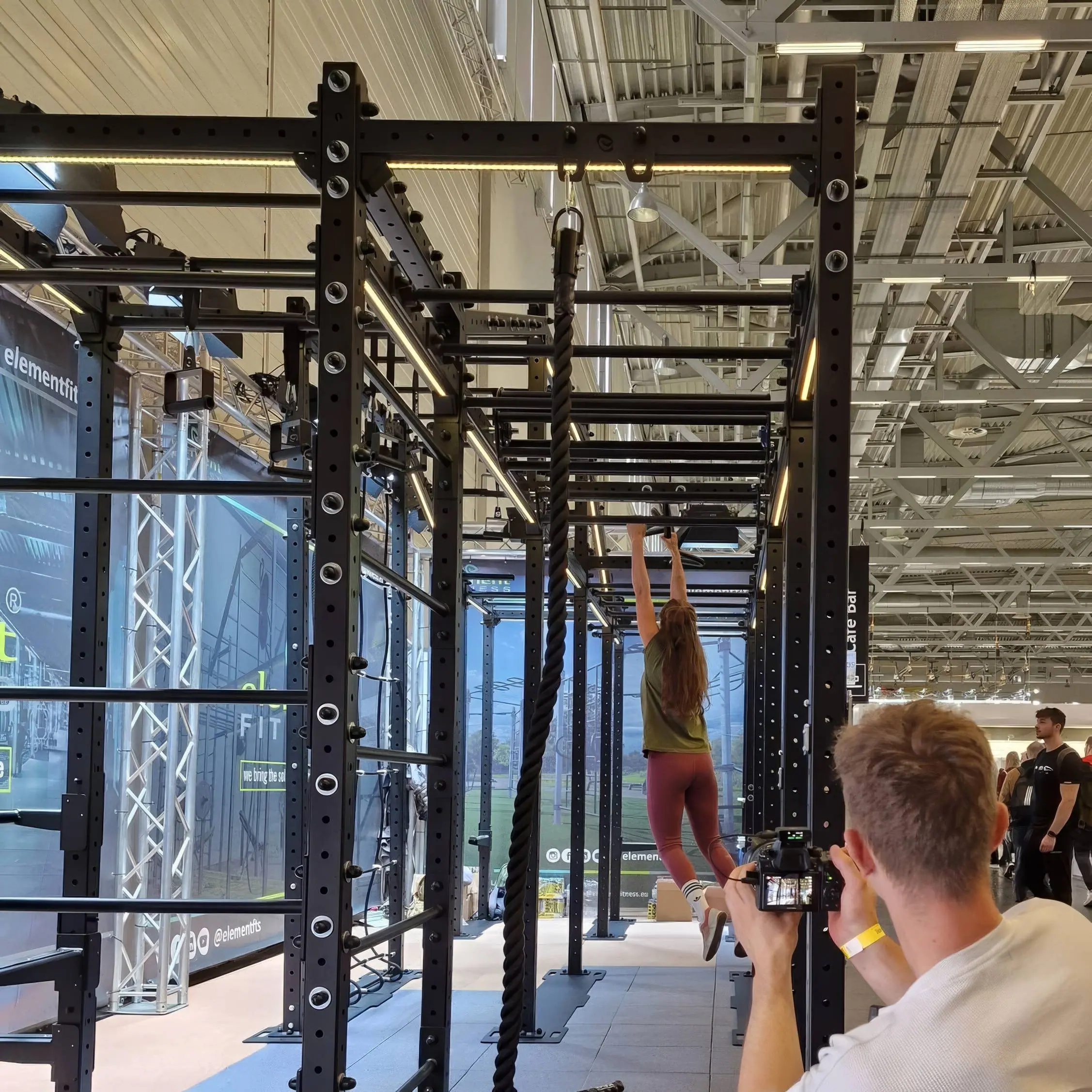
Choosing the right rig for your box is one of the few decisions that shapes everything else. It sets the quality of what you can programme, the number of athletes you can train at once and, above all, the safety of the people using it. It is also the hardest decision to undo: a rig is bolted into your floor, sized to your ceiling and paid for out of the opening budget.
Six factors decide the specification. Work through them in order, and the shortlist usually narrows to two or three configurations on its own.
1. Available space
Measure the space you actually have for the structure, then make sure enough room is left for athletes to move and circulate around it. Height, width and depth all matter, and so does the space needed for accessories and storage, which is consistently underestimated.
Height deserves particular attention. Overhead movements, rope climbs and anything performed above the bar depend on clear height, and no rig configuration can recover height a building does not have. Measure to the lowest obstruction, not to the ceiling: ducting, lighting and sprinkler heads are what determine your usable height.
2. Budget
Set a clear, realistic budget for the structure. Prices vary with size, complexity, brand and the materials used. Just as important, budget for installation, accessories and maintenance as well, since those three items are what turn a quoted structure into a working one.
The comparison worth making is cost per training station rather than headline price. A longer rig that serves twelve athletes simultaneously is often better value than a compact structure that serves six, even when the invoice is larger.
3. Athlete needs
Consider the experience level and needs of your athletes. The structure has to suit their level and offer enough challenge and room for progression. If you train athletes at very different levels, a modular structure that can evolve over time is usually the safer choice.
In practice this means adjustability: bar heights that suit different statures, enough stations that scaling does not create a queue, and attachment points that let a coach modify a movement without moving the athlete to another part of the room.
4. Types of training
Think about the sessions you already run and the ones you want to run. The structure has to be compatible with your programming and allow a genuine variety of exercises. A rig specified around pull-ups alone will constrain you the first time you want to programme rope climbs, ring work or wall balls.
This is also where competition formats enter the discussion. If your timetable includes race-format or Hyrox-style sessions, the structure and the surrounding floor have to accommodate movement between stations, not just the stations themselves.
5. Expandability
Plan for the future and for the possibility of enlarging your box or adding equipment. Choose a modular or extensible structure that can grow with your needs. The practical test is whether additional bays can be added later using the same uprights and connectors, or whether expansion means buying a second, unrelated structure.
Ask this question before you order, not after. Expandability is a design property of the system you buy, and it cannot be added to a structure that was not designed for it.
6. Quality and safety
Choose a structure built from high-quality materials that meets the applicable safety standards. Make sure it is stable and robust and that it can carry the weight of both the athletes and the equipment mounted on it. Indoor training equipment in a supervised commercial facility should be specified to EN ISO 20957-1 class S, the class intended for professional use.
Safety is the absolute priority. Make sure the structure is installed by professionals and that it is inspected and maintained regularly. Anchoring, bolt torque and the condition of wear parts are all part of a rig’s compliance, not optional extras.
Beyond the six factors
- Compare offers from several suppliers.
- Read reviews and feedback from other boxes.
- Ask professionals for quotes and advice.
- Visit supplier showrooms where possible.
Taking the time to choose properly is what creates a training space that is safe, effective and genuinely motivating for your athletes.
Freestanding or wall-mounted?
Most boxes come down to this single question. A freestanding rig works in the middle of a room, allows athletes on both sides and does not depend on the load-bearing capacity of a wall, but it needs floor area and a floor able to take the anchors. A wall-mounted rig recovers floor space and suits narrower rooms, provided the wall has been verified as structurally suitable.
If your requirement sits between the two, or your programming spans several formats, the full range of CrossFit rigs and racks covers configurations from a single squat station to a rig serving an entire class.
Frequently asked questions
What ceiling height does a rig need?
That depends on the structure and on the movements you intend to programme, so it should be checked against the specific configuration rather than a rule of thumb. Measure to the lowest fixed obstruction in the zone, not to the ceiling slab.
Can a rig be extended later?
Only if it was designed as a modular system. Confirm before ordering that additional bays use the same uprights and connectors, since that is what makes a later extension a purchase rather than a replacement.
Does a rig have to be anchored?
Follow the manufacturer’s installation instructions for the configuration concerned. Anchoring requirements form part of the structure’s compliance and should be settled with the supplier before installation, together with any checks on the floor or wall.
What standard applies to indoor training structures?
Indoor equipment for supervised commercial use should be specified to EN ISO 20957-1 class S. Permanently installed outdoor adult training equipment falls under EN 16630 instead, and the two are not interchangeable.
Specifying your structure
Work through the six factors in order and you will arrive at a configuration rather than a wish list. Measure the usable height, set the total budget including installation, define the class sizes you need to serve, list the movements you intend to programme, and only then compare structures.
Light In Fitness has equipped professional training facilities since 2013. Send us your floor plan, your usable height and the formats you intend to run, and we will come back with a configuration and a costed proposal. Request a quote to get started.
À lire aussi sur le même thème
- Essential CrossFit Equipment: A Complete Guide for Box Operators
- Why avoiding snacking is worth it: weight, blood sugar and gut health
- CrossFit Rig or Power Rack: Equipping a Private Training Space
- Functional training in a commercial gym: equipment, layout and programming
- Entraînement Ultime Pour Les Jambes : Les Meilleurs Exercices Et Routine Complète