Aller au contenu
Light In Fitness
  • Strength training
    • Selectorised
      • Strength training
      • Selectorised
      • Smith machines
      • Bodytone Forza
      • Forza FH
      • Gold Line
      • Lexco
      • Bodytone SRX
      • Power Line
      • Authentique range
      • Strong Line
    • Plate loaded
      • Plate loaded
      • Gold Line
      • Etenon Olympic
      • Etenon R8
      • Lexco plate loaded
      • Solid Rock
      • O Live Pro
      • Etenon PC series
      • TITAN range
      • Shock range
      • Lexco LSP series
      • Chest press machines
    • Benches
      • Benches
      • Racks and cages
      • Squat and power racks
      • Barbells
      • Coloured barbells
      • Booty Area
      • Power sleds
      • Multi station gyms
      • Multi station gyms
      • Vertical leg press
      • Cable stations
    • Accessories
      • Accessories
      • Kettlebells
      • Gym storage
      • Special offers
      • Double power racks
      • EVOM4 multi station
      • MT6 indoor cycling
  • Cardio equipment
    • Treadmills
      • Cardio equipment
      • Treadmills
      • Professional treadmills
      • Bodytone treadmills
      • Etenon treadmills
      • Lexco treadmills
      • Outdoor treadmills
    • Exercise bikes
      • Exercise bikes
      • Upright bikes
      • Bodytone bikes
      • Recumbent bikes
      • Lexco seated bikes
      • Cycling bikes
    • Cardio machines
      • Cardio machines
      • Lexco cardio
      • Cross trainers
      • Lexco cross trainers
      • Rowers
      • Ski ergometers
      • Stair climbers
      • Xebex
  • Wellness
    • Cold plunge baths
      • Wellness
      • Cold plunge baths
      • Portable baths
      • Fixed baths
      • Chillers
      • Cold plunge bath accessories
    • Sauna, steam and spa
      • Sauna, steam and spa
      • Sauna and steam room
      • Outdoor saunas
    • Acrylic and rigid spas
      • Acrylic and rigid spas
      • Zodiac pools
      • Pool surfacing
      • Aquatic and wellness
    • Pilates
      • Pilates
      • Inflatable air tracks
  • CrossFit and Hyrox
    • CrossFit rigs
      • CrossFit and Hyrox
      • CrossFit rigs
      • Freestanding rigs
      • Wall mounted rigs
      • Functional rigs
      • Cross training cages
      • Cross training stations
      • Portable structures
    • Ziva
      • Ziva
      • Container gym
      • Parkour and CrossFit parks
    • Floor level MMA cages
      • Floor level MMA cages
      • Podium MMA cages
      • Punch bag rails
      • Tatami mats
      • Roll out mats
    • Standards
      • Standards
      • Prices
  • Street workout
    • Stainless steel Functional Rig worldwide
    • iGreenMill outdoor treadmill worldwide
    • Calisthenics cages
      • Street workout
      • Calisthenics cages
      • Street workout parks
      • Custom configurator
      • Uruk parks
      • Parkour and CrossFit parks
      • Hexagon range
      • Mini outdoor cages
      • Calisthenics cages
      • Stainless workout cages
      • Stainless equipment
      • Outdoor wall bars
    • Stainless steel outdoor
      • Stainless steel outdoor
      • Stainless machines
      • Outdoor gym
      • Steel4Fit
      • TRAINER OutdoorStart
      • TRAINER OutdoorFit
      • TRAINER sets
      • Outdoor strength machines
      • Compact 3 in 1 stations
    • Fitness trail
      • Fitness trail
      • OUTDOOR FITNESS I
      • Adapted and rehabilitation
      • Accessible outdoor
      • TRAINER accessible
      • Galvanised range B
      • Wooden trail
      • Fitness trail stations
      • Obstacle courses
    • Ninja Warrior
      • Ninja Warrior
      • Toroz Ninja and OCR
      • Outdoor Ninja structures
      • Warped walls
      • Parkour
      • Obstacle trail modules
      • Pump tracks
  • Playground
    • Rope play modules
      • Playground
      • Rope play modules
      • Rope play sets
      • Combined rope structures
      • Complex play systems
      • Rope climbing pyramids
      • Rope climbing nets
      • Rope structure parts
    • Diamond Collection
      • Diamond Collection
      • Tubular play structures
      • Play towers
      • Elevated playhouses
      • Bespoke playgrounds
    • Swing sets
      • Swing sets
      • Spring riders
      • Playground roundabouts
      • Playground furniture
      • Children sports parks
      • Kids outdoor fitness
      • Kids cardio machines
      • Mobility wheels
      • Kids balance stations
    • Playground surfacing
      • Playground surfacing
      • Wood chips
      • Operator duties
      • Inspections
  • Rubber flooring
    • Rubber flooring
      • Rubber flooring
      • Weightlifting tiles
      • Fire rated tiles
      • Coloured tiles
      • Wood effect tiles
      • COV A tiles
    • Interlocking tiles
      • Interlocking tiles
      • 7 mm interlocking tiles
      • 6 mm patterned sports flooring
      • Pool surfacing
      • Rubber rolls
      • Sports court rolls
      • Floor underlay
    • Fitness, gym and Pilates mats
      • Fitness, gym and Pilates mats
      • Smooth surface mats
      • Moulded surface mats
      • Roll out mats
      • Tatami mats
    • Outdoor flooring
      • Outdoor flooring
      • Turf sled tracks
      • Turf sled tracks
      • Artificial turf tiles
      • Stable matting
    • Multi-sport courts
      • Multi-sport courts
      • Basketball court tiles
      • Pickleball surfacing
      • Mini modular multisport court
      • Standard modular multisport court
      • Max modular multisport court
      • Modular 3×3 basketball court
      • Multisport and 3×3 complex
    • Sports flooring tiles, deliveries
  • By facility type
    • By facility type
      • By facility type
      • Public sector
    • Buying sports equipment through public tender
      • Buying sports equipment through public tender
      • Supplier file
      • Specification template
      • Specification clauses
      • Funding
    • Case studies
      • Case studies
      • References
    • Standards
      • Standards
      • Warranties
      • After sales
      • Glossary
      • Blog
  • FRENESDE
  • No products in cart.
  • Home
  • Expert guides on professional fitness equipment
  • FAQ
  • Crossfit / Rigs
  • Circuit training: a complete guide for gym operators

Circuit training: a complete guide for gym operators
by Michaël Galy / Thursday, 21 March 2024 / Published in Crossfit / Rigs, Guides Acheteurs
maximisez votre entraînement avec le circuit training guide complet pour booster votre performance

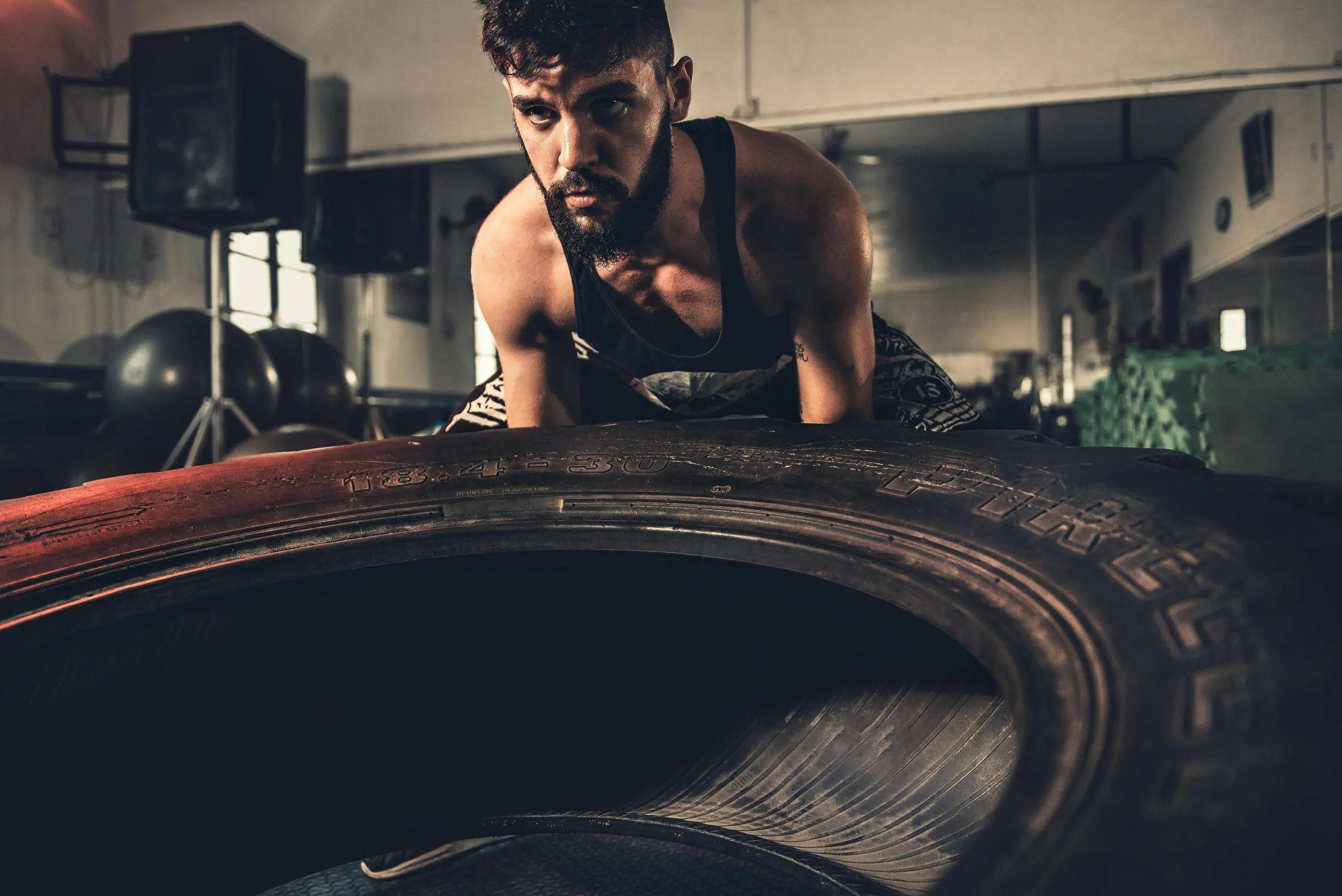
Circuit training is one of the few formats that gives an operator more members trained per square metre without extending opening hours. It is also one of the easiest to get wrong: a badly sequenced circuit creates queues, a badly equipped one creates injuries. This guide covers where the method comes from, how to plan a circuit, how to adapt it to different member profiles, and what a facility actually needs on the floor to run it well.

On this page

  • Where circuit training comes from
  • Planning a circuit
  • Why operators use the format
  • Adapting the circuit to your members
  • Equipping a circuit area
  • Sample circuits
  • Getting the most out of each session
  • Frequently asked questions
  • Planning your circuit area
  • À lire aussi sur le même thème

Where circuit training comes from

The method is not a recent invention. It was devised by R. E. Morgan and G. T. Anderson in 1953 at the University of Leeds, in England, with the original aim of improving strength and endurance at the same time. The objectives have diversified since, but the principle has not changed: a series of exercises performed one after another with short, controlled rest periods. The format is short and intense, and it suits beginners and experienced athletes alike, which is precisely why it works as a group offer in a mixed membership club.

Planning a circuit

Start with the objective. A circuit built for fat loss is not the circuit built for hypertrophy or for endurance, and running one circuit for all three is the most common reason a class format stalls. Once the objective is set, select the exercises. A mix of strength and cardio movements recruits different parts of the body and keeps the session from becoming monotonous, which matters more for retention than any single exercise choice.

Then set the order. Sequencing is not cosmetic: putting squats immediately before skipping leaves the legs unable to perform the second station properly, so alternate the muscle groups deliberately as you move around the circuit. Finally, fix the work and rest times. Rest is necessary but should stay short, because the metabolic effect of the format depends on the density of the work. Write the times on a board at each station rather than leaving them to the instructor memory, and the circuit will run the same way whoever is on shift.

Why operators use the format

Circuit training burns calories through a continuous succession of exercises while building endurance, and it develops muscle across the body by moving from squats to press ups to pull ups rather than dwelling on one pattern. For members who find conventional strength work monotonous, the variety is the retention argument.

Time efficiency is the second argument, and commercially it is the strongest one. A circuit session delivers a complete workout in a fraction of the time a machine floor circuit takes, which lets you sell it to members who cannot block out an afternoon and would otherwise not train at all. The enjoyment factor is real too: alternating stimuli keeps the muscles adapting and keeps members coming back, and a class members enjoy is a class that fills.

Adapting the circuit to your members

By objective: the circuit can be personalised for weight loss, endurance or muscle definition, and the same station layout supports all three if the work to rest ratio and the loads are changed accordingly.

By level: there is a circuit for everyone, from complete beginners to advanced athletes. The exercises are what changes, not the format, which is why one circuit area can serve a beginner class at 10 am and an advanced class at 7 pm.

By equipment: circuits can be run using bodyweight alone, which makes the format viable for hotels, campsites and corporate sites with limited space. In a commercial club, however, the format earns its place when it is properly equipped, because equipment is what allows loads to be progressed and stations to be run in parallel.

Equipping a circuit area

Three purchases do most of the work. A functional training rig anchors the area: it provides pull up bars, attachment points, storage and, crucially, a fixed geometry that tells members where each station is. Around it, a set of fitness accessories covers the loaded stations, kettlebells, dumbbells, medicine balls, ropes and boxes, and these are the items that let one circuit serve three ability levels.

The third purchase is the one most often underestimated. Rubber gym flooring tiles take the impact of dropped loads, protect the slab, and cut the noise transmitted to the rooms below, which in a mixed use building is often the difference between a class that can run and one that cannot. Specify the thickness against the drop heights involved, and where the building requires a fire classification, carry the exact class through to the order, smoke index included.

All indoor equipment for a facility open to multiple users should be specified to EN ISO 20957-1 class S. If your circuit runs outdoors, adult outdoor equipment falls under EN 16630 instead, and the free space around each station has to be respected in the layout.

Sample circuits

For beginners: squat, press up on the knees, a 30 second plank, alternating lunges and skipping rope to finish. The aim at this level is movement quality and completing the loop, not load.

For intermediate members: jump squats, standard press ups, towel assisted pull ups, mountain climbers and burpees. The circuit gets denser rather than longer.

For advanced members: squats with star jumps, feet elevated press ups with a hand clap, pronated grip pull ups, side planks and a 100 metre sprint. At this level the limiting factor is usually recovery between rounds rather than any single station.

Getting the most out of each session

Warm up first. A proper warm up reduces injury risk before the body is put through an uninterrupted sequence of exercises, and in a class context it is also the instructor opportunity to check who is training with what limitation. Breathing is the next lever: breathe deeply and in rhythm with the movement so the muscles get the oxygen they are asking for.

Progression should be gradual. Start moderately and increase the intensity and the complexity of the exercises over time; a circuit that is too hard on day one produces drop outs, not results. Nutrition supports the rest: a balanced diet adapted to the individual sustains the training and keeps energy from collapsing mid session.

Frequently asked questions

How much space does a circuit area need?

Less than most operators assume, because stations are used in rotation rather than simultaneously by everyone. The determining factors are the number of stations, the free space each piece of equipment requires and the circulation between them, all of which are set in the layout study.

How many members can one circuit serve?

One member per station, plus rotation. The practical ceiling comes from the number of stations you can fit and staff, not from the format itself.

Does circuit training replace a strength floor?

No. It complements it. Circuits deliver conditioning and variety; the strength floor delivers progressive loading. Clubs that run both keep two different member populations satisfied with one facility.

Planning your circuit area

A circuit area is one of the cheapest capacity increases available to a facility, provided the layout, the equipment and the flooring are decided together rather than one at a time. Send us the surface area available, the class sizes you want to run and the profile of your members, and you will get a station plan and a costed configuration. Request a quote and our team will design the circuit around your room.

À lire aussi sur le même thème

  • How to Choose the Right CrossFit Rig for Your Box
  • Essential CrossFit Equipment: A Complete Guide for Box Operators
  • Why avoiding snacking is worth it: weight, blood sugar and gut health
  • Barres contre Haltères : Guide Complet pour Maximiser vos Performances en Musculation
  • Les Meilleurs Exercices pour Sculpter vos Jambes et Fessiers : Guide Complet pour un Bas du Corps Tonique

Tous les articles « Crossfit / Rigs »

Tagged under: guide

About Michaël Galy

Michaël Galy est fondateur et directeur de Light In Fitness, expert en équipements de fitness et musculation professionnels depuis 2013. Fort de plus de 15 ans d'expérience dans l'équipement sportif professionnel, il accompagne les salles de sport, box CrossFit, hôtels, collectivités et établissements de santé dans leurs projets d'aménagement fitness de A à Z. Consultant reconnu en France et en Europe, Michaël Galy a équipé plus de 500 établissements professionnels. Il partage régulièrement son expertise sur les tendances fitness, les normes de sécurité et les meilleures pratiques d'aménagement des espaces sportifs professionnels.

What you can read next

Comment Choisir son Parcours Santé pour sa Ville - Le Guide Ultime par Light In Fitness
How to Choose an Outdoor Fitness Trail for Your Town: The Complete Guide
Parkour Ninja Warrior Complet 7 Postes de travails
Outdoor sports facilities and leisure parks: what to install and why
gazon artificiel piste crossfit 20m x 2m vert curled (poils courts)
Artificial Turf for CrossFit: Choosing the Right Gym Surface
TOP
This website uses cookies to improve your experience. We assume you are happy with this, but you can opt out if you wish. Cookie settingsAccept
Privacy policy

Privacy policy

This website uses cookies to improve your browsing experience. Cookies classified as necessary are stored in your browser because they are essential to the basic operation of the site. We also use third party cookies that help us analyse and understand how you use this site. These cookies are stored in your browser only with your consent. You can also disable these cookies. Disabling some of them may affect your browsing experience.
Necessary
Always Enabled
Necessary cookies are essential for the website to work properly. This category only covers cookies that provide the basic functionality and security features of the site. These cookies do not store any personal information.
Non-necessary
Cookies that are not strictly necessary for the site to work et qui sont utilisés spécifiquement pour collecter des données personnelles via des analyses, des publicités ou d\'autres contenus intégrés sont qualifiés de cookies non nécessaires. Il est obligatoire d\'obtenir le consentement de l\'utilisateur avant d\'exécuter ces cookies sur votre site web.
SAVE & ACCEPT
My quotation request 0