Hamstring machines: the complete buyers guide
La machine à ischio-jambiers travaille la flexion du genou, mouvement que le squat et la presse ne sollicitent que partiellement. Le déséquilibre entre quadriceps et ischio-jambiers est l'un des facteurs de risque les mieux documentés pour le genou. Les versions assise et allongée diffèrent par l'angle de hanche et le recrutement obtenu.
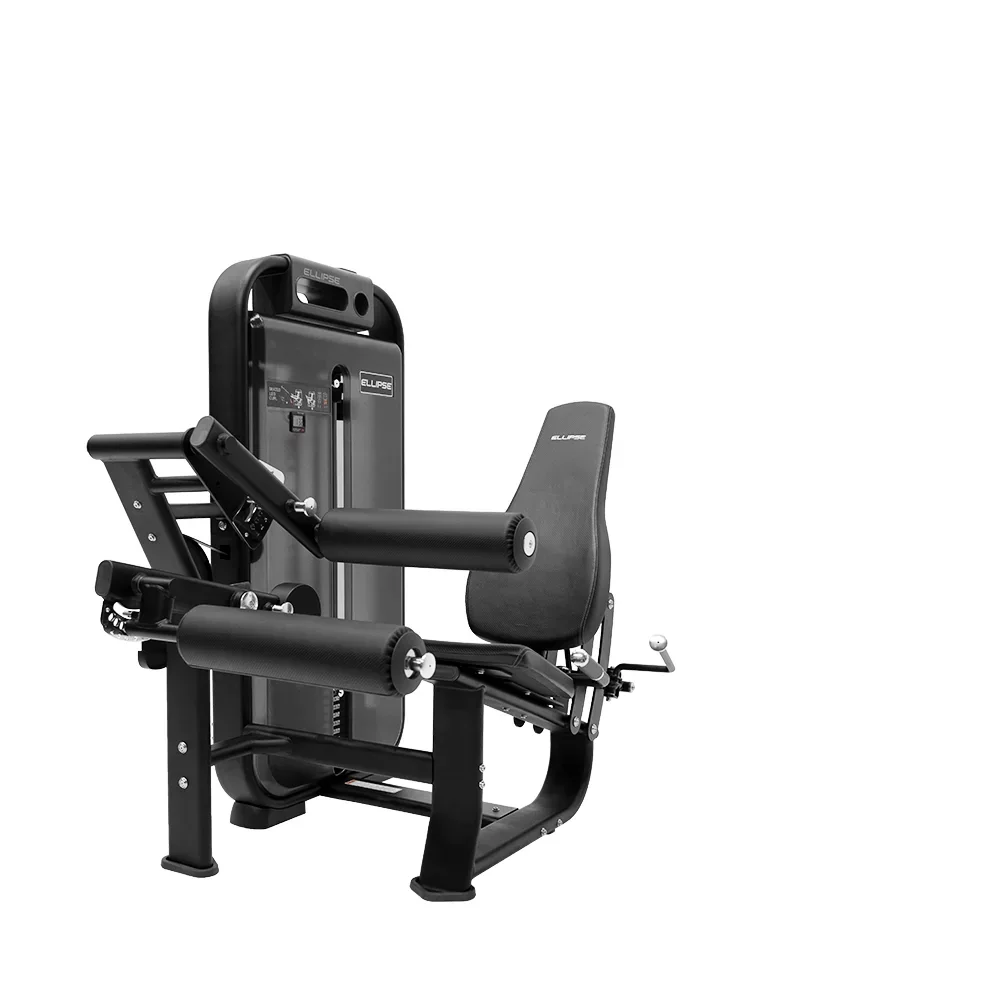
A hamstring machine trains knee flexion, a movement that squats and leg presses only load in part. The imbalance between quadriceps and hamstrings is one of the best documented risk factors for the knee, and the seated and lying versions of the machine differ in hip angle and therefore in the recruitment they produce. Hamstring work is essential for balanced development and for injury prevention, and a dedicated machine is the most reliable way to target these muscles on a gym floor. This guide covers what the machines do, the different types, how to choose one for a professional facility and how to programme the work.
What is a hamstring machine?
A hamstring machine is a piece of gym equipment built specifically to work the muscles at the back of the thigh. It allows leg curls to be performed seated, standing or lying prone, providing controlled resistance to strengthen and tone the hamstrings through a defined path of movement. Because the machine fixes the trajectory, the load can be increased without the technical risk that comes with loading the same muscle group through free weight movements.
Why hamstring training matters
Training the hamstrings brings several benefits that matter to any facility with a mixed membership:
- Better sporting performance: strong hamstrings contribute to stability and to power output across a wide range of sports.
- Injury prevention: strengthening these muscles helps prevent common injuries such as muscle tears.
- Muscular balance: a good balance between quadriceps and hamstrings is essential to avoid the imbalances that lead to pain and postural problems, and the knee is where that imbalance shows up first.
Types of hamstring machine
Seated leg curl
The seated machine allows the leg curl to be performed sitting down. The hip is flexed, which changes the length of the hamstrings at the start of the movement and therefore the recruitment obtained. It is particularly suited to beginners thanks to its ease of use and its comfort, and it is the version most members find intuitive on a first session. See our seated leg curl machines with selectorised weight stack for the detail on that configuration.
Standing leg curl
Standing machines target the hamstrings one leg at a time while also demanding stability and balance from the whole body. They are frequently chosen by advanced athletes, and they take very little floor space, which makes them useful in a room where the strength area is already tight.
Prone or lying leg curl
Lying machines give excellent isolation of the hamstrings. The hip is extended, the trunk is supported along its whole length and the movement can be performed with more control, which reduces the risk of injury. The Authentique prone leg curl is a representative example of this configuration.
How to choose a hamstring machine
Selection criteria
When choosing a hamstring machine for a commercial floor, weigh the following:
- Build quality: choose robust, durable machines. A frame on a busy floor is loaded thousands of times a year, not a few hundred.
- Comfort: make sure the machine gives good support and adequate padding, because upholstery is what members feel first and what wears first.
- Adjustment: machines should be adjustable to fit different body types. Pad position and range limiters are what let one machine serve a whole membership rather than the average member.
- Budget: compare prices and features to find the best value, and count the footprint as part of the cost, since floor area is the scarcest resource in most facilities.
Established brands
Brands recognised for their hamstring machines include Light In Fitness, Bodytone, Lexco and Ellipse. Our selectorised strength machines cover the range in the configurations most used in commercial facilities.
The main exercises
Leg curl
The leg curl is the principal exercise for the hamstrings. Performed seated, standing or lying, it produces an intense and controlled contraction of the muscles at the back of the thigh, and it is the only common gym movement that loads knee flexion directly.
Leg extension as a complement
Leg extensions strengthen the quadriceps and stretch the hamstrings in the process. They are not a hamstring exercise, but they belong in the same session as a complement, because it is the ratio between the two muscle groups that determines whether the knee is protected.
Training programmes
Beginner
- Frequency: twice a week
- Exercises: seated leg curl, 3 sets of 12 repetitions
- Advice: start with light loads and increase progressively.
Intermediate
- Frequency: three times a week
- Exercises: lying leg curl, 4 sets of 10 repetitions; leg extension, 3 sets of 12 repetitions
- Advice: add core strengthening work for greater stability.
Advanced
- Frequency: four times a week
- Exercises: standing leg curl, 5 sets of 8 repetitions; leg extension, 4 sets of 10 repetitions
- Advice: add advanced methods such as supersets and drop sets.
Avoiding injury during hamstring work
A proper warm up
An adequate warm up is essential to prepare the muscles for effort. Include light cardio work and dynamic stretching aimed at the hamstrings before the first working set.
Recovery methods
After the session, take the time to stretch and use recovery methods such as foam rolling to reduce soreness and speed up muscular recovery.
Complementary equipment
Resistance bands
Resistance bands are an excellent complement, adding variety and progressive resistance to hamstring work at almost no cost in floor space.
Free weights
Free weights such as dumbbells and kettlebells can be used for movements like the deadlift, which loads the hamstrings effectively while recruiting several other muscle groups at once. A well stocked rack of fitness accessories is what lets a coach programme this variety without booking another machine.
Stretching and flexibility
Dynamic stretching
Dynamic stretches such as leg swings are excellent for preparing the muscles for effort and improving mobility before the session.
Static stretching
After training, static stretches such as the standing forward bend help maintain flexibility and reduce the risk of injury.
Hamstring machines compared with other equipment
Compared with free weights
Machines give a more controlled and safer movement, which suits beginners and anyone training in a rehabilitation context. Free weights, by contrast, allow broader muscular activation and more flexibility in exercise selection.
Compared with resistance bands
Resistance bands are more versatile and can be used anywhere. They do not, however, provide the stability and control of a dedicated hamstring machine, and the resistance curve they produce is very different.
Frequently asked questions
Why use a hamstring machine at all?
Machines give precise isolation of the hamstrings, which allows the muscle group to be targeted efficiently and safely without depending on the technical skill of the user.
How many times a week should hamstrings be trained?
Two to four times a week, depending on experience and objectives.
Are hamstring machines safe?
Yes. Used correctly they are safe, and they reduce the risk of injury compared with the equivalent free weight movements.
What results can be expected?
With regular training, expect an increase in strength and muscle size and an improvement in athletic performance.
Should a facility offer more than one type of machine?
Yes. Varying machines and exercises helps avoid stagnation and works the muscles at different hip angles. A seated and a prone machine together cover the range far better than two of either.
Equipping your strength area
Hamstring training is essential for balanced muscular development and for athletic performance, and a dedicated machine is the most effective and safest way to deliver it. Choosing between seated, standing and prone versions is a decision about hip angle, floor space and the membership you serve, not simply about price. Tell us your floor area and the profile of your members and we will specify the strength area with you: request a quote.