Yoga vs Pilates: the Main Differences for Studio Operators
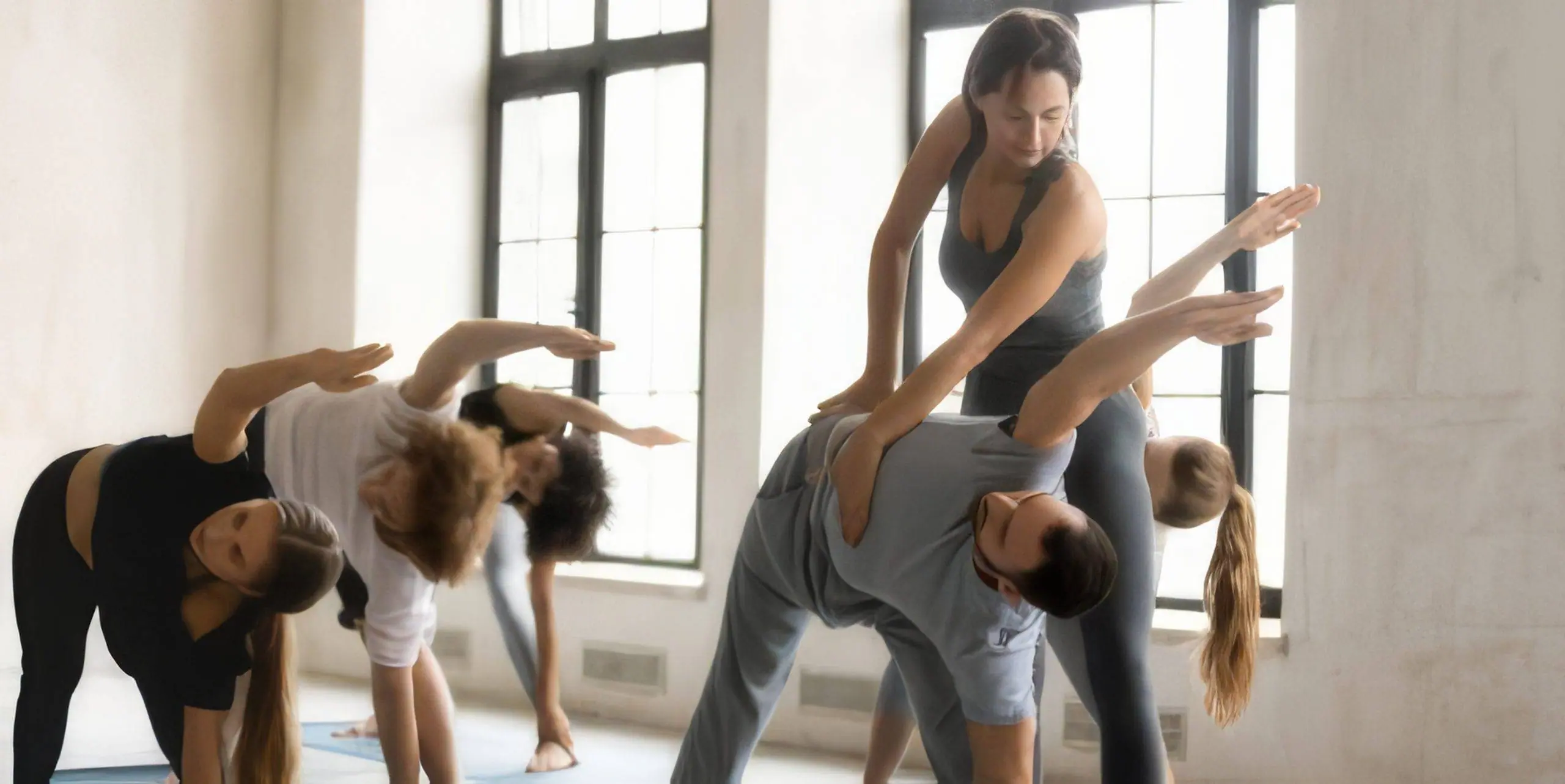
Choosing between yoga and Pilates looks like a personal question, but for a club, a studio or a hotel wellness area it is a programming and an equipment decision. The two disciplines fill different slots in a timetable, attract partly different members and need very different fit-outs. This article sets out the real differences and what each one asks of the room.
Origins and philosophy
Yoga is an ancient practice rooted in India, going back thousands of years. It combines physical postures (asanas), breathing techniques (pranayama) and meditation to bring body and mind into alignment. The postures build both flexibility and tone. Yoga rests on a spiritual and ethical framework aimed at an inner state of calm, and that framing is part of what members come for.
Pilates was created in the early twentieth century by Joseph Pilates. The method concentrates on strengthening the deep muscles, particularly those of the centre of the body. It draws on several disciplines, gymnastics and dance among them, and puts posture, flexibility and strength at the centre of the work.
Equipment required
Yoga needs a mat above all. The mat provides support and grip, which is what makes the postures safe to hold. Blocks, straps and blankets are added to make certain postures accessible to less mobile members, and a club running mixed-ability classes will want them in quantity rather than as an afterthought.
Pilates uses a mat as well for floor work, but the discipline opens up as soon as you add apparatus. Reformers, the Cadillac and small equipment such as balls and rings widen the range of what can be programmed and are what allow a studio to charge a different price for an apparatus class. Our professional Pilates reformers and the matching studio accessories are specified for that kind of repeated commercial use.
Both disciplines share one requirement: a floor that is clean, warm underfoot and consistent. A dedicated set of fitness, gymnastics and Pilates mats is usually the first purchase for a room that will host both.
Breathing technique
Yoga puts breathing at the centre of the practice. Each movement is synchronised with an inhalation or an exhalation, which calms the mind and improves concentration.
Pilates treats breathing as equally essential but uses it differently. Exercises integrate controlled breathing to make the strengthening work effective. The most common technique is lateral thoracic breathing: opening the rib cage while keeping the abdominal wall drawn in.
Benefits for body and mind
Yoga improves flexibility, muscular strength and balance. It is also recognised for reducing stress and improving mental clarity. The postures, usually performed on a mat, encourage deep relaxation, which is why yoga slots so well into an evening timetable.
Pilates focuses on strengthening the centre, the deep muscles, and on correcting posture. It helps build balanced musculature and prevent injury, and it improves coordination and concentration. That makes it the natural partner for a rehabilitation offer or for a member base with desk-related back complaints.
Movements and postures
Yoga sessions range from very gentle styles such as Hatha to more dynamic practices such as Vinyasa or Ashtanga. Postures are often held for several breaths, which supports meditation and introspection.
Pilates movements are flowing and controlled. Sessions include floor exercises, usually on a mat, as well as work on specific apparatus such as the reformer. Every movement is precise and aims to strengthen and lengthen at the same time.
Yoga and Pilates side by side
| Aspect | Yoga | Pilates |
|---|---|---|
| Origin | India, an ancient practice | Early twentieth century, Joseph Pilates |
| Philosophy | Spiritual and ethical | Muscular strengthening and posture |
| Breathing | Synchronised with movement (pranayama) | Lateral thoracic breathing |
| Movements | Postures held for varying lengths depending on the style | Flowing, controlled movements, floor work and apparatus |
| Equipment | Mat, blocks, straps, blankets | Mat, apparatus (reformer, Cadillac), balls, rings |
| Participants | All ages and fitness levels | All ages and fitness levels |
| Flexibility work | Very high | Moderate to high |
| Intensity | Varies with the style, gentle to intense | Moderate to intense |
Frequently asked questions
Can one room host both disciplines?
Yes, provided the floor and the storage are planned for it. Mats, blocks and straps have to be stored out of the way for a reformer class, and reformers have to be movable or parked along a wall for a mat class.
Which one should a club add first?
Yoga has the lower entry cost and fills a class quickly. Pilates on apparatus costs more to set up but supports a higher price point and a smaller class size, which is often the better margin.
How many reformers for a studio class?
That depends on the room dimensions and the access space you need around each machine. Send us the plan and we will lay out the maximum workable number.
Do both need the same flooring?
Both need a clean, stable, warm surface. Apparatus classes additionally need a floor that takes point loads without marking. We can specify the right surface for a mixed-use room.
Equipping your studio
Yoga and Pilates are both complete practices, and most facilities end up running the two side by side rather than choosing. What decides whether that works is the room: the floor, the storage and the apparatus. Tell us the dimensions of your studio and the classes you want to programme, and we will propose a full equipment list. Request a quote to get a costed proposal.
À lire aussi sur le même thème
- Yoga régénératif (qu’est-ce que c’est, comment le pratiquer, 13 bienfaits)
- Fitness Pilates : La Méthode Infaillible pour Une Silhouette Sculptée et un Bien-Être Optimisé
- What Is Pilates in Fitness? The Complete Guide by Light In Fitness
- Boostez vos Performances: Découvrez les Top 12 Aliments Fitness Incontournables
- Situps vs crunchs