CrossFit Rigs and Platforms: Modular Structures That Maximise Your Training Floor
A rig is the single piece of equipment that decides how many members a training floor can hold at once. Modular CrossFit rigs and lifting platforms turn a fixed square-metre allocation into a configurable training area: pull-up stations, squat stations, rings, ropes and storage on one frame, reconfigured as the class format changes. This guide covers how these structures are specified, what the modularity actually buys an operator, and what to plan for before the first bolt goes into the floor.
Modular structures: what a rig actually is
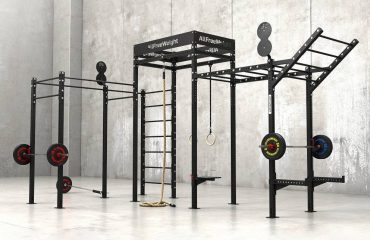
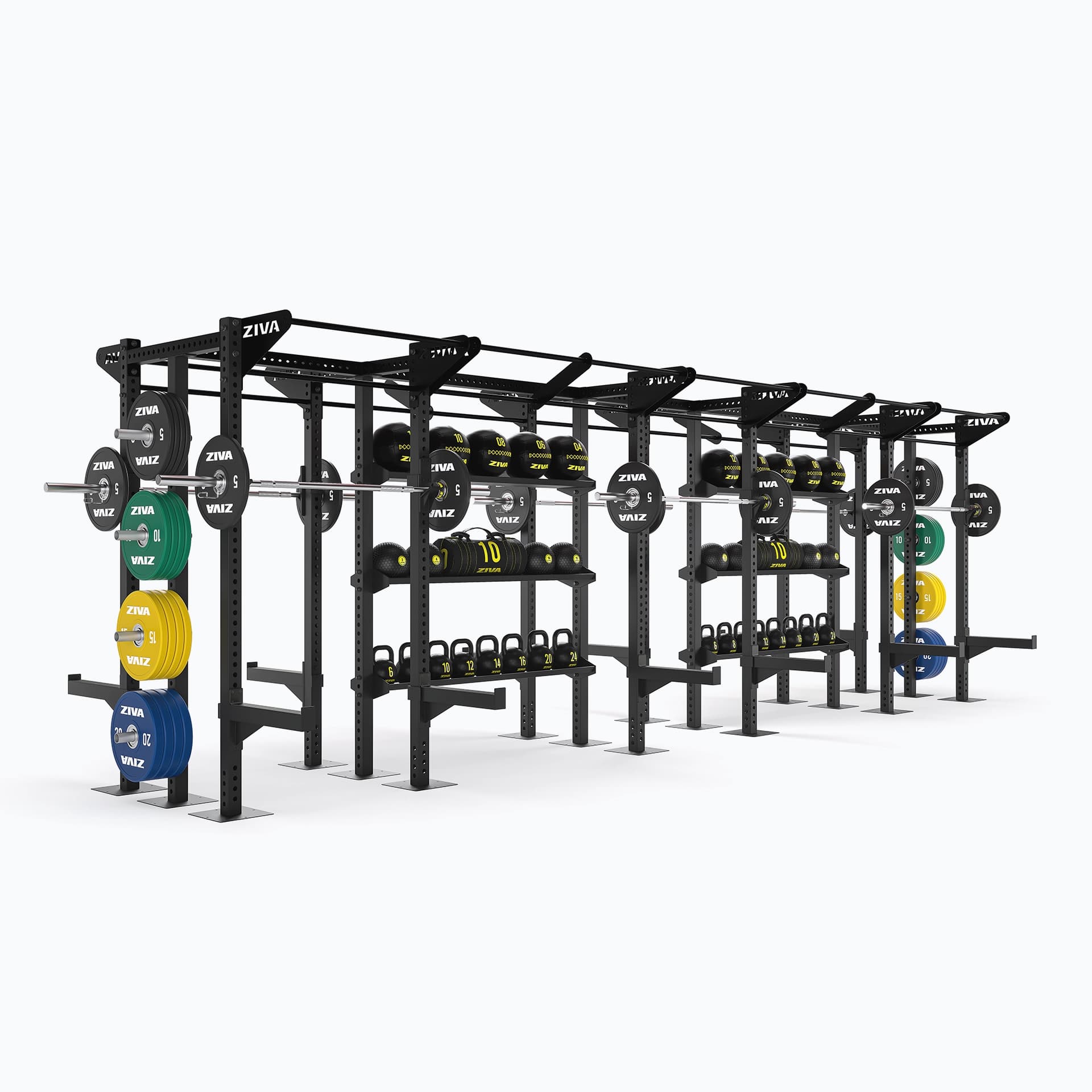
A CrossFit rig is a bolted steel frame built from uprights, cross-members and connectors, to which stations and accessories attach. That definition matters because it is what separates a rig from a rack. A rack is a single station. A rig is a system: the same footprint serves eight to twelve athletes simultaneously, and its capacity is set by how many stations you hang on it rather than by how many separate machines you buy.
For a commercial operator, that changes the economics of the floor. Rather than buying one machine per movement, you buy one structure and populate it. When the programming shifts, the structure stays and the attachments change.
The whole range of CrossFit rigs and racks is built on this principle, from compact freestanding units to full perimeter configurations spanning an entire wall.
What modularity buys you
Modular rigs support a very wide movement library on one frame: pull-ups, muscle-ups, dips, rope climbs, ring work, squats, presses and every barbell movement performed inside a station. Because those movements recruit several muscle groups at once, one structure covers strength, conditioning and skill work without demanding a separate zone for each.
The practical benefit for a gym is throughput. A group class that would otherwise queue for one rack rotates through stations on a rig. The same structure serves a beginner scaling a pull-up with a band and an experienced athlete working muscle-ups, at the same time, under one coach’s supervision.
Modularity also protects the investment. Uprights and cross-members outlive several generations of programming; adding a station later is a bolt-on operation rather than a new purchase. That is the reason a rig is normally specified slightly larger than current demand: extending a frame that was designed to be extended costs a fraction of replacing one that was not.
Efficiency in a compact footprint
Rigs are designed to concentrate training options into a small area. Horizontal and vertical members accept rings, climbing ropes, parallel bars, dip bars, landmines, band pegs, storage horns and target boards, so a long list of exercises becomes available without a long list of machines.
This is what makes a rig the right answer for a constrained commercial site: a small box, a hotel fitness room, a corporate facility or a rehabilitation centre with one multipurpose hall. The constraint on such a site is floor area, and a rig converts vertical space into training capacity. Freestanding configurations such as the ZIVA XP 14ft freestanding space saver rack exist specifically for floors where a wall-fixed structure is not an option.
Two dimensions govern the whole exercise and both need checking before ordering: clear ceiling height, measured to the lowest obstruction rather than to the slab, and the safety envelope around the frame, which has to accommodate a bar being dropped and an athlete swinging, not just an athlete standing.
Configurations and customisation options
Rigs are specified rather than simply bought. The variables are consistent across manufacturers:
- Height. Determined by ceiling clearance and by whether kipping and rope climbing are programmed.
- Number of stations. Driven by peak class size, not by average attendance.
- Fixing. Wall-fixed, floor-fixed or freestanding. Freestanding structures need a wider base and clear space behind, and are the only option on a floor that cannot be drilled.
- Attachments. Rings, ropes, dip bars, landmines, storage, targets, monkey bars and sliding pole elements can be added at any point in the rig’s life.
- Integrated platforms. Lifting platforms sit within or alongside the frame and define where barbell work happens.
Several rigs can also be linked to form a single continuous structure, which is how a growing box expands without replacing what it already owns.
Because this is professional equipment used in supervised commercial settings, specify to EN ISO 20957-1 class S. That is the class intended for use in supervised facilities, and it is the class the whole professional range is built to.
The floor under the rig
The rig and the floor are one specification, not two. Barbells are dropped in this zone, and the floor build-up has to absorb that load while keeping the structure level and the anchors intact.
Lifting platforms concentrate the drop zone and protect both the slab and the bar. Around them, heavy-duty rubber covers the circulation and station areas: a thickness such as the 40 mm CrossFit rubber tile is specified for zones where loaded barbells land, while lighter build-ups are enough where they do not. Getting this wrong is expensive twice over, because a failed floor is replaced with the rig still bolted through it.
Getting the most out of the structure
Plan the programming before the layout. Define which formats will run at peak, how many athletes each one puts on the rig at once, and where the coach stands to see all of them. Those three answers determine the station count and the orientation of the frame far more reliably than a catalogue diagram.
Build recovery into the schedule as deliberately as the training. A rig invites intensive use, and both the athletes and the equipment need the rotation to be planned rather than improvised.
Finally, put the inspection routine in place at handover. Bolted structures need their fixings checked periodically, rings and ropes need visual inspection, and attachment points need to be logged. This takes minutes per week and is the difference between a twenty-year structure and an incident.
Frequently asked questions
How much ceiling height does a rig need?
It depends on the configuration and on whether rope climbs and kipping movements are programmed. Measure to the lowest obstruction, including ducts, lighting and sprinkler heads, and send that figure with your enquiry: it is the constraint that most often changes a specification.
Freestanding or wall-fixed?
Wall-fixed uses less floor area and is the default where the building allows it. Freestanding is required on floors that cannot be drilled, in leased premises, and where the rig has to be repositioned. Freestanding structures need more space and more mass, which is a design choice rather than a compromise.
Can a rig be extended later?
Yes, provided it was specified as a modular system from the start. Uprights, cross-members and connectors from the same range join to form a longer structure, so plan the eventual length now even if you install part of it today.
What warranty applies to the structure?
Light In Fitness offers up to twenty years on steel structures and a lifetime warranty on stainless steel. Coverage assumes the structure is installed and inspected as specified.
Specifying your rig and platform
Light In Fitness has equipped more than 2,500 customers since 2013, from boxes and commercial gyms to hotels, armed forces sites and rehabilitation centres. Send us the room dimensions, the clear ceiling height, the peak class size and the floor construction, and we will return a rig configuration, a platform layout and a matched floor build-up. Request a quote for your facility.