Functional Cross-Training and CrossFit Rigs: The Operator Guide
Ask an operator who has rebuilt a training floor in the last five years and the same story comes back: the free-weight rows were trimmed, the selectorised line stayed, and the centre of the room turned into a functional zone built around a rig. Cross-training and functional CrossFit programming is no longer a class you slot in at seven in the evening. It has become the structural backbone of how a facility fills its off-peak hours and justifies every square metre of floor it pays rent on.
This guide is written for the people who sign the purchase order: box owners, gym managers, hotel and campsite operators, municipal sports departments, clubs, schools and rehabilitation centres. It covers what functional cross-training actually is, why the rig is the single piece of equipment that determines everything else you buy, how to programme it so members keep coming back, and the planning mistakes that turn a promising functional zone into wasted floor space.
What functional cross-training actually is
Cross-training means combining different physical activities in one programme rather than repeating a single discipline. Running, weightlifting, swimming and cycling all belong to it. The purpose is general physical preparedness: an athlete who is competent across several domains rather than specialised in one.
CrossFit-style training is the intensive end of that idea. It combines cardiovascular work, strength work and gymnastics, and it puts the emphasis on intensity and on constantly varied movement to build strength, endurance and power at the same time.
Functional cross-training brings the two together. The movements chosen are functional ones, meaning they reproduce the patterns people use in everyday life: lifting from the floor, pushing overhead, carrying, hinging, squatting, pulling. The strength and mobility that come out of them transfer to real tasks rather than staying inside the machine that produced them.
For an operator, the practical consequence is simple. One programme covers strength, endurance, mobility and coordination in a single session, which means one zone of your floor serves members who would otherwise need three different areas.
Why the rig decides everything else
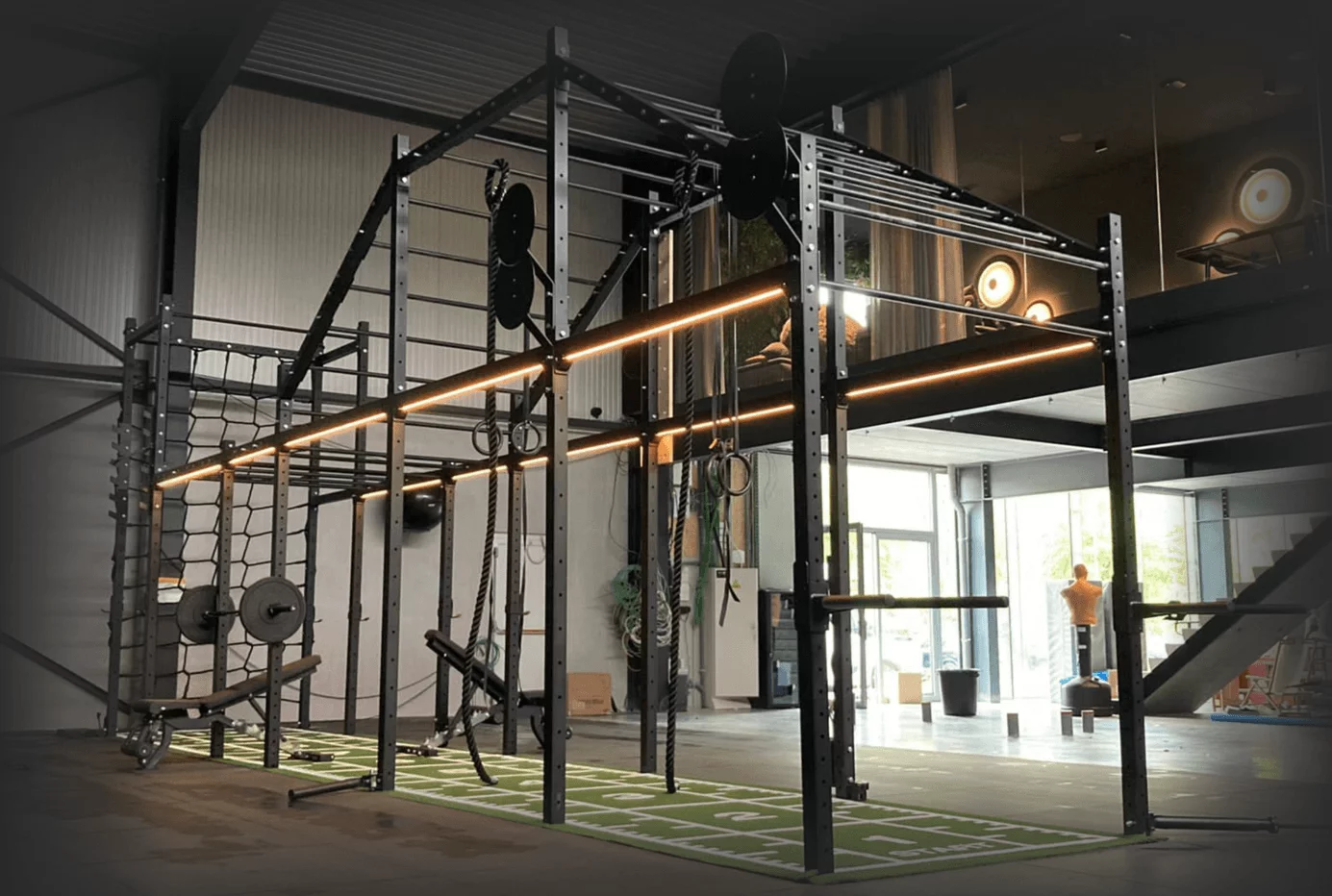
A functional zone is not a pile of accessories. It is a structure with accessories hung on it. The rig, cage or rack sets the number of simultaneous training stations, the ceiling height you need, the anchoring method, the circulation around the zone and the class sizes your coaches can run. Every subsequent purchase is downstream of it.
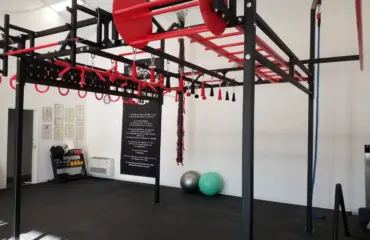
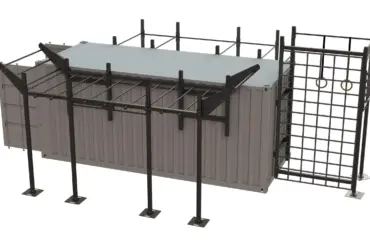
Three configurations cover most projects. A wall-mounted rig gives the smallest footprint and suits hotel, residential and corporate facilities where floor space is the constraint. A freestanding rig or cage stands clear of the walls and lets members work on both sides, which doubles station count for the same footprint. A full modular rig, extended bay by bay, is what affiliated boxes and municipal facilities use when the training group is the whole room rather than a handful of members.
Light In Fitness has been equipping professional facilities since 2013 and builds these zones as complete projects. The full range is on the CrossFit and Hyrox cages page, with modular structures on functional training rigs.
What the method delivers for the facility
It prevents stagnation. Constant variety keeps both the body and the member engaged, which is what stops the performance plateau that causes people to drift away after four months. Retention, not acquisition, is what a functional zone actually improves.
It builds balanced condition. Working strength, endurance, mobility and coordination together produces well-rounded fitness rather than one impressive number and three weak links.
It improves functional movement. Because the patterns mirror daily life, members feel the benefit outside the room. That is the argument that sells memberships to people who are not athletes.
It saves time. Several qualities trained in one session is a strong proposition for professionals with a fixed lunch hour, and it is the main reason corporate and hotel facilities invest in a functional zone rather than more cardio.
The three programming principles
Variety. The method works because the stimulus changes. A programme that settles into the same six movements stops producing adaptation and starts producing boredom. Your equipment mix has to support genuine rotation, which is why a rig with multiple attachment points beats a fixed station.
Intensity. Results come from working hard: heavier loads, more repetitions, or shorter rest between efforts. That has an equipment consequence operators often miss. Intensity means dropped bars, so the flooring under the rig is not a finish, it is a structural part of the zone. Weightlifting-grade rubber protects the slab, controls noise for the neighbours and keeps the equipment warranty intact.
Progression. Difficulty has to rise gradually so the body keeps adapting. In practice that means loading increments and attachment options that let a coach take a beginner and a competitor through the same session at different levels, on the same structure.
Rolling it out in your facility
Define the objective first. A rehabilitation centre, an affiliated box and a hotel gym are buying three different zones. Decide whether you are chasing class throughput, member retention or a broader offer, then size the structure to that answer rather than to the catalogue.
Choose a programme that matches your staff. Plenty of functional programmes exist. The one to adopt is the one your coaching team can actually deliver at the intensity it demands, week after week, with the group sizes you sell.
Be consistent. Results, for members and for the business case, come from regular scheduled sessions rather than from occasional showcase classes. Put the functional zone in the timetable and keep it there.
Listen to the body. Coaches should stop members who report pain or excessive discomfort and refer them to a health professional. Written into your class rules, that is both good practice and basic risk management.
Movements and the equipment they require
| Movement | What it trains | Equipment needed |
|---|---|---|
| Burpees | Strength, endurance, coordination through press-up, squat and jump combined | Floor space and shock-absorbing flooring only |
| Deadlift | Strength and power in the back, legs and glutes | Olympic barbell, bumper plates, weightlifting flooring |
| Kettlebell swing | Explosive power in the lower body and the stabilising muscles | Kettlebells, storage rack |
| Wall ball shots | Strength, endurance and coordination through a squat and throw | Wall balls, target on the rig, clear wall height |
All four are rig-adjacent rather than rig-dependent, which is the point: the structure anchors the zone, and the accessories around it multiply what one square metre can do. Flooring specifications for loaded movements are covered on the weightlifting rubber tiles page.
Mistakes to avoid
Skipping the warm-up. A proper warm-up prepares the body for the effort. In a class format it is the coach who owns that step, and cutting it to gain five minutes of session time is the fastest route to an injury report.
Neglecting basic technique. Members have to master the fundamental movement before load or intensity goes up. Poor technique under load causes injury, and in a supervised commercial setting it causes claims as well.
Ignoring the body. Pain or excessive discomfort is a stop signal, not something to train through. Members should be referred to a health professional rather than pushed past their limit.
Buying accessories before the structure. Kettlebells and balls are easy to add later. Ceiling height, anchoring and the footprint of the rig are not. Specify the structure first and let the consumables follow.
Frequently asked questions
Do I need a full box to run functional cross-training?
No. The method is defined by varied, functional, intensive work, not by floor area. A wall-mounted rig with a set of barbells, kettlebells and balls supports a credible programme in a hotel or corporate facility. What changes with a larger room is how many members train at once, not whether the method works.
How much space should I allow around the structure?
That depends on the model, the attachments you choose and the class format you intend to run, so it is specified project by project rather than from a general rule. Send us your floor plan and ceiling height and we will lay out the zone before you commit to a structure.
Is functional cross-training suitable for beginners?
Yes, provided intensity and load are scaled. The same session can be run by a first-time member and by a competitive athlete on the same structure, which is precisely what makes the zone commercially efficient: one installation, one coach, a mixed group.
What should I buy first?
The structure. It fixes ceiling height, anchoring, station count and circulation, and everything else adapts to it. Accessories can be added over several budget years without touching the installation.
Planning a functional zone
Functional cross-training earns its place on a professional floor because it trains several qualities at once, keeps members engaged through genuine variety and produces strength that transfers to real life. What turns that method into a working commercial zone is the structure at its centre, the flooring underneath it and a programme your coaches can sustain.
Tell us the room, the ceiling height and the group size you want to run, and we will specify the structure, the flooring and the accessories as one project. Request a quote and our team will come back to you with a costed layout.