CrossFit Training: A Practical Guide for Gym and Box Operators

CrossFit has moved from a niche training method to a structural segment of the fitness market. For gym operators, box owners, hotels, municipalities and armed forces, the question is no longer whether to offer it, but how to build a floor that can take it. This guide explains what the method actually involves, who it serves, and what professional equipment a functional training area requires.
What is CrossFit?
CrossFit was developed by the American coach Greg Glassman. It was originally designed as a training format for Californian police officers, and was later adopted by firefighters and by US military personnel. The method rests on three pillars: strength training, gymnastics and aerobic conditioning. The effectiveness of that combination explains how quickly it spread worldwide.
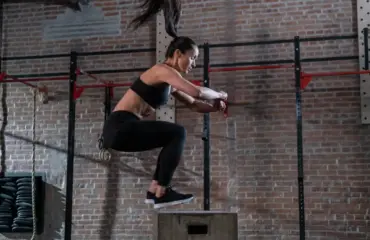
The aim of the training is to improve overall physical condition, endurance and coordination. Regular practitioners typically become faster, more agile, stronger and more precise in their movement. The defining characteristic of the method is variety: a single week can include skipping, barbell work, running and medicine ball throws. It also places sustained demand on the cardiovascular and respiratory systems, which is why the sessions are short and dense.
The group format matters commercially as much as physiologically. Training is delivered in classes, which raises motivation, builds retention and turns a training floor into a community. For many members, the box becomes a social habit rather than a subscription.
Who is the training for?
The method can be practised by almost anyone, regardless of age or gender. People recovering from surgery, injury or illness should train only with medical clearance and under supervision. Programming is scaled, which is what allows an amateur and a competitive athlete to work in the same class at different loads.
Members join for different reasons. Some want an active use of their free time, others weight management or a measurable improvement in conditioning. Many professional athletes use the format as off-season conditioning to raise general work capacity. A large share of the adult market simply uses it to discharge work-related stress in a positive way.
For an operator, that breadth is the point: one training area serves beginners, general members and competitive athletes without duplicating equipment.
How sessions are structured
Correct practice starts with a qualified coach. Only an experienced trainer can build a plan that matches the ability in front of them and correct technique under fatigue. Every session must be preceded by a proper warm-up to prepare the muscles for intense work, and the session itself should follow the coach instructions closely.
Classes are commonly run two or three times a week and last around half an hour of working time. Training every single day is counterproductive, because the body then has no window to recover and adapt. That rhythm has a direct operational consequence: your class timetable, and therefore the number of rig stations you need, is driven by peak-hour group size rather than by total membership.
Equipping a functional training area
Three decisions determine whether a functional floor works: the structure, the flooring and the circulation space around them.
The rig is the backbone. A freestanding rig can be positioned in the middle of a room and worked from both sides, which is the efficient answer when one structure has to serve a full class. Wall-mounted configurations save floor area but fix the training zone against a perimeter. Our full range of CrossFit and HYROX cages is built for continuous commercial use.
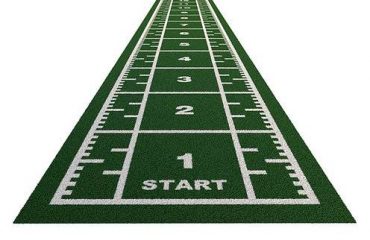
Flooring is not a finish, it is a safety component. Dropped barbells, kettlebells and loaded sleds require shock-absorbing rubber gym tiles. For lifting zones, a 40 mm tile such as the CrossFit rubber tile 40 mm at 38.50 EUR excluding VAT protects both the slab and the equipment. A dedicated turf lane is then used for sled pushes and carries, keeping high-traffic movements away from the lifting area.
All indoor equipment supplied for a commercial floor must meet EN ISO 20957-1 class S, the professional class for equipment installed in supervised, publicly accessible facilities.
| Area | Function | Typical requirement |
|---|---|---|
| Rig zone | Pull-ups, racks, squats, gymnastics | Freestanding or wall-mounted structure, class S |
| Lifting platforms | Olympic lifts, dropped loads | Thick shock-absorbing rubber tiles |
| Turf lane | Sleds, carries, sprints | Dedicated artificial turf track |
| Cardio | Rowers, ski ergometers, bikes | Commercial-grade machines |
Frequently asked questions
Do I need a coach to run CrossFit-style classes?
Yes. The programming is intense and technical, and group classes only work safely when a qualified coach scales the workout and supervises technique throughout the session.
How often should members train?
Two or three sessions per week is the usual rhythm. Consecutive daily sessions leave no time for recovery, which is when adaptation actually happens.
Is domestic equipment acceptable in a commercial box?
No. Equipment used in a supervised commercial facility must be certified to EN ISO 20957-1 class S. Anything below that class is not designed for the load cycles and usage frequency of a training floor.
How much space does a functional area need?
It depends on your maximum class size and the rig configuration you choose. Send us your floor plan and class format and we will size the structure and flooring around them.
Building your training floor
A functional training area is a single system: structure, flooring, cardio and circulation designed together. Light In Fitness has been equipping professional facilities since 2013, from single training zones to complete turnkey fit-outs.
Send us your project and we will come back with a costed layout: request a quote.