Training Without Equipment: How to Train With Your Own Bodyweight at Home
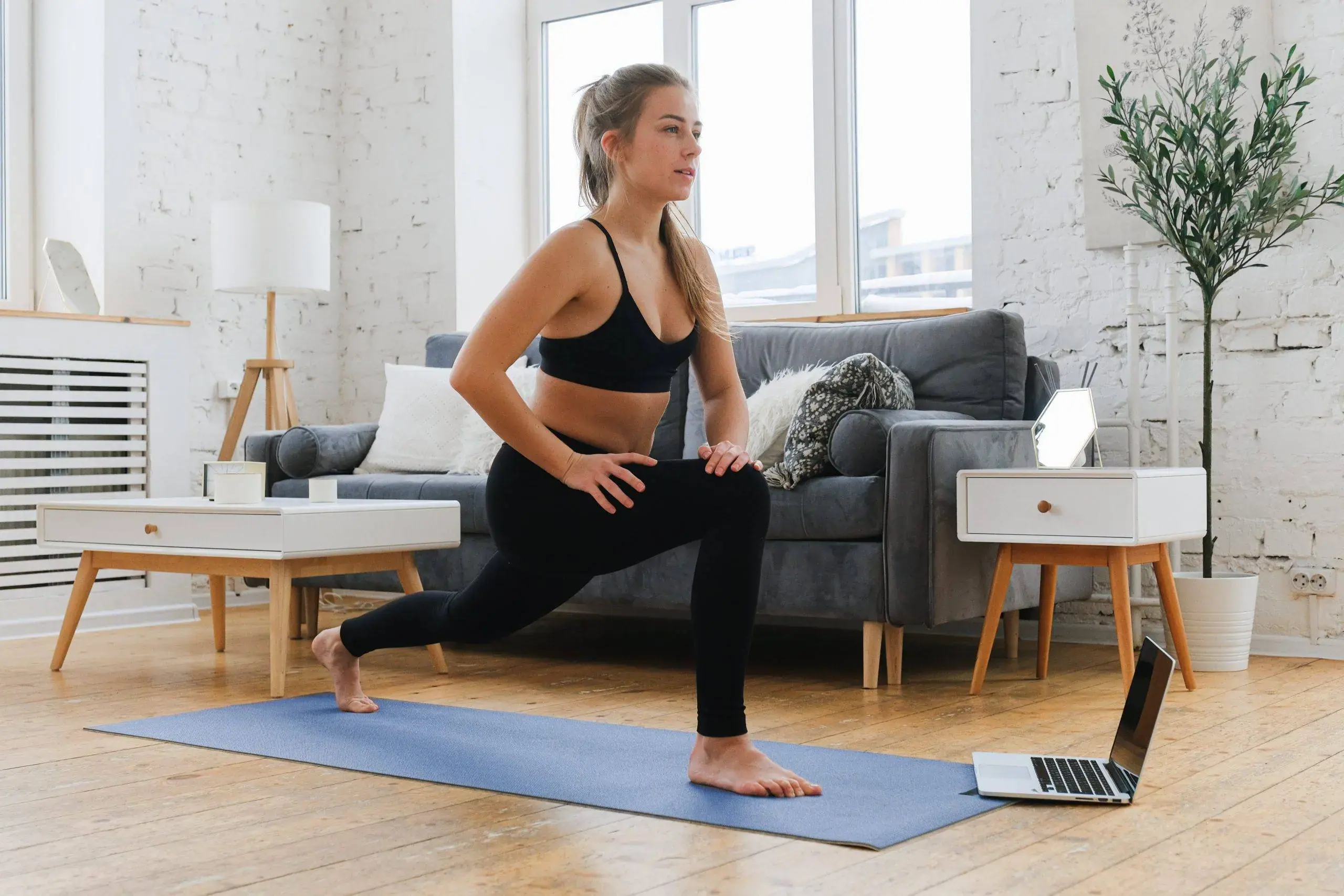
Bodyweight training has become steadily more popular in recent years, with interest growing fastest among beginners and among people who have very little time. Contrary to appearances, training without equipment can build an impressive level of condition, and it is also a very safe form of physical activity. For anyone specifying a small fitness space, that combination is worth understanding: it is the training model that works when there is no room, no supervision and no budget for a full equipment list.
How to train at home without any equipment
There is really no great philosophy to this kind of training. To start training, you first need a training plan, so that the strength session runs calmly and you never have to stop and think about which exercise comes next. Complete beginners who do not yet know how to structure a plan can take inspiration from the ready-made plans available online. Anyone with some training experience is better off building their own plan, one that engages the muscles of the whole body. A personal trainer can also prepare such a plan for you.
Do not skip the warm-up. Even without weights, the warm-up remains the foundation of the session: a body that has not been properly warmed up risks unnecessary injury. It is equally worth stretching the muscles after the session, which improves their recovery.
The benefits of training with your own bodyweight
The two biggest benefits of this kind of training are savings of time and of money. Many people with busy lives do no sport at all because they do not have enough time to travel to a gym, train, and travel home again. With bodyweight training, that travel time disappears, and the session itself is generally shorter. You also save the money that would have gone on a membership or on training equipment. To complete a full bodyweight session, no equipment is needed at all.
Calisthenics is also ideal for people recovering from joint injuries. The exercises in this kind of strength training use the natural range of motion of the joints, which has a beneficial effect on their recovery after an injury. Another advantage is the freedom to train different muscle groups: you can run a circuit session that trains every muscle group, or a conventional strength session focused on one or two groups, working the chest and back for example.
The best bodyweight exercises to do at home
If you decide to build your own training plan, you need to think about which exercises to build it from. Contrary to appearances, there is no need to look for elaborate movements: the simplest exercises are the best ones for this kind of training.
1. Squats, for strong thighs and glutes
Squats are an often neglected exercise, but they can deliver enormous benefits. They load the muscles of the legs, in particular the thighs and the glutes. The fact that you cannot add external load does not mean the exercise cannot be made harder: if regular squats are too easy, there is nothing to stop you doing them on one leg, which effectively doubles the load. You can also simply add repetitions to the set, though that increases training volume rather than intensity.
It works the other way too. If full squats are too hard, half squats will build the muscles needed to perform standard squats later on. These are strength exercises by nature, but nothing prevents you from adding a jump to the squat, which turns it into an explosive movement that carries over into your dynamics.
2. Push-ups, the universal exercise
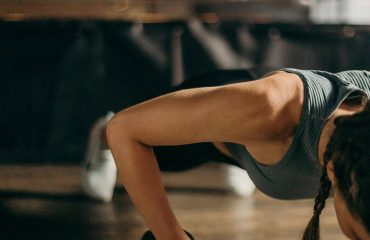
This is an exercise almost everyone knows, and, like the squat, one that is often underestimated. As with the previous movement, both progression and regression are available. The most advanced form is the one-arm push-up, which demands enormous strength and condition, so if regular push-ups are easy for you it is worth attempting.
If you are coming back from an injury, or have had little contact with training before, and the exercise is too hard, there is nothing to stop you doing push-ups on your knees, which prepares the muscles for a later move to standard push-ups. This exercise also lets you decide which muscles to emphasise: push-ups with a wide hand position work the chest muscles more, while a narrow hand position brings the triceps into play.
3. Crunches, for a defined midsection
This is an exercise that needs no introduction, and one of the most popular movements for the rectus abdominis. Fewer people know that there are variations of the sit-up that engage not only the rectus abdominis but also the oblique and deep abdominal muscles. One variation is the side sit-up, which loads the obliques and the core.
Nobody should have trouble with the basic version of the exercise, because these are the muscles used in everyday activity. If someone does struggle with sit-ups, they can perform abdominal curls alone, which prepare the muscles for the full movement.
4. Jumping jacks, ideal for warming up
Most people associate jumping jacks with school PE lessons, where they were among the most frequently practised exercises. Contrary to appearances, they are an excellent way to warm up, because they engage practically every muscle group to a small degree.
Here, low muscular involvement is the advantage: the purpose is to prepare and warm the muscles for the effort to come. Jumping jacks are well worth adding to a training plan, because they prepare the body for the strength work that follows.
5. Lunges, an excellent leg exercise
This is the second most popular exercise for the leg muscles after the squat. Combining lunges with squats is ideal for a more intense session on the lower body, and it will reinforce the effects of leg strength training. They do not load exactly the same muscles as squats, which is precisely why the two exercises complement each other so well.
6. Jumps, to improve your dynamics
This often neglected and underestimated exercise can improve your dynamics considerably. It also improves joint mobility, which is a further significant advantage. Jumps can be combined with squats, which improves explosiveness further still, and they are ideal for people practising sports that demand dynamism.
7. Bridges, for a strong neck and back
This exercise is very often neglected and underestimated, yet it can break a plateau in back training. It develops not only the back muscles but also the neck and the surrounding musculature. There are many variations:
- head bridges,
- hand bridges,
- the bridge from standing.
The bridge from standing is one of the harder variations and should be performed on a soft surface. On the first attempts, support yourself against a wall so that a failed repetition does not end with your head hitting the floor. This is the one point in a bodyweight programme where a surface genuinely matters: our fitness and gymnastics mats are the usual answer in a room used for floor work.
How to write a home training plan
It really all depends on the type of training you want to do. If you are planning an FBW session designed to engage every muscle group, the plan has to include exercises for each part of the body.
Choose 6 to 7 exercises and perform 3 to 4 sets of each. If instead you intend to train one or two muscle groups, choose 5 to 6 exercises involving only those groups, and perform 2 to 3 sets of each in order not to overtrain.
How long should a home session last?
There is no clear answer to how long a home strength session should last. Many people are able to finish a session in half an hour, but that is usually a single-part session that takes a little less time. If you are planning FBW, expect around an hour, warm-up included.
That is the optimal window in which the muscles are properly engaged without being overtrained. Of course, if your session ran slightly longer or shorter, that does not mean it was done badly. Everyone has an individual training rhythm and individual needs, and session length follows from them.
Bodyweight strength training: a beginner plan
For beginners at the very start of their training, the best plan is an FBW plan that engages every muscle.
| Exercise | Work time | Sets |
|---|---|---|
| Wide push-ups | 60 seconds | 3 to 4 |
| Squats | 60 seconds | 3 to 4 |
| Crunches | 90 seconds | 3 to 4 |
| Jumps | 45 seconds | 3 to 4 |
| Narrow push-ups | 60 seconds | 3 to 4 |
| Burpees | 60 seconds | 3 to 4 |
The plan does not specify a number of repetitions, because everyone is at a different training level. And do not forget to warm up before the session.
What this means for a facility
The same programme is what operators fall back on in spaces that cannot hold a full equipment list: hotel rooms with a few square metres, residential buildings, campsites, and outdoor areas. Two conclusions follow for a specification.
- A bodyweight programme still needs a floor. Impact from jumps and burpees, and comfort during floor work, are the difference between a usable room and one nobody returns to.
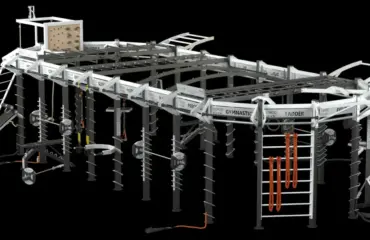
- Bodyweight training scales up rather than out. A pull-up and dip structure turns the same programme into a complete strength offer without adding a single machine, which is why street workout and calisthenics cages are so often the first structure installed in a shared outdoor space.
For a building where the fitness room is an amenity rather than a business, the equipment brief is short and the constraints are unusual; our residential gym equipment page covers that case in detail.
Building the space around the programme
Bodyweight training asks almost nothing of a room, which is exactly why the little it does ask should be specified properly: a floor that takes impact, enough clear area per user, and a structure to progress onto when floor exercises stop being enough. Send us the dimensions and the intended use and we will size it: request a quote.