Makeup at the Gym: What Members and Operators Should Know
In brief: plenty of members train with makeup on, and no amount of signage will change that. Sweat mixed with makeup clogs pores, so the useful answer is not a ban but a short set of practical habits, plus a cleaning and changing-room routine on the operator side that keeps upholstery and mirrors presentable.
Why members keep their makeup on
The reasons are ordinary: running into someone they know, self-consciousness about a blemish, or simply enjoying the way they look. For a facility, that is worth understanding rather than judging, because a member who feels uncomfortable in the room is a member who cancels. Comfort in a training space is not only about equipment spacing and air handling; it is also about whether people feel able to show up as they are.
What sweat and makeup actually do to skin
Wearing makeup during a session is not recommended from a skin-health point of view. Perspiration combined with cosmetic product blocks the pores, and heavy coverage worn through a full class is the least favourable combination. A consistent skincare routine before and after training limits the damage far more effectively than switching brands.
This is the message worth putting in a members newsletter or on a changing-room card: train with as little product as possible, and clean the face straight afterwards. Anything more prescriptive tends to be ignored.
Practical habits for training with makeup
The first habit is a mattifying primer. It reduces surface oil and acts as a barrier between the skin and the rest of the product, which is what stops makeup migrating once someone starts to sweat.
The second is to leave foundation out. A lighter CC cream gives partial coverage while sitting more comfortably on skin that is about to perspire, and it should be matched to the skin type to avoid problems at either end of the oily-to-dry range.
For eyes, waterproof mascara and a long-wear eyeliner prevent smudging during effort, and a matte eyeshadow keeps the result subtle. A setting spray holds the whole thing in place through the session. Whatever the routine, cleansing the face after training is the step that matters most.
What this means on the operator side
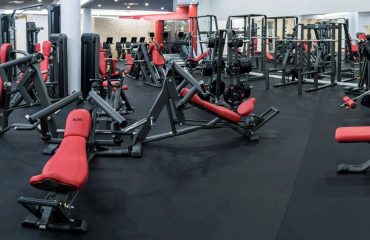
Cosmetics leave marks. Foundation and setting products transfer onto upholstery, head pads and bench covers, and they show first on light-coloured surfaces. That is an argument for specifying darker upholstery on high-contact stations, and for choosing pad materials that tolerate repeated cleaning with the products your staff actually use.
The same applies to mirrors and to the equipment consoles that members touch with product on their hands. Neither is a design flaw; both are a cleaning-frequency question that belongs in the opening and closing checklist rather than in a member rulebook.
Changing rooms are the third piece. A room with enough bench space, a clear surface near the mirrors and somewhere to put a bag turns the post-session cleanse into something members actually do. Changing-room benches and multi-compartment lockers are the two items that decide whether that space works or simply fills up.
Frequently asked questions
Should a facility ban makeup in the training area?
There is no practical way to enforce it and little to gain. Guidance in the newsletter and a well-equipped changing room achieve more than a rule nobody applies.
Does makeup damage gym upholstery?
It transfers onto contact surfaces and shows up first on light finishes. Choosing pad colours and materials that tolerate frequent cleaning is the straightforward answer.
What should be recommended to members?
As little product as possible during the session, waterproof formulations for the eyes, and cleansing the face immediately afterwards.
Fitting out a room people are happy to be seen in
Comfort in a training space comes from the whole fit-out: circulation, flooring, storage and finishes that still look clean after a year of use. Our fitness accessories and rubber gym flooring ranges cover most of that. Tell us about your room and your membership profile and we will put a proposal together. Request a quote.