Outdoor Fitness Equipment: Trends for Professional Sites
L'équipement fitness extérieur évolue vers des matériaux sans entretien, inox et acier galvanisé épais, et vers des stations multi-postes plutôt que des agrès isolés. Les cardios sans moteur, tapis incurvés et vélos autonomes, permettent l'installation en accès libre sans raccordement électrique. La conformité EN 16630 encadre l'ensemble de ces équipements.
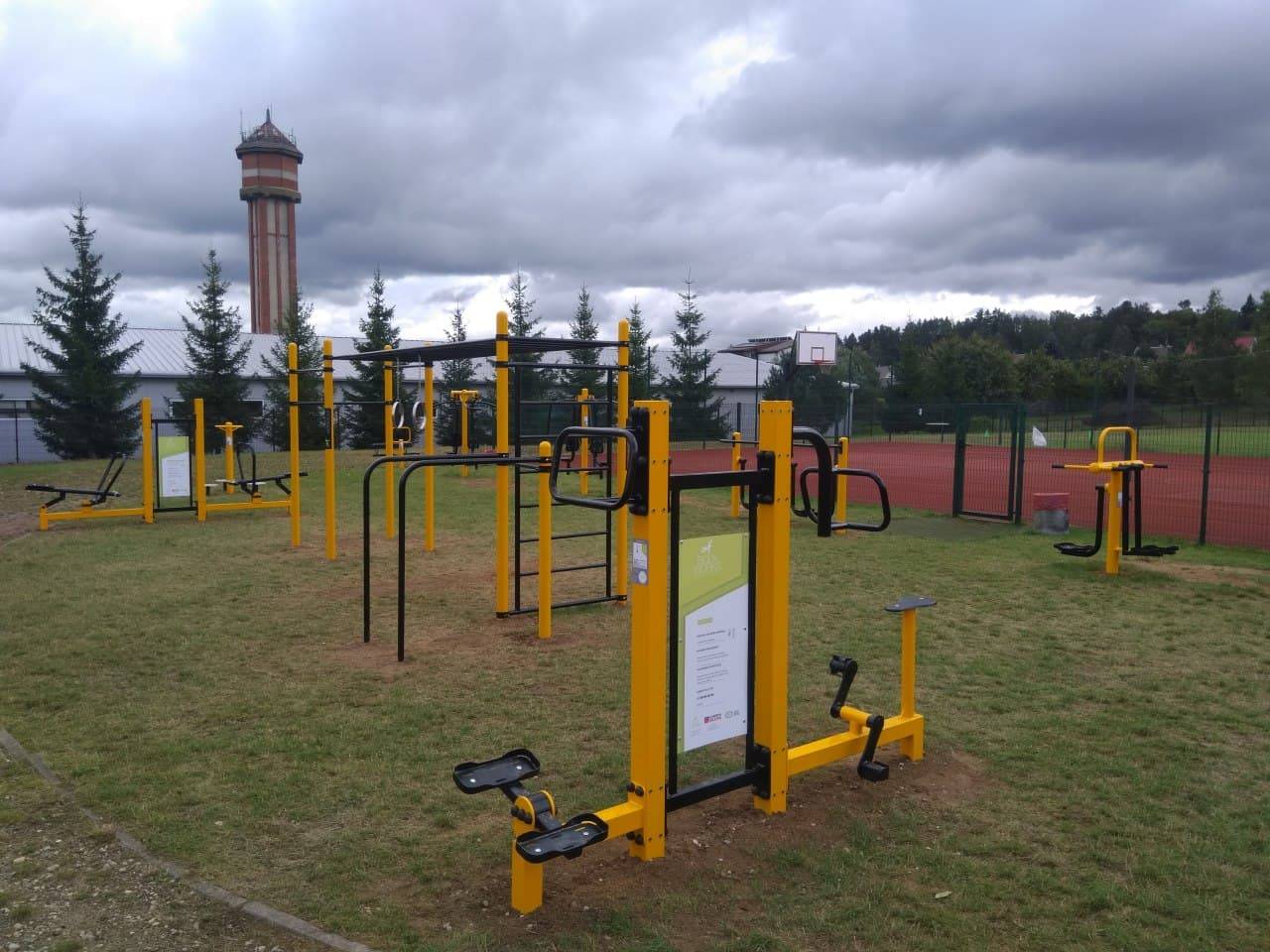
Outdoor fitness has moved from a municipal nice-to-have to a line in serious capital budgets. Clubs extending their training floor into the open air, campsites competing on facilities, hotels building a wellness offer, local authorities opening free-access training areas: the buyer profile has widened, and expectations of the equipment itself have widened with it.
The shift has little to do with novelty. An outdoor rig faces UV, rain, frost, sometimes salt spray, and unsupervised use twelve months a year, with no reception desk controlling who uses it. That single constraint explains most of what is changing in the category: the material specified, the move from isolated units to multi-station rigs, and the arrival of cardio machines that need no power supply.
This guide reviews the trends that matter when you are specifying equipment for a site rather than for yourself, and the standard that governs all of it.
Why outdoor training areas are being specified more often
The first argument is capacity. An outdoor area extends usable training space without construction work, without a change of use, and without the mechanical ventilation an indoor extension would require. For a club whose free-weight floor saturates between 18:00 and 20:00, that is the cheapest square metre available.
The second is exposure. Daylight and fresh air are what users say they want, and an installation visible from a street, a promenade or a campsite alley advertises itself continuously. Varied ground, slopes and open space also make sessions less monotonous than a row of indoor machines, which matters for retention.
The third is service. For a hotel, a campsite or a residential scheme, a training area is a facility that guests and residents compare across competitors, in the same way as a pool or a play area. It is judged on how it looks after three winters, not on the day it opens.
You will find the full professional range in our outdoor gym equipment section.
Materials: the real dividing line
Nothing separates a good outdoor installation from a disappointing one as clearly as the material. The market has moved decisively towards finishes that need no maintenance programme: stainless steel, and thick galvanised steel with a powder-coat finish over it.
The reasoning is operational rather than aesthetic. Painted mild steel demands inspection, touching up and eventually replacement, and nobody staffs that on a free-access site. Stainless steel removes the question entirely, which is why it dominates seafront, poolside and coastal specifications where chloride attack is constant. Our stainless steel outdoor fitness range is built for exactly those sites.
Warranty is the honest way to compare offers. Light In Fitness warrants its steel structures for up to 20 years and its stainless steel structures for life. A supplier who will not put a figure on structural life is telling you something about the coating.
From isolated stations to multi-station rigs
The second clear trend is the disappearance of the single-exercise unit installed on its own. Buyers now specify multi-station structures that carry several exercises on one footing plan.
The reason is throughput. A bodyweight station combining parallel bars, pull-up bars, wall bars and hanging points serves a small group simultaneously, on one concrete base, with one inspection point. Three isolated units serve three people, take three foundations and generate three maintenance records.
Functional training structures follow the same logic, reproducing natural movement patterns rather than isolating a muscle: pulling, pushing, squatting, lunging, hanging. For a site that has to work for a fifteen year old and a sixty year old on the same afternoon, movement-based equipment ages far better than machines built around a single joint angle.
Trails and obstacle courses
Running remains the entry point for most outdoor users, and equipment now supports it rather than competing with it. A fitness trail distributes stations along a route so that the run is the session and the stations are the intervals, which suits parks, campsites and large residential sites where a single concentrated area would be too small.
At the demanding end, obstacle courses have moved from event hire into permanent installation. Climbing walls, ropes, hanging traverses and balance sections test strength, grip and agility in a way that a strength rig alone does not, and they are what draws teenagers and cross-training groups onto a public site. See our OCR obstacle courses and outdoor fitness trail ranges.
Cardio without a power supply
The most significant technical change of recent years is non-motorised outdoor cardio. Curved treadmills and self-powered bikes generate their resistance from the user, which means an outdoor cardio zone can now be installed with no electrical connection, no cable trench and no consumption.
That removes the objection that used to kill the idea. A free-access area in a park, on a promenade or inside a campsite can carry running, cycling, rowing and elliptical work without an electrician ever being involved, and without a machine going dark when the supply fails.
It also changes siting. Without a cable route to design around, the equipment can be placed where users actually pass, rather than where the power happens to be.
The standards that apply, and where each one stops
This is where specifications most often go wrong, so it is worth being precise.
Adult outdoor fitness equipment falls under EN 16630, which covers permanently installed outdoor training equipment: construction, safety and test methods. Every adult station on a free-access site should be covered by it.
Children’s play equipment is a separate world. It falls under EN 1176-1 for the equipment and EN 1177 for the impact-attenuating surfacing beneath it. The two are never interchangeable, and EN 16630 is never the right reference for a children’s item. If a supplier offers you a single certificate covering both an adult training area and a play area, ask which document covers which item.
Indoor equipment is different again: professional indoor machines are specified to EN ISO 20957-1 class S. That is the reference to insist on for a club gym floor, and it does not transfer to anything installed outdoors.
Specifying: what to settle before briefing a supplier
Start with the use, not the catalogue. Decide whether the area is primarily strength, primarily cardio, or a circuit combining both, because that decides the footprint before it decides the model list.
Then measure honestly. Every station needs its own safety zone around it, clear of paths, benches, lighting columns and planting, and those zones cannot overlap with circulation. An area that looks generous on a site plan often shrinks by a third once safety zones are drawn.
Then settle the ground. Surfacing, drainage and foundation type are decided at the same time as the equipment, not afterwards, because the footing design depends on what sits on it.
Finally, decide who the area is for. A site meant to be usable by wheelchair users needs equipment designed for it from the start; retrofitting access is rarely possible. Our accessible outdoor gym range is built around that requirement.
Making the area used rather than merely installed
An outdoor area that nobody programmes becomes street furniture. The installations that work are the ones with a reason to be visited at a fixed time: a coached session before work, a lunchtime circuit, a weekend club slot on the campsite or in the park.
Simple, durable signage matters more than technology here. Users bring their own watches and headphones; what they do not bring is a clear explanation of what each station is for and how to use it safely. Exercise panels at the station, legible after five years of sun, do more for usage than any connected feature.
Frequently asked questions
Which standard applies to outdoor fitness equipment?
EN 16630 covers permanently installed outdoor fitness equipment for adults. Children’s play equipment is covered by EN 1176-1, with impact-attenuating surfacing to EN 1177. The two families are not interchangeable.
Is stainless steel always necessary?
No. Thick galvanised steel with a powder-coat finish performs well inland. Stainless steel earns its cost in coastal, poolside and heavily chlorinated environments, and where the site owner wants to remove structural maintenance from the budget permanently.
Can outdoor cardio machines be installed without electricity?
Yes. Non-motorised equipment, including curved treadmills and self-powered bikes, draws its resistance from the user and needs no supply, which is what makes free-access outdoor cardio zones practical.
How much space does an outdoor training area need?
That depends entirely on the stations selected and the safety zone each one requires, so it is answered on your site plan rather than in a brochure. Send us the plan and we will mark the zones on it.
Can an outdoor area be extended later?
Yes, provided the first phase is laid out with that in mind. Multi-station rigs and modular trails are designed to be added to, which is why phasing a project over two budget years is common and rarely wasteful.
Specifying your outdoor training area
The trends that count are unglamorous: materials that survive without maintenance, layouts that serve several users per footing, cardio that works without a power supply, and equipment certified to the standard that actually applies to it. Get those four right and the area still looks like an asset after five winters.
Light In Fitness has manufactured and installed professional fitness equipment since 2013, for clubs, campsites, hotels, local authorities, schools and residential schemes, with more than 2,500 customers equipped. Send us your site plan, the profile of your users and your budget envelope, and we will come back with a specified layout.
Request a quote for your outdoor fitness project.
Réalisations documentées
- Cage street workout ultime, Carcassonne – armée française
- Cage street workout ultime, Tahiti – armée française, Polynésie
- Cage SP Max, centre EPIDE de Combrée – établissement public d’insertion
- Cage SP Max, lycée Saint-Bénigne de Dijon – établissement scolaire
Sources et références
- NF EN 16630 – modules fixes d’entraînement physique de plein air : exigences de sécurité et méthodes d’essai (AFNOR)
- Code du sport, article L322-2 – garanties d’hygiène et de sécurité des établissements d’activités physiques et sportives (Légifrance)