What Is the Best Time of Day to Do Cardio?
Cardio training is the tool most often reached for when the goal is to reduce body fat or improve performance, and its benefits go well beyond that, reaching many aspects of health. What remains contested is the timing: should the session happen before breakfast or after it? For an operator this is not an academic question. It decides when your cardio zone fills up, how many machines you need at 7 a.m. versus 6 p.m., and what your coaching team should tell members who ask. This article sets out what the research actually says.
What you will find here:
- why fasted cardio is so often recommended
- how session timing affects fat loss
- how session timing affects appetite
- whether fasted cardio works for athletes
- what the best time of day is in practice
Why is fasted cardio recommended?
The usual objective of cardio work is to increase fat loss, which requires releasing the fatty acids stored in adipose tissue. Low and moderate intensity endurance exercise, which is what most cardio sessions are, is fuelled largely by energy from fatty acids. Fat oxidation during fasted cardio is also 20 to 30 per cent higher than during an identical session performed after a meal. That is explained by the depletion of carbohydrate stores, in the form of muscle glycogen, after an overnight fast, and by lower insulin levels.
The mechanism is real. The question is whether it changes anything over a training block.
How cardio actually reduces body fat
The premises of mechanistic studies do not always translate into real world effects, and they have to be verified in intervention trials. In a study by Schoenfeld and colleagues, twenty women performed one hour of cardio three times a week alongside a weight loss diet, either before or after breakfast. All of them lost a similar number of kilograms, regardless of when the cardio was done.
In another study, overweight and obese women performed intervals, meaning shorter and more intense cardio, three times a week for six weeks. No dietary changes were made, but the timing of the session was varied, before or after breakfast. The participants did not lose weight over the six weeks, but they did improve body composition, losing fat tissue and slightly increasing muscle mass. The key conclusion was the same: the timing of the cardio made no difference. A 2017 meta-analysis reached the same result.
The reason for the absence of any difference is straightforward. The existence of one isolated mechanism does not mean it plays a decisive part in the complex system that is the human body. What drives fat loss is energy balance, and more precisely a calorie deficit. Short term shifts in which fuel is being used do not move that number.
How timing affects appetite
A calorie deficit can be created in two ways: by increasing energy expenditure, or by limiting intake through diet. Exercise affects appetite and the amount of food eaten, increasing or decreasing it depending on the form, duration and intensity of the session. In one study, men training on an empty stomach consumed around 20 per cent fewer calories in the twenty four hours after the session than men doing cardio after a meal.
A similar result was reported in a further study, where participants consumed around 400 kcal less per day when exercising fasted than when training after breakfast. The weakness in this line of evidence is that all the studies were short term, so it is impossible to say clearly whether a similar effect persists beyond a week or a month.
Does fasted cardio work for athletes?
This is where the picture changes. For an athlete whose aim is to optimise the quality of the cardio session itself, endurance work performed after a meal is more effective than training without eating. Available fuel supports higher output, and higher output is the point of the session. Fasted work belongs to the fat loss conversation, not the performance one.
So what is the best time in practice?
If the objective of the cardio is to reduce body fat, the session should be fitted to the individual preference and daily schedule, because that is what raises the chance of it actually happening. Research suggests fasted cardio may suppress calorie intake across the day, but long term studies to support that are missing. It is therefore difficult to say that fasted cardio holds an advantage over training after a meal. The best time to do cardio is the time that is convenient. The exception is the athlete optimising performance, for whom eating first is the better choice.
Remember: there is no ideal time to do cardio. Fit it to preference and daily routine so that the training is easy to sustain. Some data indicate that fasted cardio may suppress appetite, but the evidence is still not compelling.
What this means for a facility
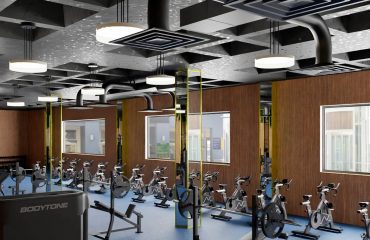
If timing does not change the outcome, the practical conclusion for an operator is that cardio capacity should follow member schedules rather than any theory of optimal timing. Machines are used at the hours your members can attend, which for most sites means an early morning peak and a strong evening peak. Size the cardio zone for the busier of the two, not for the average, and make sure the mix of treadmills, bikes and rowers is deep enough that no single machine type becomes the bottleneck at peak.
Our full range sits under professional cardio equipment, with the two most requested families under professional treadmills and exercise bikes.
Frequently asked questions
Does fasted cardio burn more fat?
During the session, yes: fat oxidation is 20 to 30 per cent higher than in an identical session after a meal. Over a training block, that does not translate into more fat lost, because total energy balance is what decides the outcome.
Does the time of day matter for weight loss?
Intervention studies and a 2017 meta-analysis found no difference between training before and after breakfast. Choose the time that fits the schedule and can be sustained.
Does fasted training reduce appetite?
Some short term studies suggest it does, with reductions of around 20 per cent of calories over the following day in one trial. All of this evidence is short term, so no firm conclusion can be drawn.
When should an athlete do endurance work?
After a meal. For performance rather than fat loss, training with fuel available produces a better session.
Planning your cardio zone
Light In Fitness equips gyms, clubs, hotels, campsites, local authorities and rehabilitation centres with professional cardio equipment. Tell us your peak attendance and your floor area and we will size the zone properly. Request a quote and our team will come back with a costed proposal.
À lire aussi sur le même thème
- Mastering the Cross Trainer: Get More from Every Cardio Session
- Professional Cross Trainers: Why Buy From Light In Fitness
- Pourquoi acheter votre vélo de fitness pour les cours de spinning chez Light In fitness ?
- Mastering the Upright Row on a Guided Bar: Complete Guide
- Professional Upright Bike: Buying Guide for Gyms and Hotels