Smooth, Fine Grain or Studded Rubber Tiles: Which Surface Finish to Choose?
La finition de surface d'une dalle caoutchouc conditionne l'adhérence, l'entretien et le confort autant que l'épaisseur ou la densité. La surface lisse se nettoie le plus facilement, le grain fin apporte l'adhérence en zone de charge, la pastillée limite la glissance en ambiance humide. Le choix se fait par zone d'usage, pas pour toute la salle.
The surface finish of a rubber tile — smooth, fine grain or studded — determines its grip, cleaning regime, drainage and even its slip-resistance compliance, yet buyers usually specify only thickness and density. As a rule of thumb: fine grain is the right answer for about 80% of sports floors, smooth suits machine zones and premium studios, and studded belongs outdoors and in wet barefoot areas. Here is the complete comparison for choosing the right finish for each zone.
The three surface finishes at a glance
| Criterion | Smooth | Fine grain | Studded (penny top) |
|---|---|---|---|
| Appearance | Uniform, premium look | Lightly textured, visible granules | Raised pattern (discs or diamonds) |
| Barefoot grip | Fair | Good | Excellent — even wet |
| Grip in trainers | Good | Excellent | Excellent |
| Ease of cleaning | Very easy — mop or scrubber-dryer | Easy | Moderate — debris collects between studs |
| Visible wear | Marks show quickly | Texture hides wear | Relief hides wear |
| Drainage (outdoor) | Poor — water pools | Fair — micro-porosity | Good — channels between studs |
| Primary use | Studios, yoga, machine zones | Gyms, CrossFit, home gyms | Outdoors, wet zones, barefoot areas |
Smooth: the aesthetic, easy-clean choice
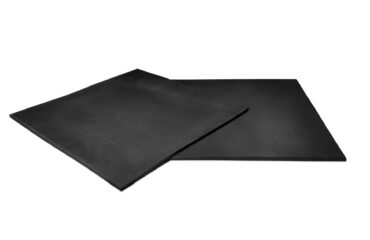
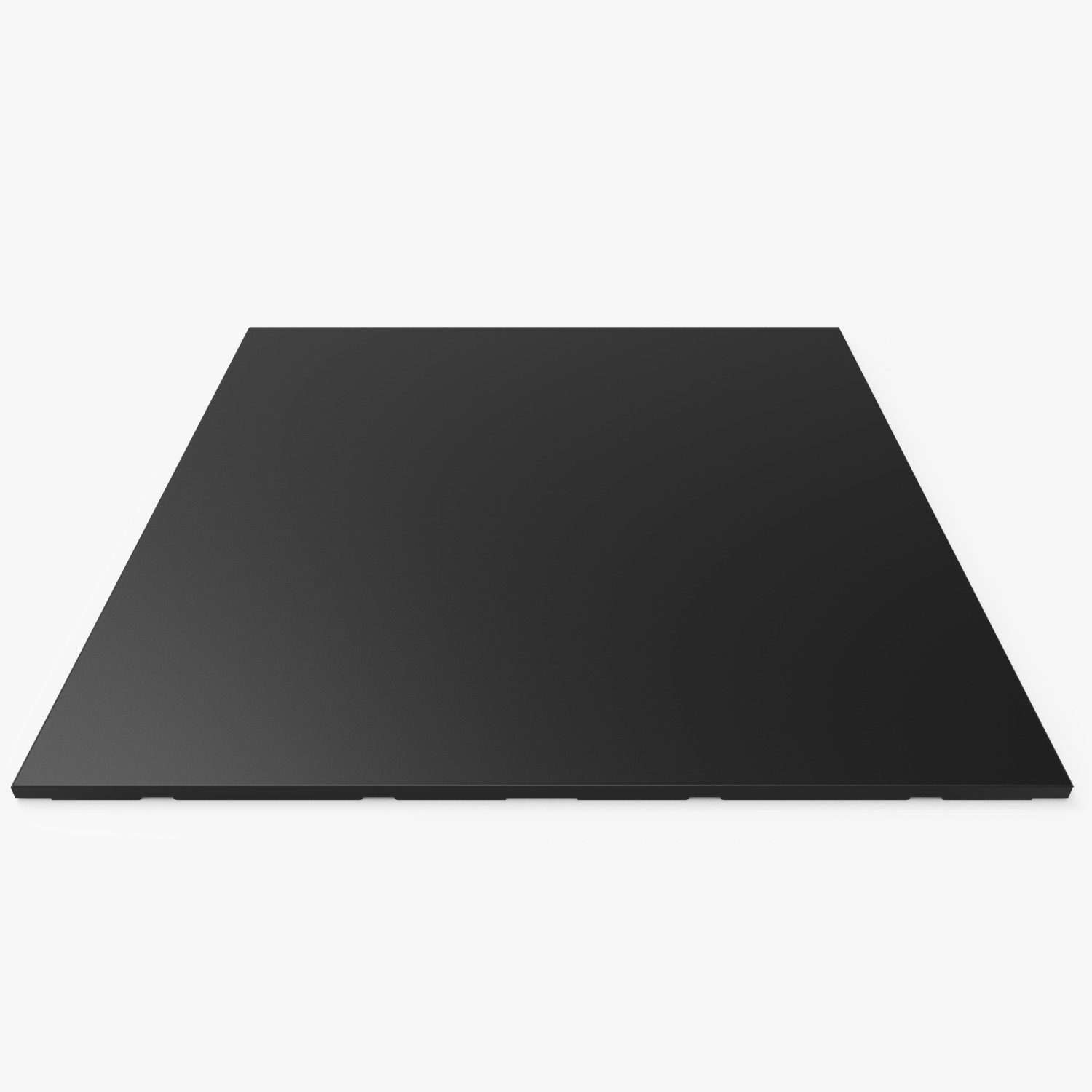
Smooth (closed-pore) tiles give a homogeneous, contemporary look, typically with a high-density top layer around 980 kg/m3 on bi-layer products.
- Fastest cleaning: a mop or scrubber-dryer pass — no recesses where dust collects.
- Premium aesthetics and hygiene: no micro-cavities for sweat or bacteria — suits upscale studios, hotels and yoga spaces.
- Machine-friendly: wheeled racks and trolleys roll without resistance.
Limits: reduced grip when wet (a water film forms on a smooth surface — avoid in wet-foot zones and uncovered outdoor areas), visible scratches and shoe marks, and zero drainage.
Fine grain: the all-rounder
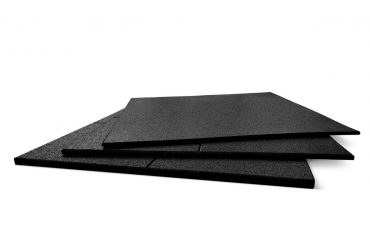
Fine-grain finish is the standard on most professional gym tiles from 15 to 60 mm: rubber granules remain lightly visible, creating a natural micro-texture.
- Optimal grip in trainers for CrossFit, strength, functional and HIIT work.
- Easy cleaning: fine enough not to trap dirt — vacuum plus mop suffices.
- Wear stays invisible: the irregular texture hides scratches and shoe marks for years.
- Micro-porosity: granules create micro-channels that aid evaporation and limit surface water film.
Limits: a more industrial look than smooth (rarely a problem in a gym, more so in a spa) and possible rubber odour in the first days after unpacking SBR tiles. Within textured finishes, granule size matters too — see our dedicated comparison of fine grain vs coarse grain rubber tiles.
Studded: grip and drainage champion
Studded tiles (also called penny top or checker plate) carry a regular raised pattern and dominate industrial environments, wet zones and outdoor installations.
- Maximum slip resistance, even barefoot on a wet surface — the safest finish where slips are a real risk.
- Built-in drainage: water flows away through the channels between studs instead of pooling.
- Barefoot comfort: a micro-massage effect appreciated in changing rooms, pool surrounds and spa zones.
- Anti-fatigue in prolonged standing zones — reception desks, workshops.
Limits: more frequent vacuuming (debris collects between studs), rolling resistance when moving wheeled equipment, an industrial aesthetic, and discomfort for floor-based exercises without a mat.
Which finish for which project
| Project type | Recommended finish | Why |
|---|---|---|
| Strength floor | Fine grain | Grip + cleaning + wear concealment |
| CrossFit / functional box | Fine grain | Shoe grip, survives drops, simple maintenance |
| Weightlifting / drop zone | Fine grain, 40–60 mm | Maximum absorption with a stable, grippy surface |
| Yoga / Pilates studio | Smooth | Aesthetics, floor comfort, maximum hygiene |
| Selectorised machine zone | Smooth | Easy machine movement, fast cleaning |
| Outdoor street workout rig | Studded or fine grain | Drainage plus wet-foot grip |
| Outdoor playground | Studded | Drainage, child safety, anti-slip |
| Changing rooms / pool surround | Studded | Wet barefoot grip and comfort |
| Public-building reception / circulation | Fine grain or smooth | Fire classification + aesthetics + cleaning |
| Garage / workshop | Studded | Oil resistance, drainage, tool impact resistance |
Mixing finishes across one facility — recommended
Professional layouts routinely combine finishes by zone:
- Free weights / drop zone: fine grain in 40–60 mm for absorption and grip.
- Machine zone: smooth in 15–20 mm for easy movement and looks.
- Functional / CrossFit zone: fine grain in 20–25 mm.
- Outdoor or changing areas: studded for drainage and slip safety.
- Reception and circulation: smooth or wood-effect for aesthetics.
Keep the same thickness across adjacent zones to avoid trip lips, or specify transition ramps where thicknesses differ. Thickness selection per zone is covered in rubber tile thickness by zone.
How the finish affects compliance
- Slip resistance (EN 16165): studded and fine-grain surfaces naturally achieve better slip-resistance coefficients than smooth. In public buildings, an overly smooth floor can fail accessibility requirements.
- Fire reaction (EN 13501-1): the finish does not change the fire classification (Efl to Bfl), which depends on material composition — always check the certificate for the exact product.
- Impact attenuation (EN 1177): critical fall height depends on thickness and density, not finish.
- Wheelchair accessibility: heavily studded surfaces can impede wheelchairs; fine grain is the best grip-to-accessibility compromise.
The four-question method
- Indoor or outdoor? Uncovered outdoor → studded. Indoor → fine grain or smooth by use.
- Barefoot or shoes? Wet barefoot → studded. Sports shoes → fine grain. Street shoes and machines → smooth.
- How much cleaning can you sustain? Daily → studded is fine. Weekly → fine grain or smooth.
- How much does appearance matter? Premium studio image → smooth or wood-effect; sports-first spaces → fine grain.
As a price guide, professional 20 mm tiles run from roughly 26 EUR/m2 excluding VAT depending on finish, density and fire classification; browse the full rubber gym flooring tile range.
Frequently asked questions
Is smooth rubber flooring dangerous when members sweat on it?
Localised sweat is manageable with routine cleaning, but standing moisture is the real risk. Keep smooth finishes away from water fountains, entrances on rainy days and any barefoot wet zone — or specify fine grain there instead.
Do studded tiles meet playground impact requirements?
The stud pattern itself does not change EN 1177 performance — critical fall height comes from thickness and density. Choose studded outdoor tiles in the thickness your fall height requires, and verify the product’s test certificate.
Can wheeled machines sit on fine-grain tiles?
Yes — rolling resistance is only slightly higher than on smooth. Only heavily studded surfaces make moving racks and machines genuinely harder.
Which finish hides chalk, scuffs and stains best?
Fine grain, followed by studded. Smooth black tiles show chalk dust, shoe streaks and dried sweat fastest and need the most frequent visual maintenance.
Get a flooring recommendation by zone
Send us your floor plan and usage per zone: we will specify finish, thickness and fire class for each area, with a costed supply-and-install quote. Request a flooring quote.
Réalisations documentées
- Dalles et sols sportifs : livraisons documentées – plusieurs chantiers
- Sol sportif extérieur, square Georges-Vallerey – Taverny (95)
Sources et références
- Décret n° 96-1136 du 18 décembre 1996 – prescriptions de sécurité relatives aux aires collectives de jeux (Légifrance)
- NF EN 1176-1 – Équipements et sols d’aires de jeux, partie 1 : exigences de sécurité et méthodes d’essai générales (AFNOR)
- NF EN 1177 – revêtements de surface amortissants : détermination de la hauteur de chute critique (AFNOR)
- Arrêté du 19 avril 2011 – étiquetage des produits de construction ou de revêtement de mur ou de sol sur leurs émissions de polluants volatils (Légifrance)