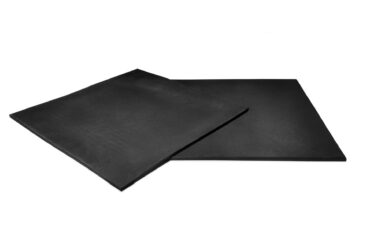
Fine or coarse grain rubber tiles: selection criteria
Choisir un grain fin ou un gros grain exige d’examiner la référence, pas seulement son aspect. Comparez un échantillon, les données de la dalle et sa notice d’entretien. Le grain visible ne démontre ni adhérence, ni drainage, ni résistance aux charges.
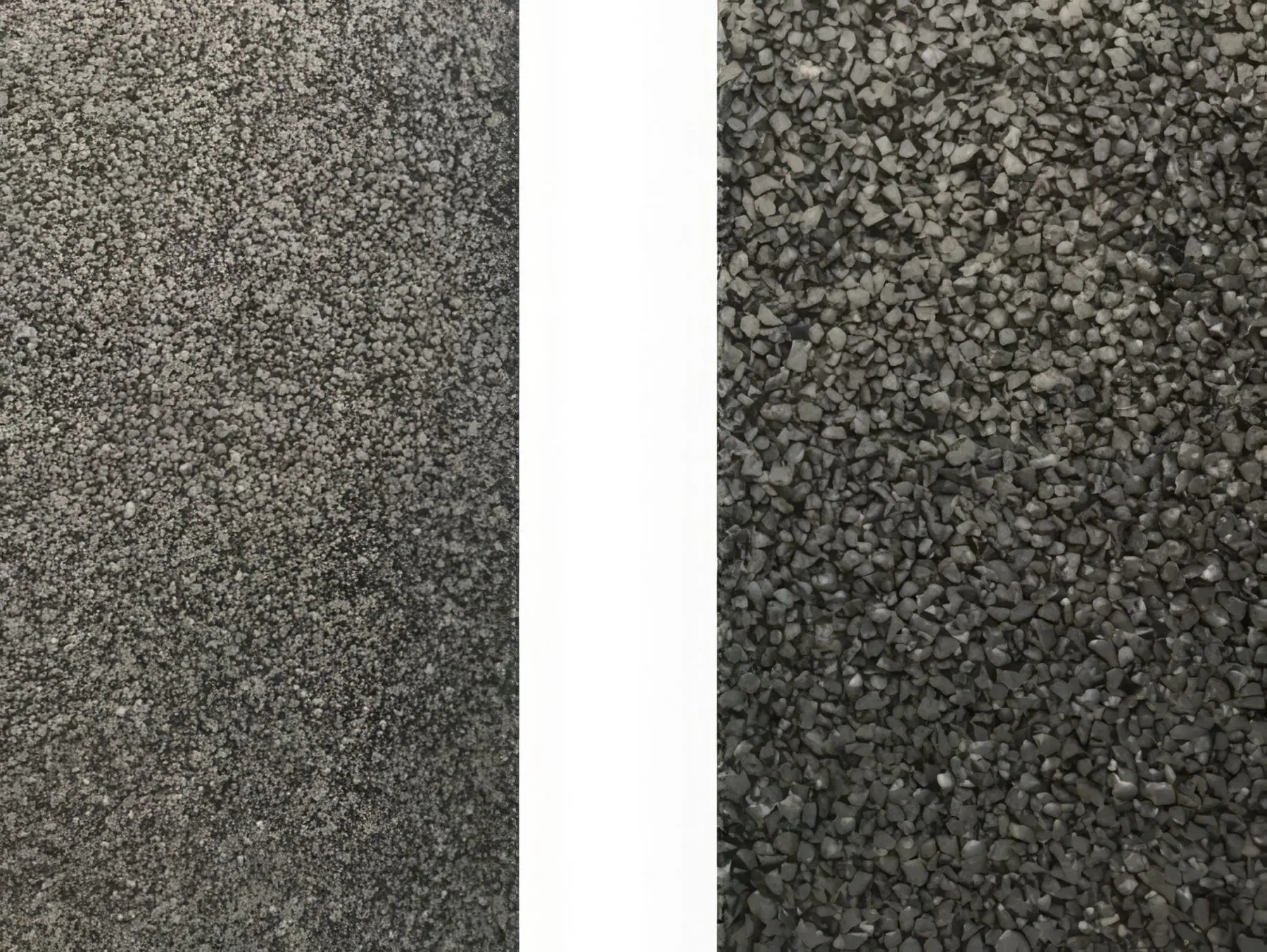
Fine grain or coarse grain describes a surface appearance; it is not enough to choose a rubber gym tile. Compare the actual relief, construction, thickness and maintenance instructions. A visible grain or photograph does not prove grip, load resistance, drainage or fire classification.
Distinguish appearance from construction
Ask what grain means for the model: visible particles, texture, a surface layer or a decorative finish. Two fine-grain products can have different constructions and instructions. Inspect a representative sample, its joints and underside; a sample does not replace a performance report.
Compare evidence rather than labels
Use the checklist below for each exact reference. Density and surface grain describe different aspects of a product; neither alone demonstrates that one finish lasts longer or drains better.
| Selection criterion | Useful check |
|---|---|
| Appearance | Representative sample of the current finish. |
| Cleaning | Instructions and a trial with the expected dirt. |
| Machines and impacts | Declared use, construction, thickness and relevant data. |
| Grip | A relevant test and its stated conditions. |
| Noise and fire | Document covering the tested product or system. |
| Outdoors | Declared use, water and exposure conditions. |
Cleaning chalk and dust
Identify the dirt expected in the gym. Follow the model’s instructions for dust removal, cleaning product, dilution and tool. Test the authorised method on a sample or small area, then inspect the dry surface. Fine grain does not guarantee that chalk marks disappear or that cleaning takes less time.
Choose for the intended zone
For machines and free weights, check documented use, loads and impact conditions. For an outdoor area, verify the product’s declared suitability, water behaviour and installation requirements. Coarse grain alone does not prove permeability. Where finishes or thicknesses meet, plan the transition and circulation.
For mass and thickness, read the rubber tile density guide. wood-effect rubber tiles · tiles with documented fire classification.
A wood-effect layer needs its own maintenance instructions. A Bfl-s1 claim requires a document for the exact reference and installation conditions, not a grain label.
Questions about grain and maintenance
Is fine grain always easier to clean?
Fine grain alone does not guarantee faster cleaning. Relief, the surface layer and the type of dirt also matter. Compare samples using each model’s authorised method.
Is coarse grain automatically suitable outdoors?
Coarse grain does not prove drainage or outdoor suitability. Check the declared use and the data for water and exposure. An indoor tile does not become an outdoor product through its appearance.
How should chalk be removed?
Follow the model’s dust removal and cleaning instructions. Trial the authorised method on a sample or small area first. Grain alone cannot guarantee removal of chalk marks.
Can wood-effect tiles be assessed in the same way?
Evaluate the model’s construction and the instructions for its decorative layer. A wood appearance does not prove impact resistance, grip or fire classification. Check the exact reference for the planned zone.
Choosing the right finish for your floor
Light In Fitness has manufactured and distributed professional sports flooring from Tours, France, since 2013, and has equipped more than 2,500 customers. We will match finish, thickness and fire class to each zone of your plan, supply the test documentation your file needs, quote within 24 working hours and ship in 5 to 10 working days from stock.
Request a quotation, or browse rubber gym flooring tiles and outdoor sports flooring.
Réalisations documentées
- Dalles et sols sportifs : livraisons documentées – plusieurs chantiers
- Sol sportif extérieur, square Georges-Vallerey – Taverny (95)
- Functional Rig inox – installations sur trois continents
- iGreenMill, tapis de course extérieur – installations sur trois continents
Sources et références
- Arrêté du 19 avril 2011 – étiquetage des produits de construction ou de revêtement de mur ou de sol sur leurs émissions de polluants volatils (Légifrance)
- Ministère de la Transition écologique – étiquetage des produits de construction : classes d’émission A+ à C