Gym Flooring for Weight Training Rooms: How to Specify
Le sol d'une salle de musculation se dimensionne par zone : dalle épaisse sous les charges libres, dalle standard sur le plateau machines, tatami sur les zones de chute. Un revêtement inadapté provoque des blessures, endommage les équipements et transmet le bruit à la structure du bâtiment. C'est l'un des postes les plus sous-estimés d'un projet d'aménagement.
The floor is the one component of a weight training room that every user, every machine and every kilo of loaded iron passes through. It has to absorb impact, survive abrasion, clean quickly, contain noise and stay grippy when it is wet with sweat. Getting it wrong is expensive twice over: once when it fails early, and again when the room has to close for a replacement.
Specify by zone, not by room
The most common mistake is buying one covering for the whole floor. A weight room has zones with completely different demands, and a good specification treats them separately.
The free weight zone takes dropped loads, so it needs thickness and impact absorption above everything else. Circulation routes and machine zones take rolling and point loads from equipment feet, so they need abrasion and indentation resistance rather than shock absorption. Splitting the floor along those lines is what keeps the budget sensible: you pay for impact performance only where impact happens.
Rubber for the loaded areas
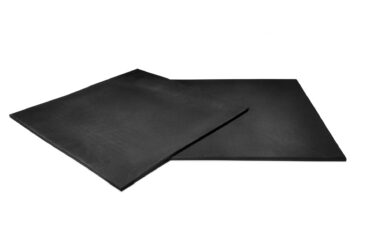
Rubber is the reference covering for any area where free weights are handled. It absorbs the energy of a dropped bar, protects the slab underneath, damps the noise of the impact, and resists the abrasion of plates being dragged across it. It is supplied as tiles for zoned areas and as rolls for larger continuous surfaces.
Thickness follows the load: the heavier the weights and the more likely a drop, the thicker the specification. Our rubber gym flooring tiles cover the standard cases, with the 25 mm rubber gym tile as a typical choice for a general free weight area, and dedicated weightlifting rubber tiles where bars are dropped from height. For continuous surfaces, rubber flooring rolls reduce the number of joints.
PVC and vinyl for circulation and machine zones
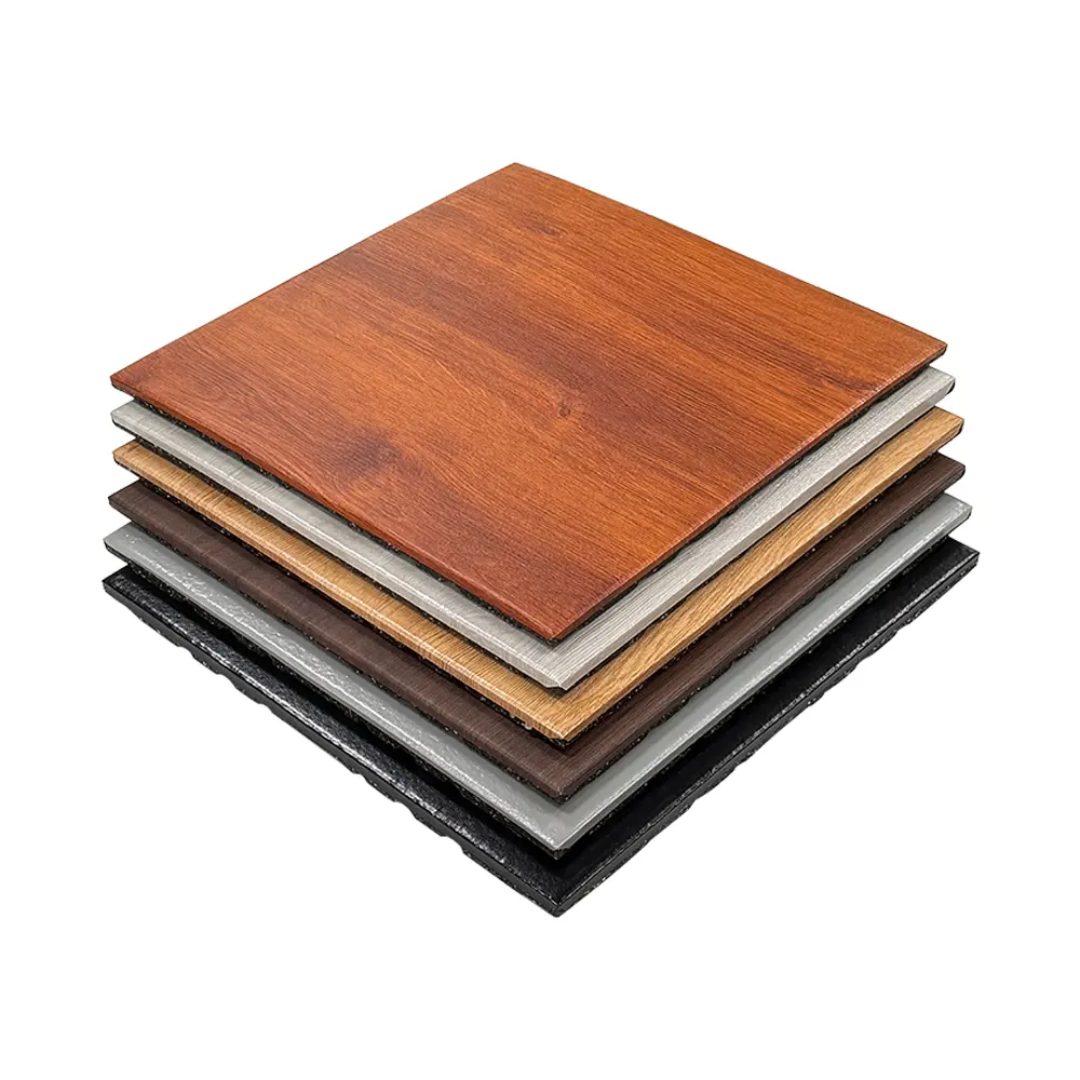
PVC is a robust material with good resistance to abrasion and to indentation, which is exactly what a circulation route and a machine zone need. It installs and maintains easily, as click or adhesive tiles and planks, and it comes in a wide range of colours and decors including wood and cement-tile effects. Vinyl offers the same logic: strong wear resistance, easy maintenance, and a wide choice of decors.
These are finishes for areas where nothing gets dropped. They are not a substitute for rubber under a rack or a platform, and specifying them there is the fastest way to destroy a new floor.
Noise: the constraint that decides projects
Sound is what gets gyms into disputes with neighbours and landlords, and it is rarely designed in early enough. Impact noise from dropped weights travels through the structure, not through the air, so surface thickness alone does not solve it. Where the room sits above or beside occupied space, an acoustic underlay installed beneath the covering is the element that does the work. Resilient coverings laid over an underlay perform far better than the same covering laid directly on the slab.
Slip resistance and safety
A gym floor gets wet, and slip resistance is a safety requirement rather than a preference. Rubber holds its grip when damp, which is one more reason it dominates in training areas. Whatever covering is chosen, the surface has to keep its adhesion under sweat, and joints and edges have to sit flat: a lifting edge is a trip hazard long before it is a wear problem.
What not to specify
Laminate and similar rigid decorative coverings look like an economical way to get a wood appearance, and they belong in a studio or a reception area, not in a free weight zone. They are not designed to take dropped loads, and a single dropped plate will damage them. Where the wood look is wanted in a training area, use wood-effect rubber tiles, which give the appearance with the performance.
Frequently asked questions
What thickness should a free weight area have?
It depends on the loads handled and whether bars are dropped. A general free weight zone and a dedicated lifting platform are not specified the same way; tell us what happens in the zone and we specify it.
Tiles or rolls?
Tiles suit zoned layouts, awkward shapes and areas that may be reconfigured, and they allow a damaged unit to be swapped. Rolls suit large continuous surfaces and leave fewer joints.
Do I need an underlay?
If there is occupied space below or adjacent, plan for one. Impact noise transmitted through the structure is not solved by the surface covering alone.
Is fire performance part of the specification?
In many buildings it is, and it should be checked with the building file before ordering. Fire-rated tiles are available where the project requires a specific classification.
Getting your floor specified
Send us the room plan with the zones marked, the type of training each area will take and what sits below the room, and we will come back with a covering, a thickness and a price per zone. Start with a request a quote.
Réalisations documentées
- Dalles et sols sportifs : livraisons documentées – plusieurs chantiers
- Sol sportif extérieur, square Georges-Vallerey – Taverny (95)
Sources et références
- Arrêté du 19 avril 2011 – étiquetage des produits de construction ou de revêtement de mur ou de sol sur leurs émissions de polluants volatils (Légifrance)
- Ministère de la Transition écologique – étiquetage des produits de construction : classes d’émission A+ à C
- Décret n° 96-1136 du 18 décembre 1996 – prescriptions de sécurité relatives aux aires collectives de jeux (Légifrance)
- NF EN 1176-1 – Équipements et sols d’aires de jeux, partie 1 : exigences de sécurité et méthodes d’essai générales (AFNOR)