Which Strength Equipment Range Is Recommended for Intensive Use?

Facilities that run all day need equipment specified for it. Strength training and bodybuilding demand robust machines that carry high loads while keeping the user safe, and a range that survives eight hours a day of use is not the same range that survives two. This article sets out the categories of equipment recommended for intensive use in a commercial gym, a club, a military or corporate facility, and what to verify before signing the order.
1. Strength machines
Professional strength machines, benches, multi-stations and guided equipment are the backbone of a training floor because they let a user work a specific muscle group safely and without supervision. Chest press machines target the pectorals efficiently, and leg presses load the legs including the quadriceps and glutes. For facilities that also run circuit or cross-training formats, cardio stations such as rowers and cross trainers combine conditioning and muscular work in the same session.
Under intensive use, the differences between ranges show up in the frame section, the welding, the cable diameter, the bearing quality and the upholstery. Look at the Forza FH range for a guided line built for that duty, and at the plate-loaded machines where the site works with olympic discs.
Whatever the range, indoor professional equipment is specified to EN ISO 20957-1 class S. Ask for the declaration in writing before ordering. Class I is a professional class covering inclusive access, not a level above class S.
2. Dumbbells and free weights
Dumbbells are indispensable equipment for anyone training for strength, beginner or advanced. They give great flexibility in exercise selection, allowing work on the upper body including the biceps, triceps and back. Used for squats and lunges they also strengthen the lower body, targeting the thighs and glutes. To build muscle, load is increased progressively across sessions.
In an intensive setting the specification points are the rubber or urethane coating, the handle knurling and the rack that holds them. A professional dumbbell set with a matching rack takes less floor area and survives being dropped, which a budget set does not.
3. Bands and bodyweight training
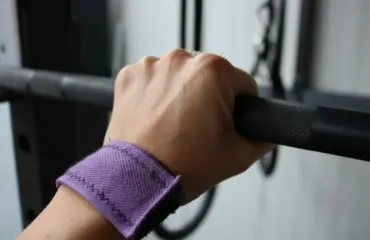
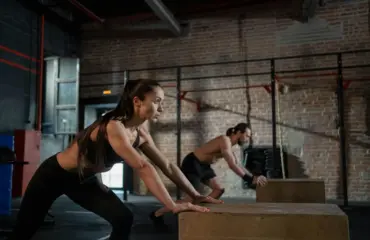
Resistance bands are an excellent complement for varying sessions and for conditioning work. They allow muscular work while limiting joint stress, which makes them useful for warm ups, for rehabilitation and for older members. Bodyweight exercises, such as pull-ups on a bar or push-ups for the trunk, are an effective alternative for developing endurance and muscular power, and they cost nothing in floor area once the structure is in place.
That structure is usually a rack or a rig: see the squat racks and power racks, which give pull-up bars, band anchors and barbell storage in one footprint.
4. Core and abdominal stations
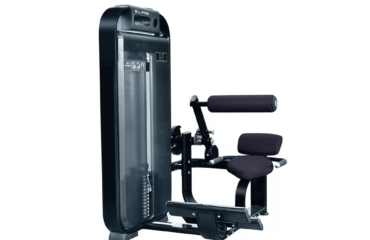
To work the abdominals and improve trunk tone, an inclined bench or a dedicated abdominal machine is genuinely useful. Completing that routine with bracing work strengthens the abdominal wall and improves upper body stability, which in turn improves what a member can lift safely on every other station in the room.
5. Cardio equipment
Do not overlook cardio. Treadmills and cross trainers are essential for burning calories and improving general endurance, and regular conditioning sessions inside a strength programme support fat loss while maintaining muscle mass. In an intensive facility, cardio is also the equipment with the highest running hours, which makes duty rating and service availability more important there than anywhere else on the floor.
6. Coaching and follow-up
Finally, working with a coach or running group classes maximises the effectiveness of training. A coach can build a programme matched to the objective, whether that is strength, hypertrophy or general conditioning. Warm up and stretching sessions remain necessary to prevent soreness and injury, and they are the cheapest injury prevention a facility can offer.
Frequently asked questions
What actually makes a range suitable for intensive use? Frame section and welding, cable and bearing quality, upholstery durability, spare part availability, and a class S declaration. Marketing labels are not a specification.
Guided machines or free weights for a busy floor? Both. Guided machines carry unsupervised users and beginners; free weights carry the experienced population. The mix depends on your membership, not on a rule.
How many stations for a given number of members? It depends on peak occupancy rather than total membership. Give us your busiest hour and we will size the floor against it.
What is the first thing to fail under intensive use? Usually cables, bearings and upholstery, in that order. Ask about their availability and lead time before you buy, not after.
In summary
For intensive use, invest in a varied professional range covering strength machines, dumbbells, bands and cardio equipment. That gives a complete approach to building muscle, conditioning the body and improving overall fitness in a safe environment. The right machines and the right equipment are what make strength training effective and sustainable over the life of a facility. Request a quote with your floor area and your peak occupancy and we will build the range with you.