Which Outdoor Strength Equipment Range for Which Audience?

When choosing a range of outdoor strength equipment for a fitness area, the decisive question is not which machines look best on a plan. It is who will use them. A well designed outdoor fitness area has to suit different levels of physical condition at the same time, from a beginner starting out to a trained athlete looking to add volume to their week, and it has to do so with nobody on site to explain anything.
This guide works through the audiences a municipality, a housing association, a campsite, a hotel, a school or a sports club has to serve, and the equipment range that fits each one. Adult outdoor fitness equipment installed permanently falls under EN 16630, and that standard is the frame within which all of these choices are made.
1. Equipment that works for every level
It is essential to include a variety of stations that let users work different muscle groups. That means equipment for the upper body such as chest press and pull-down stations and units for the arms, alongside parallel bars and pull-up bars for bodyweight work, which is highly effective for building and maintaining strength.
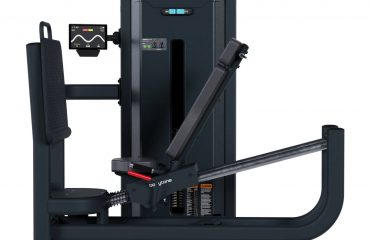
For beginners, guided-resistance stations are the right answer. They allow safe work while the correct movement pattern is being learned, and because the range of motion is fixed, they are safe when used imperfectly, which is what matters when there is no supervision. Multi-function outdoor stations offer a wide spread of exercises from a single frame, including core work, squats and complete lower body training, and they are efficient in both cost and footprint.
The outdoor gym equipment ranges group these stations by construction and by intended duty.
2. Including cardiovascular stations
An outdoor fitness area should not be limited to strength work. Cardiovascular training is essential to a complete offer. Including stations such as an outdoor rower, a cross trainer, an air walker and a stepper lets users build cardiovascular endurance alongside strength, and it broadens the audience considerably: many people who will never use a chest press will use a cross trainer.
Outdoor cardio stations work by mechanical resistance rather than by motors or electronics, which is what allows them to survive unsupervised outdoor use in the first place. Do not expect a treadmill in the sense of an indoor machine; the outdoor equivalents are built to a different principle.
3. Accessories and what belongs outdoors
Loose training accessories such as dumbbells, resistance bands and skipping ropes genuinely do broaden what a session can contain, and they are worth providing where there is a supervised setting or a lockable store: a club with staff, a school with a PE department, a hotel with a reception, a campsite with a season desk.
They do not belong loose in an unsupervised public fitness area. Nothing removable stays there. For a permanently installed public area, the correct answer is fixed stations that need no accessories at all, and where variable resistance is wanted, stations that provide it through their own design.
4. Ergonomics, accessibility and safety
The area has to be designed ergonomically to minimise injury risk, and that matters most for older users and for people training in a rehabilitation context. In practice that means clear approach and exit to each station, sensible station heights, seats and backrests where a movement calls for them, and pictogram instructions that work without text.
Accessibility should be built in rather than added. Stations designed to be used from a wheelchair, served by a level route with a suitable surface, turn an installation that serves most residents into one that serves all of them. A dedicated accessible outdoor gym range exists for exactly this, and it is far cheaper to specify at design stage than to retrofit.
Where a site serves rehabilitation users specifically, equipment ranges built for gentle, joint-friendly movement patterns are available and should be chosen deliberately rather than assumed from a general catalogue.
5. Equipment for athletes and trained users
For athletes and cross training enthusiasts, the outdoor answer is not a version of an indoor gym. It is bodyweight and calisthenics infrastructure: pull-up and dip bars, multi-height bars, wall bars, rings and the frames that carry them. Load is varied through leverage, tempo and progression rather than through plates, which is what makes this work outdoors.
Street workout rigs are the reference here, and they have the additional advantage of being used intensively by a demographic that does not otherwise appear in municipal sports provision. Where a site has both a general audience and a trained one, the two zones can sit next to each other but should be specified as separate installations.
Materials and duty
Whichever audience the range is chosen for, the material specification decides how long it lasts. Stainless steel is the specification for coastal sites, for anywhere exposed to de-icing salt, and for installations where repainting is not part of a realistic maintenance plan. Galvanised and coated steel is a legitimate choice for a sheltered site with a maintenance budget, but it is a different lifetime and should be costed as such.
Frequently asked questions
Which standard applies to outdoor strength equipment?
Permanently installed outdoor fitness equipment for adults falls under EN 16630. Request the conformity documentation for the specific references you buy. Children equipment is a separate matter, covered by EN 1176-1 with EN 1177 surfacing, and the two must never be mixed in one specification.
Can one range serve beginners and athletes?
Partially. Guided-resistance stations serve beginners and general users well but will not satisfy trained users; calisthenics rigs serve trained users but exclude many beginners. Most successful sites provide both, as adjacent but distinct zones, rather than compromising on one range.
What about older users and rehabilitation?
Specify for them explicitly. Low-impact stations, mobility elements, seats, handrails and a level approach route make the difference between an area older residents use and one they walk past. This is a specification decision, not a signage decision.
How many stations does an area need?
Enough to cover the movement families for the audiences you have chosen, before any duplication. The total comes from the layout, because each station carries a free space requirement under EN 16630 that has to be respected between units.
Building the right mix
In short, an outdoor strength range for a public fitness area should include varied equipment matched to a diverse audience, from beginners to trained athletes. The stations have to cover strength and cardiovascular work while accounting for user safety and comfort, and everything left outdoors has to be fixed. Get that mix right and the area encourages activity across the whole population it serves. Detailed project quotations, with a scaled layout and a station schedule matched to your user groups, are available for any public or private site.