How to Install an Outdoor Sit-Up Bench in Your Town
Installer un banc à abdominaux en extérieur suppose un agrès conforme à la norme EN 16630, un ancrage adapté au support et un sol de réception calibré. La commune reste exploitante de l'installation et doit tenir un registre de contrôle. Light In Fitness fournit l'étude d'implantation, l'agrès, la pose et le dossier de conformité.
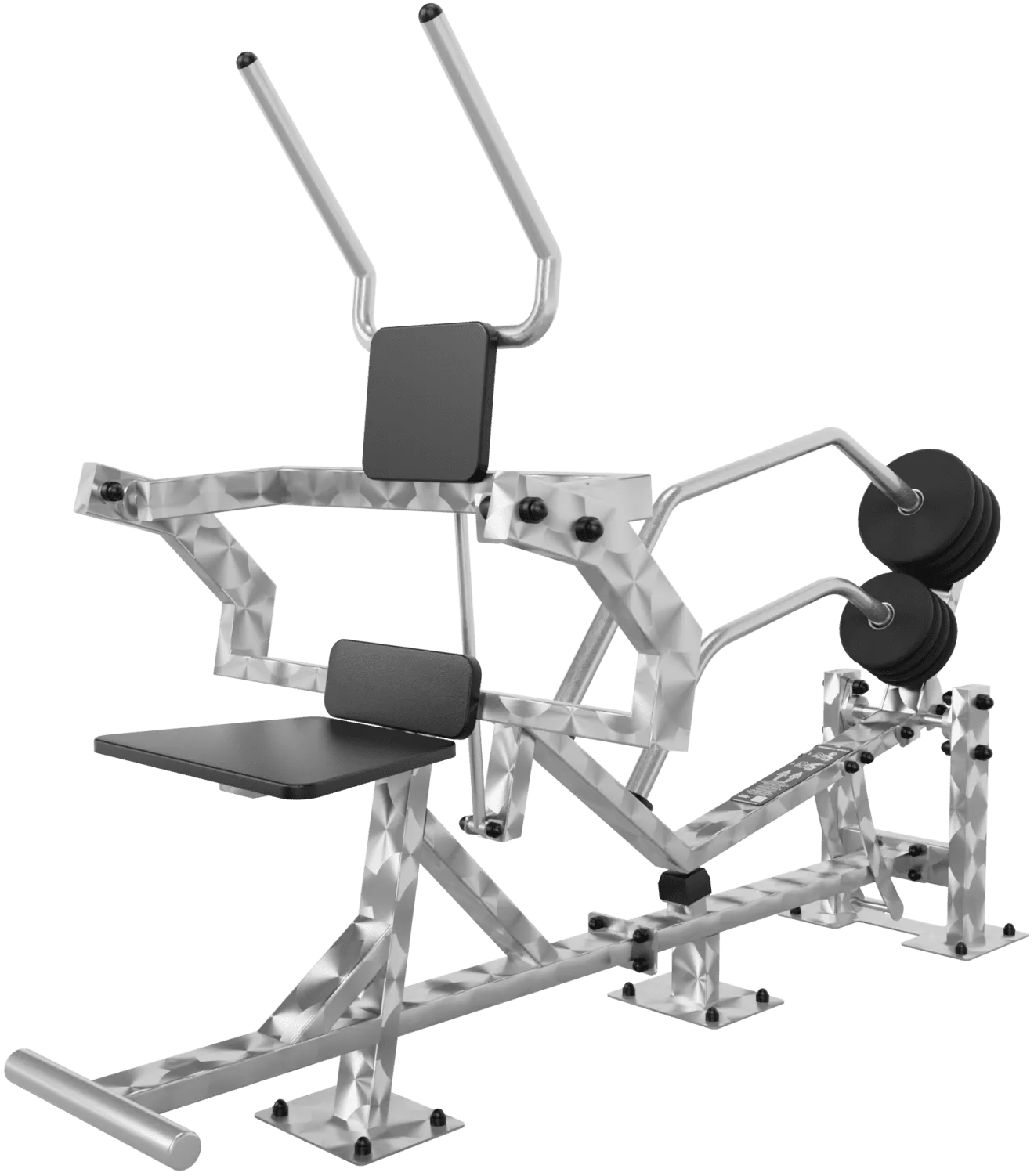
An outdoor sit-up bench is one of the least expensive ways for a town to put strength training within reach of everyone, at any hour, with no membership and no booking. It is also a piece of public equipment, which means it is governed by a standard, it has to be anchored, and somebody has to inspect it for as long as it stands. This guide runs through the whole process, from choosing the site to keeping the installation compliant.
Step 1. Choosing the site
Pick a location that is level, well drained, visible and already used: a park path, the edge of a sports pitch, a promenade, a school perimeter or an existing outdoor gym area. Passive surveillance matters more than most planners expect, because equipment that is overlooked is used more and vandalised less. Check sightlines, lighting, the distance to the nearest footpath and access for maintenance vehicles. Avoid ground that holds water and slopes that would put the user head-down.
Step 2. Permissions and responsibilities
Public outdoor fitness equipment falls under the planning, safety and accessibility rules of the municipality that owns the land, and those rules differ from country to country. Contact the department responsible for parks, sports facilities or public works before ordering anything, and confirm three points: who authorises the installation, who is registered as the operator afterwards, and what documentation has to be filed. In practice the authority that owns the land remains the operator of the installation and carries the inspection duty.
Step 3. Choosing equipment that is legal outdoors
This is where projects go wrong. Indoor gym equipment cannot be installed in a public park. A folding bench, an adjustable incline bench or a set of dumbbells is designed for a supervised indoor room, it is not weather resistant, it is not anchored and it is not built for unsupervised public access.
Outdoor adult fitness equipment is covered by EN 16630, which sets requirements for permanently installed, freely accessible outdoor training equipment: structural strength, entrapment and finger-trap prevention, protection against falls, corrosion resistance, and the free space to be kept around each station. A compliant sit-up bench is a fixed, anchored unit with no adjustable moving parts to lose, a slip-resistant surface and a frame designed to be left outside permanently.
Two material families dominate. Hot-dip galvanised and powder-coated steel is the standard choice and the most economical. Stainless steel costs more and is the right answer on coastal sites and anywhere de-icing salt or heavy pollution is present. Our ranges are grouped under outdoor gym equipment, with a dedicated stainless steel outdoor fitness line for aggressive environments.
If the bench is being installed as part of a wider area, the usual companions are a pull-up bar, parallel bars, a back extension station and a set of step or dip units. If children are expected to use part of the area, note that equipment intended for children is a different regulatory world: it falls under EN 1176-1, with impact-absorbing surfacing under EN 1177, and it must not be mixed with EN 16630 adult equipment as if the two were interchangeable.
Step 4. Preparing the ground and the foundations
Outdoor equipment is not placed on the ground, it is founded in it. The manufacturer specifies the foundation for each model, normally concrete footings cast at a defined depth for the anchor bolts or for direct burial of the posts. Improvised bases, loose paving slabs or timber boards are not an acceptable substitute: they neither hold the anchor loads nor keep the unit level after a winter.
Surfacing is a separate question from foundations. Where the equipment involves a risk of falling from height, an impact-absorbing surface is required and its specification depends on the free height of fall. For a sit-up bench the fall height is low, but the surrounding surface still has to be even, non-slip and drained. Grass wears to mud in a well-used spot, which is why bonded rubber, rubber tiles or a reinforced turf are usually specified around stations. Our outdoor sports flooring range covers the usual options.
Step 5. Installation
Follow the manufacturer instructions to the letter, because they are what the conformity of the installation rests on: foundation dimensions, curing time before use, anchor torque, free space kept clear around the unit and distance to other equipment. Installation by a trained team is strongly advisable; on public land it is often required. When the unit is commissioned, a post-installation inspection should be carried out and recorded before the area is opened.
Step 6. Inspection and maintenance
Once open, the installation needs a documented inspection regime: frequent visual checks for vandalism and obvious damage, periodic operational checks of wear points and fixings, and a deeper annual inspection of structure, corrosion and foundations. Keep a register: it is the document that proves the operator met its obligations, and it is the first thing asked for after an incident. Budget for consumables such as fixings and surface treatment, and repair or take out of service promptly rather than leaving damaged equipment accessible.
Step 7. Getting the equipment used
Installed equipment that nobody knows how to use is a common and avoidable waste. Free introductory sessions run with a local club, signage with two or three clear exercises per station, a QR code to a short demonstration video, and outdoor group classes in the first season all convert a piece of street furniture into a used facility. Schools, community associations and rehabilitation services are the partners who bring the first regular users.
Frequently asked questions
Can an indoor bench simply be bolted down outdoors?
No. Indoor equipment is not designed for weather exposure or unsupervised access and does not meet EN 16630. Anchoring it does not make it compliant.
Galvanised steel or stainless steel?
Galvanised and powder-coated steel is the standard choice inland. Stainless steel is worth the difference near the coast, near swimming pools and where salt or industrial pollution attacks coatings.
Who is responsible if a user is injured?
Generally the operator of the installation, which on public land is the authority that owns it. That is why the choice of compliant equipment, correct installation and a maintained inspection register matter well beyond the purchase itself.
How much space does one station need?
Each model has a defined free space that must be kept clear around it, given in its technical documentation. Layouts are drawn from those figures, not estimated on site.
Planning your installation
Send us the site, its surface area, the exposure and the audience you want to serve, and we will come back with a layout, EN 16630 compliant equipment, the foundation and surfacing specification and a costed proposal: request a quote.