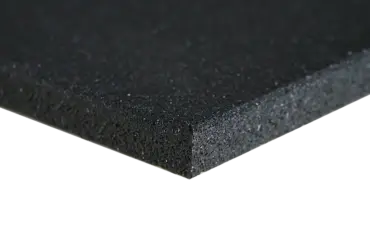
Do Rubber Tiles Resist Frost, UV and Rain Outdoors?
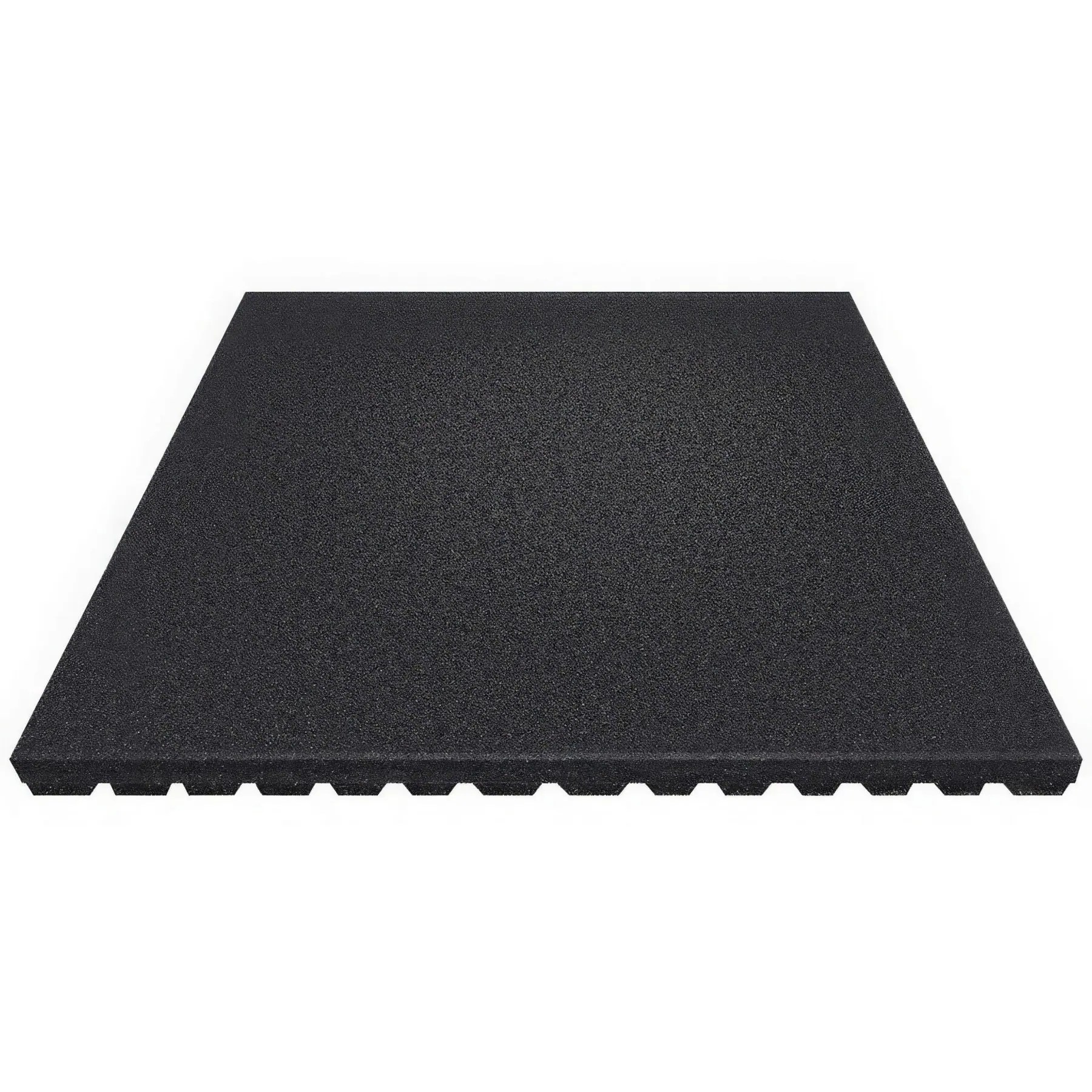
Rubber tiles have become the default outdoor surface for playgrounds, outdoor gyms, terraces, walkways and pool surrounds. The question every specifier asks before signing is the right one: do they actually survive frost, ultraviolet exposure and rain, or do they look excellent for two seasons and then curl, fade and crack? The honest answer is that a correctly specified rubber tile lasts for years outdoors and a badly specified one does not, and the difference is visible on the datasheet long before it is visible on site.
What a rubber tile is
A rubber tile is a floor covering made from rubber, frequently recycled rubber from end-of-life tyres, bound and moulded into a slab. The result is a durable, slip-resistant, shock-absorbing surface. The composition, whether natural or recycled rubber, together with the binder and the manufacturing process, directly governs wear resistance and how the tile behaves under repeated impact. Two tiles of identical appearance and thickness can behave completely differently outdoors depending on what is inside them.
Where rubber tiles are used
Rubber tiles are versatile and appear across many outdoor situations. They are used extensively under playground equipment, where their impact-attenuating properties reduce injury risk from falls. They also serve as surfacing for terraces, balconies, pedestrian walkways and pool surrounds, providing a surface that is safe and visually acceptable at the same time. Compressive strength and abrasion resistance are what make them suitable for high-traffic areas, which is why they are also the standard answer for outdoor fitness zones and stable areas.
Frost and temperature extremes
Frost is the most demanding test an outdoor surface faces, because water entering the material and then freezing expands. The tile has to keep its elasticity and its structure to avoid cracking or deformation. Quality tiles made from a rubber compound formulated for outdoor use offer excellent resistance to freeze-thaw cycling, which is what delivers the service life. Thickness is a significant variable here: a thicker tile carries the mechanical stress of the cycle better than a thin one, and it is the specification most often reduced to save budget.
UV and prolonged sun exposure
Prolonged sun exposure is a genuine challenge for any outdoor surface. Ultraviolet radiation causes colour fading and degradation of the rubber. To counter this, UV stabilisers are added during manufacture to protect the material. That protection is what keeps a tile looking acceptable and keeps its physical properties intact after long exposure. Coloured tiles are available, and it is worth asking specifically how the colour behaves under UV: pigmented surface layers and through-coloured granules do not age the same way.
Rain, water and drainage
Resistance to rain and moisture is essential outdoors. Rubber tiles are manufactured either impermeable or permeable depending on the application. Permeable tiles let water drain through quickly, reducing standing water and the associated slip risk. A properly designed drainage build-up below the tile extends the service life of the surface and preserves its slip resistance. Specify the drainage and the sub-base at the same time as the tile: a permeable tile over an impermeable base solves nothing.
Thickness and density
Thickness and density are the two factors that decide performance and durability. A thicker tile gives better impact absorption and greater wear resistance. Density governs how much load the tile carries and how it resists compression. For playgrounds, thickness must be selected against the critical fall height of the equipment above it: impact-attenuating playground surfacing is specified to EN 1177, while the play equipment itself falls under EN 1176-1. These are two distinct standards and must never be conflated. For adult outdoor fitness equipment, the applicable standard is EN 16630.
Permeable and porous properties
Permeability and porosity matter particularly outdoors. Permeable tiles allow water to pass through into the ground, reducing run-off and puddling. Porous surfaces keep a slip-resistant texture even when wet. Both characteristics contribute to safety and comfort in use and make cleaning easier. Our outdoor sports flooring and pool surfacing ranges are built around these properties.
Compared with natural stone
Against natural stone, rubber tiles have clear advantages in the situations that matter for public and shared spaces. They absorb impact, which reduces injury risk from falls; they are generally easier to install and to maintain; and recycled rubber is an environmentally responsible material choice. Natural stone offers a different aesthetic, but for playgrounds and outdoor areas that need a safe, slip-resistant surface, rubber is the functional answer.
Maintenance
Regular cleaning
Routine cleaning preserves both durability and appearance. Water and mild soap is generally enough to remove dirt and debris. Avoid aggressive chemical products, which damage the material. For stubborn marks, use a cleaner specifically intended for rubber surfaces.
Preventing impact damage
Avoid dropping heavy or sharp objects onto the tiles. In playgrounds, confirm that the tile thickness matches the maximum fall height of the equipment installed above it. Thicker tiles absorb impact better and wear more slowly.
Repair and replacement
Damaged tiles should be repaired or replaced promptly so the damage does not spread. Small cracks can be repaired with a rubber-specific sealant. A tile that is too far gone should be replaced with a new one of the same dimensions and thickness so the surface stays uniform. Modular tiles are far easier to maintain in this respect than a bonded surface, which is a strong argument for tiles in public spaces exposed to vandalism. See our rubber flooring tiles.
How to specify
When choosing rubber tiles, check three things in this order: thickness against the intended use and, for playgrounds, against the fall height; UV treatment, so colour and material do not degrade; and permeability, matched to your drainage strategy. Then check the supplier: ask for the technical datasheet, the standards the product is tested against, and the availability of matching replacement tiles in two years. A surface you cannot patch is a surface you replace whole. Our playground surfacing range is specified with these questions already answered.
Frequently asked questions
Do rubber tiles fade?
Any pigmented outdoor surface changes over time. UV stabilisers slow this considerably. Ask how the colour is achieved, since the answer determines how the surface looks after several summers.
Can tiles be laid directly on soil?
No. Tiles need a prepared, level, load-bearing and correctly draining sub-base. The base is what determines whether the installation survives, and it is the most common cause of failure.
Are they suitable for freeze-prone regions?
Yes, with a compound formulated for outdoor use, adequate thickness and a drainage build-up that prevents water sitting under the tiles.
What thickness for a playground?
That depends on the critical fall height of the equipment installed. The thickness is derived from the equipment, never chosen independently of it.
Specifying your outdoor surface
Rubber tiles resist frost, UV and rain when the compound, the thickness, the UV treatment and the drainage build-up are specified together. Send us the location, the intended use, the fall heights where relevant and photographs of the existing base, and our technical team will propose the correct tile and build-up. Request a quote for a costed specification.
Réalisations documentées
- Dalles et sols sportifs : livraisons documentées – plusieurs chantiers
- Sol sportif extérieur, square Georges-Vallerey – Taverny (95)