Weights Room Flooring: Rubber, Vinyl or Modular Tiles — Professional Comparison
Trois familles de sols équipent une salle de musculation : dalles caoutchouc, revêtements vinyle en lés et tapis techniques, chacune répondant à un usage précis. Le caoutchouc absorbe les charges lâchées, le vinyle convient aux zones de circulation et de cours collectifs. Les normes EN 12503 et EN 1307 encadrent respectivement les tapis de sport et les revêtements textiles.
For a weights room, rubber is the default flooring — in tiles, rolls or wet-pour form — while sports vinyl (LVT) and linoleum belong in cardio and group-class zones, and modular polypropylene tiles serve temporary or multi-purpose spaces. The right answer is almost always a combination by zone, at a total installed cost of roughly 25–135 EUR excluding VAT per m² depending on system. This comparison, written for architects, contractors and facility managers, sets out the technical characteristics, standards, zone-by-zone thicknesses and installed prices of each family.
Standards: what actually applies
- EN 14904 — the reference standard for indoor multi-sports surfaces: shock absorption, vertical deformation, friction, ball bounce. Mandatory reference for school and multi-sport halls; informative for pure weights rooms.
- EN 13501-1 — reaction-to-fire classification. Publicly accessible premises typically require documented floor classes (Cfl-s1 is the common specification); demand the classification report per product.
- Impact and acoustic performance — not covered by a single harmonised standard for free-weight areas: specify by drop test data, density and thickness instead (see below).
Rubber: tiles, rolls and wet-pour
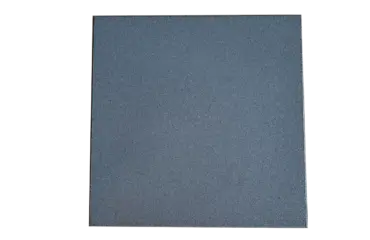
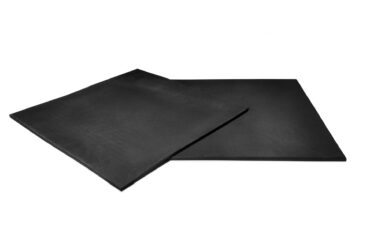
- Rubber tiles (50 × 50 or 100 × 100 cm): the workhorse. High-density SBR (950–1,050 kg/m³), 10–65 mm thicknesses, local replacement of damaged units, loose-laid up to 40 mm. Verified price points from our range: 40 mm CrossFit tile at 38.50 EUR excluding VAT, 42 mm premium DFL S1 tile at 60 EUR excluding VAT, 20 mm oak-look designer tile at 49 EUR excluding VAT.
- Rubber rolls (1.2–1.5 m wide, 6–10 mm): fewer joints, fast coverage of large flat areas, but full-width replacement when damaged and glued installation.
- Wet-pour rubber (EPDM granulate + PU binder): seamless, 18–25 year lifespan, the premium option — and the most substrate-sensitive.
Vinyl and linoleum: cardio and studios, not under iron
Sports LVT (approx. 6 mm) and linoleum (approx. 3.5 mm) give easy cleaning, controlled friction and a warm finish for cardio parks, circuits and group-class studios. Neither tolerates dropped weights: point loads cut and delaminate them. Where a weights room and studio share a floor plate, split the specification rather than compromise — comparison details in our PVC sports flooring guide.
Modular tiles: temporary and multi-purpose
Interlocking polypropylene tiles (10–22 mm) install without adhesive over almost any substrate, tolerate wheeled loads and disassemble for events — useful for converted halls and pop-up facilities. EVA foam tiles are for stretching and yoga corners only; under machines or weights they compress permanently within months.
Thickness by zone
- Cardio and circulation: rubber 8–15 mm, or LVT.
- Machine circuit: rubber 15–20 mm.
- Free weights to ~50 kg dumbbells: rubber 20–30 mm.
- Barbell drop zones and platforms: rubber 40–65 mm or platform build-up.
- Group studio: point-elastic vinyl or 6–8 mm rubber.
Comparison table: installed cost and lifespan
| System | Thickness | Supply (EUR/m²) | Installation (EUR/m²) | Total excl. VAT | Lifespan |
|---|---|---|---|---|---|
| Rubber tiles 10 mm | 10 mm | 18–28 | 5–10 | 23–38 | 10–15 yrs |
| Rubber tiles 20 mm | 20 mm | 30–45 | 6–12 | 36–57 | 12–18 yrs |
| Rubber tiles 30 mm | 30 mm | 45–65 | 8–14 | 53–79 | 15–20 yrs |
| Rubber roll 8 mm | 8 mm | 22–35 | 12–18 | 34–53 | 10–15 yrs |
| Wet-pour EPDM 12 mm | 12 mm | 50–75 | 35–60 | 85–135 | 18–25 yrs |
| Sports LVT 6 mm | 6 mm | 35–55 | 12–20 | 47–75 | 12–18 yrs |
| Linoleum 3.5 mm | 3.5 mm | 20–35 | 12–20 | 32–55 | 15–20 yrs |
| Modular PP tiles | 10–22 mm | 18–40 | 0 (floating) | 18–40 | 8–12 yrs |
Total cost of ownership rule: a 20 mm rubber tile floor at ~45 EUR/m² installed over 15 years costs about 3 EUR/m²/year; wet-pour EPDM at ~110 EUR/m² over 22 years costs about 5 EUR/m²/year. The cheapest floor per year is the one matched to its zone. Wider market benchmarks: sports flooring prices per m².
Substrate and installation: where projects go wrong
- Flatness: maximum 2 mm deviation under a 2 m straightedge; self-levelling compound (2–6 EUR/m²) is routine, not optional.
- Residual moisture: new slabs must test dry before any glued system; otherwise a damp-proof membrane adds 8–15 EUR/m².
- Acoustics: above occupied floors, add a dedicated resilient layer — thickness alone is not an acoustic strategy; see acoustic underlays for gym floors.
- Laying mode: when to loose-lay versus bond is covered in laying rubber tiles: loose or bonded.
Frequently asked questions
Which flooring is best for a 400 m² strength club?
The proven combination: 20 mm rubber tiles across the machine and dumbbell floor, 40 mm in the drop lanes, LVT or thin rubber in cardio, point-elastic surface in the studio — around 55,000–70,000 EUR excluding VAT installed for 400 m².
Can rubber flooring be laid over an existing timber floor?
Yes, if the boards are sound, fixed and flat; use loose-laid tiles so the timber can breathe and be inspected. Avoid full-surface gluing over timber — seasonal movement opens joints.
How do you clean a rubber gym floor?
Daily dry sweep or vacuum, weekly damp mop with neutral pH detergent, never solvent or acid cleaners. Full protocol in our rubber gym flooring guide.
What floor does a school weights room need?
A 20 mm high-density rubber floor with a documented EN 13501-1 fire class, plus EN 14904-compliant surfacing in any shared multi-sport hall — both certificates should be filed with the building’s safety records.
Specify your floor with a single supplier
Light In Fitness stocks rubber tiles and rolls, sports vinyl and modular systems, with fire and impact documentation, European delivery and installation teams. Send us your floor plan and zone uses, and we will return a costed flooring specification within 24 working hours.
Réalisations documentées
- Dalles et sols sportifs : livraisons documentées – plusieurs chantiers
- Sol sportif extérieur, square Georges-Vallerey – Taverny (95)
Sources et références
- Arrêté du 19 avril 2011 – étiquetage des produits de construction ou de revêtement de mur ou de sol sur leurs émissions de polluants volatils (Légifrance)
- Ministère de la Transition écologique – étiquetage des produits de construction : classes d’émission A+ à C
- Code du sport, articles R322-4 à R322-43 – garanties d’hygiène et de sécurité applicables aux établissements d’activités physiques et sportives (Légifrance)