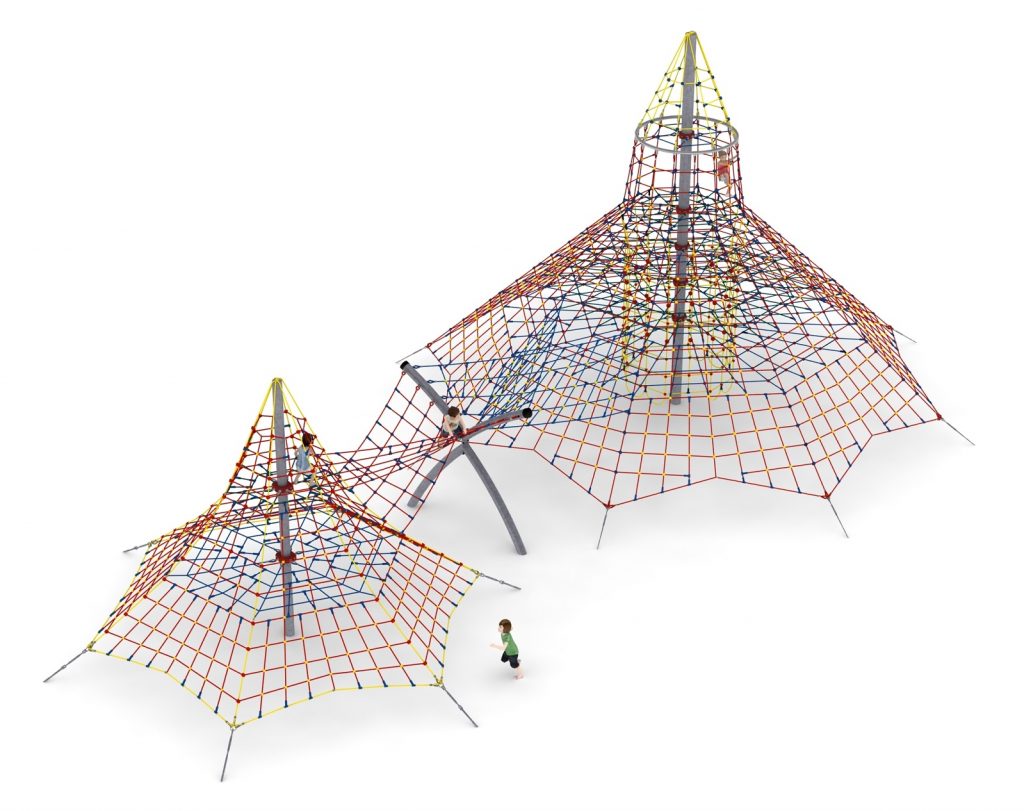
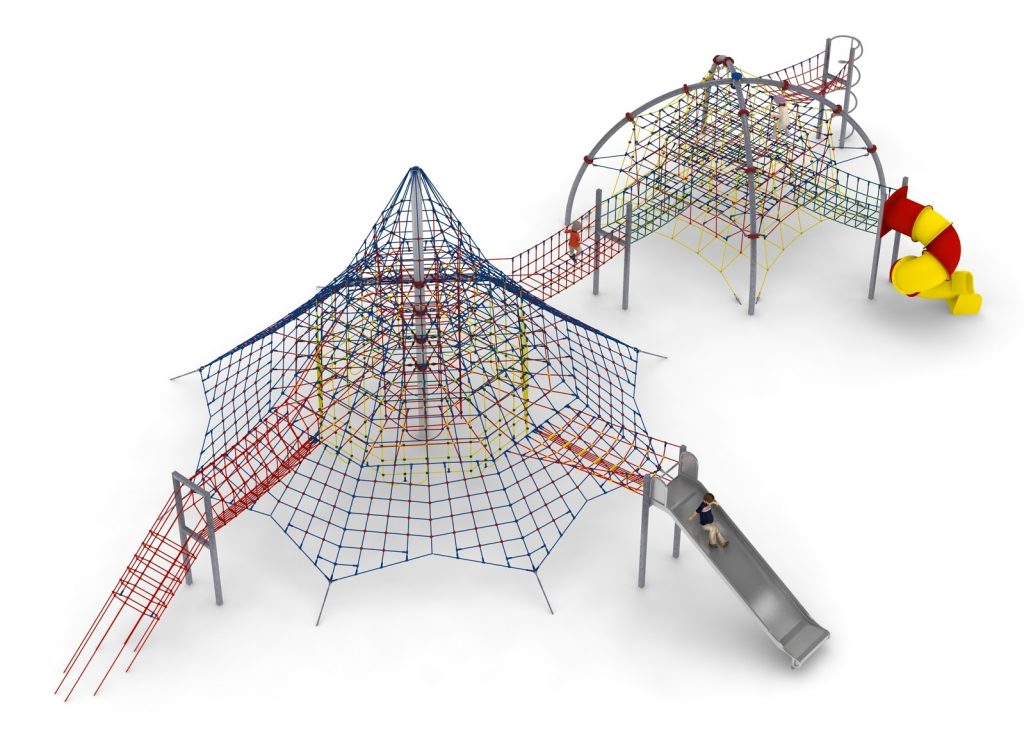
Rope play configuration no. 14 – two 8 m climbing pyramids
Rope play configuration no. 14 – two 8 m climbing pyramids : combined rope play structures for playgrounds, marque Light In Fitness, tarif sur devis. Encombrement 2 110 × 1 160 × 800 cm. Delivery and installation priced on quotation across Europe.
Price on request
Shipping quoted separately The shipping cost is confirmed before you approve the order.
Price on request — project quotation within 24 business hours.
Two 8 m rope climbing pyramids joined by a transition connector on a 21.1 x 11.6 m plot — vertical challenge on a compact footprint.
This item is supplied on quotation: configuration, delivery and installation are priced against your project.
Request a quotation +33 6 20 72 66 96
Answer within 24 to 72 business hours, quote reference LIF-KZ14-1114. Layout study, delivery, installation and after sales.
Conformity: equipment certified compliant with EN 1176 (playground equipment) by an independent certification body; the certificate is supplied on request with the quotation.
Warranty: specified in the quotation for each reference — details of our warranties.
Description
In brief — Rope play configuration no. 14: dimensions 2110 × 1160 × 800 cm, material hot-dip galvanised steel, free fall height 3,0 m, age range 5 to 14 years, standards EN 1176-1:2017, certification certificate of conformity from an independent certification body, price on quotation.
Rope play configuration no. 14 is three components and eight metres of height: two tall rope climbing pyramids joined by a transition connector, on a 21.1 x 11.6 m plot. The brief it answers is vertical challenge for older, more adventurous children, on a plot far smaller than the sprawling multi-module layouts.
Height concentrated, not spread
Most large playgrounds buy scale horizontally. This configuration buys it vertically: 8.0 m of pyramid on a footprint of about 245 m². Children who have outgrown low equipment get a climb that is genuinely long, and the installation makes a visual statement out of proportion to its ground take — useful where a park needs a landmark but has no room for one.
- Two tall rope climbing pyramids
- Transition connector between the two structures
Why two pyramids rather than one
A single tall pyramid concentrates every user on one net and one summit. Two, linked, let children climb one, cross, and descend the other, which spreads load across the rope, halves the queue at the top and gives the connector a purpose beyond decoration.
Materials and installation
Hot-dip galvanised steel, standard finish, foundations at 1.0 m depth. Heavy plant access is required — the pyramid masts are erected by crane, so confirm access routes, overhead clearances and ground bearing capacity before the location is fixed.
Surfacing
The free height of fall is 3.0 m. The impact area requires an impact-attenuating surface certified to EN 1177 for a critical fall height of at least 3.0 m. The equipment itself is certified to EN 1176-1:2017 by an independent certification body: EN 1176-1 covers the equipment, EN 1177 the surface beneath it. The safety area is issued with the siting drawing (EN 1176-1), because at this fall height the free space envelope is what governs the plot, not the structure outline.
Technical specification
| Reference / SKU | LIF-KZ14-1114 |
|---|---|
| Dimensions (L x W x H) | 21.1 x 11.6 x 8.0 m |
| Age range | 5 to 14 years |
| Free height of fall | 3.0 m |
| Safety area | Issued with the siting drawing (EN 1176-1) |
| Foundation depth | 1.0 m |
| Frame | Hot-dip galvanised steel |
| Finish | Standard galvanised finish |
| Standard | EN 1176-1:2017, independently certified |
| Price | On request — project quotation within 24 business hours |
Frequently asked questions
Is 8 m too high for a public playground?
Height is not what the standard controls — free height of fall is, and here it is 3.0 m. Tall rope pyramids limit the fall distance by design, because a climber is inside the net rather than on top of it.
Will younger children in the range use it?
They will climb the lower net without difficulty. The upper sections are self-selecting: children who are not confident do not reach them, which is one of the reasons pyramid geometry works well across a wide age range.
What are the main inspection points?
Rope tension and abrasion at the connector and at the apex fixings, mast bases and foundation exposure, and the depth and condition of the impact-attenuating surface.
Send us the plot dimensions, planning context, access route and surfacing intentions, and we will return a costed proposal with a scaled siting drawing within 24 business hours.
Additional information
| Dimensions | 2110 × 1160 × 800 cm |
|---|
Delivery and installation
Lead times are confirmed in the quotation according to the product, available stock and destination.
Access requirements and delivery appointments for heavy equipment are agreed before dispatch.
Installation is included when stated for the product or in the quotation; otherwise it is quoted separately.
You may also like…
-
Rope play configuration no. 12 – twin pyramids, 1 m fall height to Pinterest (opens in a new window)Save on Pinterest : Rope play configuration no. 12 – twin pyramids, 1 m fall height
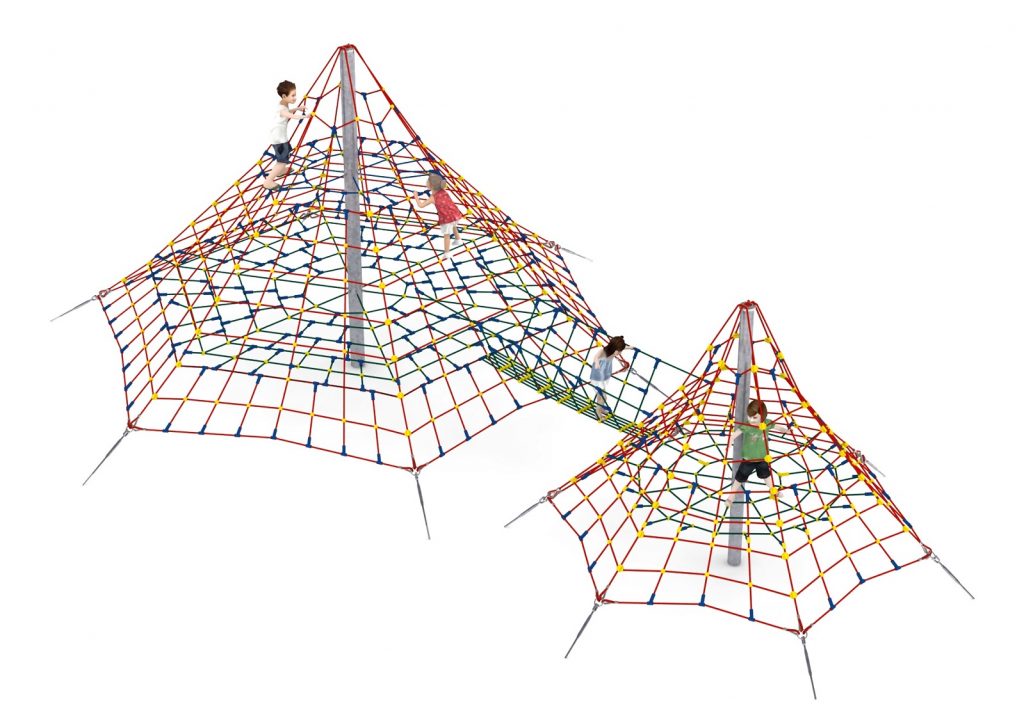 View product
Rope play configuration no. 12 – twin pyramids, 1 m fall height
Price on request -
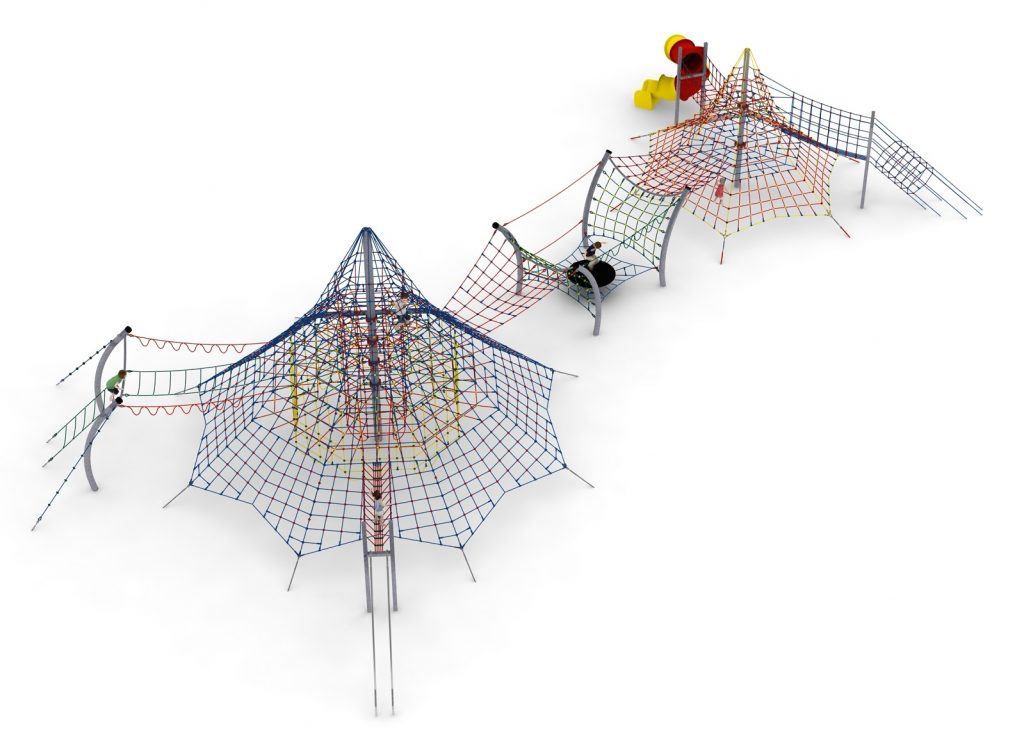
Rope play configuration no. 16 – twin climbing pyramids to Pinterest (opens in a new window)Save on Pinterest : Rope play configuration no. 16 – twin climbing pyramids
![Structure de jeu en corde LIF-1116 - vue d'ensemble]() View product
View productRope play configuration no. 16 – twin climbing pyramids
Price on request -
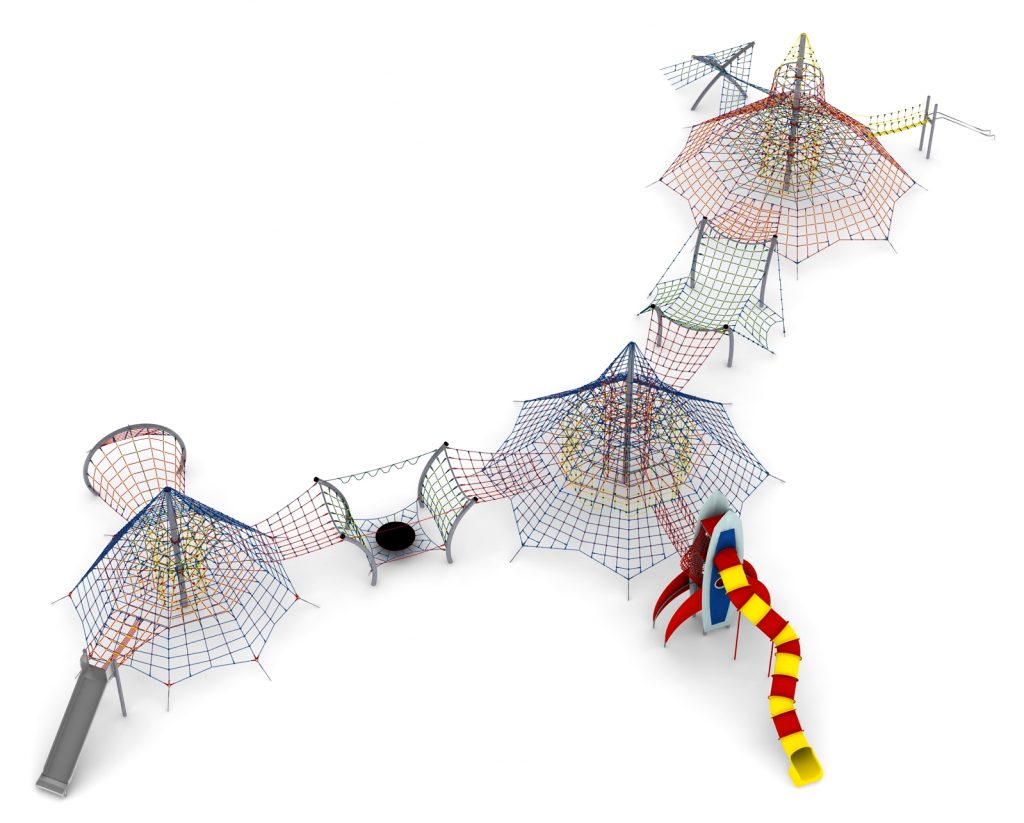
Rope play configuration no. 19 – three linked climbing pyramids to Pinterest (opens in a new window)Save on Pinterest : Rope play configuration no. 19 – three linked climbing pyramids
![Structure de jeu en corde LIF-1119 - vue d'ensemble]() View product
View productRope play configuration no. 19 – three linked climbing pyramids
Price on request -
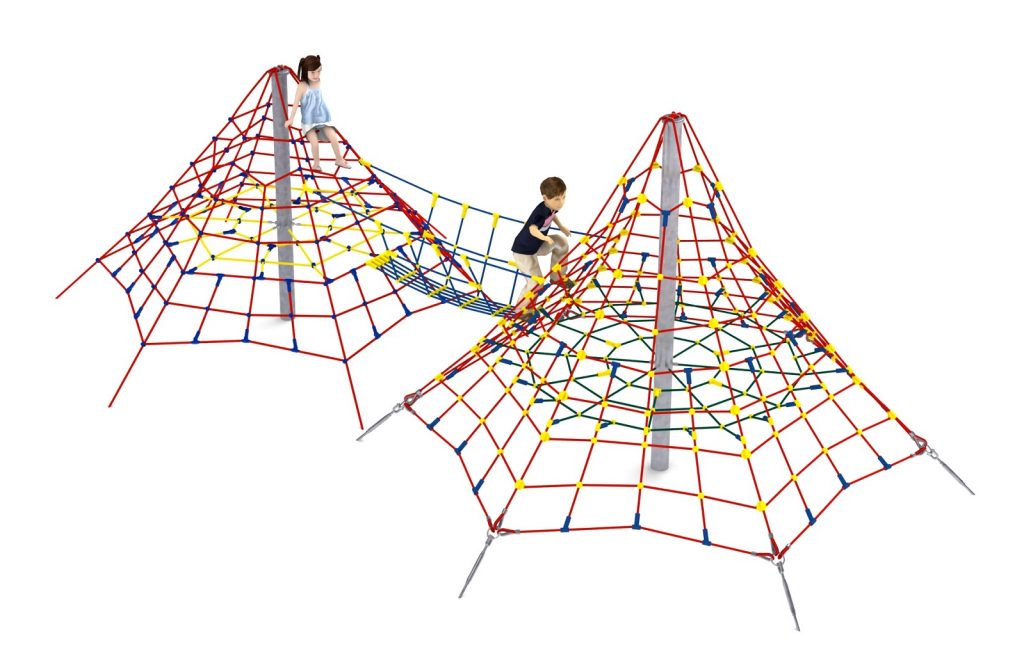
Rope play configuration no. 13 – compact two-structure set to Pinterest (opens in a new window)Save on Pinterest : Rope play configuration no. 13 – compact two-structure set
![Structure de jeu en corde LIF-1113 - vue d'ensemble]() View product
View productRope play configuration no. 13 – compact two-structure set
Price on request -
Rope play configuration no. 17 – pyramid and tower with sliding pole to Pinterest (opens in a new window)Save on Pinterest : Rope play configuration no. 17 – pyramid and tower with sliding pole
![Structure de jeu en corde LIF-1117 - vue d'ensemble]() View product
View productRope play configuration no. 17 – pyramid and tower with sliding pole
Price on request
Related products
-
Rope play configuration no. 44 – dome and tower with triple slide to Pinterest (opens in a new window)Save on Pinterest : Rope play configuration no. 44 – dome and tower with triple slide
![Structure de jeu en corde LIF-1144 - vue d'ensemble]() View product
View productRope play configuration no. 44 – dome and tower with triple slide
Price on request -
Rope play configuration no. 11 – three linked pyramids to Pinterest (opens in a new window)Save on Pinterest : Rope play configuration no. 11 – three linked pyramids
![Structure de jeu en corde LIF-1111 - vue d'ensemble]() View product
View productRope play configuration no. 11 – three linked pyramids
Price on request -
Rope play configuration no. 27 – pyramid and tiered structure to Pinterest (opens in a new window)Save on Pinterest : Rope play configuration no. 27 – pyramid and tiered structure
![Structure de jeu en corde LIF-1127 - vue d'ensemble]() View product
View productRope play configuration no. 27 – pyramid and tiered structure
Price on request