Leg Training in a Commercial Gym: The Programme Members Want and the Equipment It Needs
Ask any club manager which body part members most often say they want to work on, and legs will be near the top of the list. Ask which area of the floor is most often underspecified, and the answer is usually the same. Lower-body training is where member demand and equipment provision diverge most sharply. This article sets out the leg programme members are actually asking for, the equipment that delivers it on a commercial floor, and how to size a lower-body zone that gets used rather than walked past.
What members mean when they ask about legs
Members rarely arrive with a training vocabulary. They describe an outcome: firmer, more defined, better shaped legs. Translated into programming, that request breaks down into three components, and a club that can deliver all three retains those members.
The first is a reduction in overall body fat, which comes from a sustained energy deficit supported by cardiovascular work – not from any exercise that targets the legs specifically. There is no mechanism by which training one region removes fat from that region. Staff who explain this clearly save members months of frustration and save the club the churn that comes with it.
The second is muscle development in the quadriceps, hamstrings, glutes and calves. This is what actually changes the shape of a leg, and it requires progressive resistance work.
The third is consistency. Visible change takes weeks to months and depends on training frequency, nutrition and individual variation. Setting that expectation at the induction is worth more to retention than any single machine on the floor.
The cardiovascular component
Widely used public health guidance sets a target of at least 150 minutes of moderate to vigorous cardiovascular activity per week. That is the figure to give members, and it is the figure your cardio provision has to support at peak hours.
Running, cycling, rowing and group formats all serve. What matters operationally is that a member pursuing a lower-body goal will use cardio stations two to three times a week on top of their resistance sessions, and your equipment count needs to reflect that combined demand rather than treating the two populations separately.
The resistance component: the five movements to provide for
A lower-body area only needs to cover five movement patterns. Everything else is a variation.
Squatting. The bilateral knee-and-hip movement that recruits quadriceps, hamstrings and glutes together. Provided by a rack for members who barbell squat, and by a leg press for the much larger group who will not. A typical prescription is three sets of twelve to fifteen repetitions for a general fitness goal.
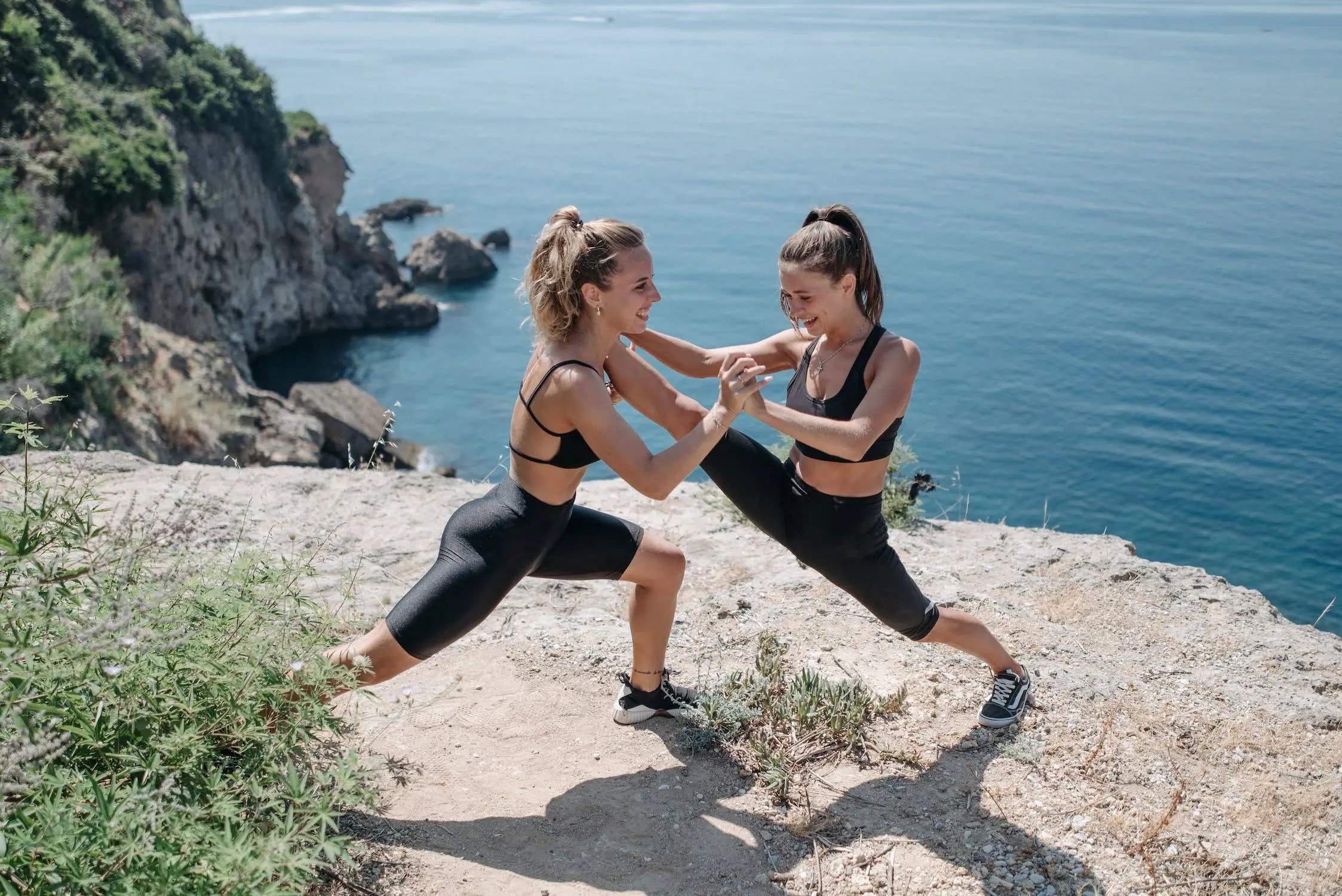
Lunging and single-leg work. Addresses left-right asymmetry and loads the glutes strongly. Needs floor space more than it needs machines – a clear area with dumbbells is enough, and it is the provision most often forgotten when a floor plan is drawn.
Knee extension. Isolates the quadriceps. A leg extension machine is the reliable way to load this pattern for a general membership, and the seated position makes it accessible to members who are not confident with free weights.
Knee flexion. Isolates the hamstrings, the pattern most commonly left out of self-directed leg training and the one whose absence shows up as posterior chain weakness. A leg curl station is not optional in a complete area.
Calf raise. Simple, low-footprint and consistently requested. It can be provided standing on a step or with a dedicated station, and three sets of twelve to fifteen is the usual prescription.
Two to three lower-body sessions per week, with recovery time between sessions, is the frequency to programme against. That is what determines how many stations you need for a given membership size.
Specifying the equipment
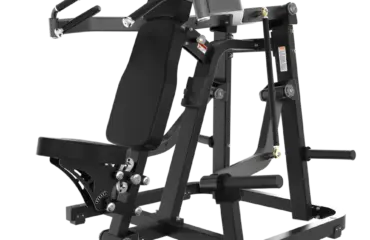
The leg press is the anchor of the area. It handles the largest loads, it serves the widest range of ability, and it is the station members queue for. A vertical format such as the Bodytone SRX54 vertical leg press loads heavily for a small footprint, which is why it suits floors where area is the binding constraint; the full vertical leg press range covers the alternatives.
Leg extension and leg curl stations should be specified together. Providing one without the other produces exactly the imbalance the area exists to prevent, and iso-lateral versions let each side work independently, which matters for members returning from injury.
Beyond that, a rack, clear floor space and a dumbbell set complete the zone. See the wider professional strength training machines range for how the stations combine.
Whatever you specify, indoor equipment for a professional installation must be certified to EN ISO 20957-1 class S – the requirement for facilities open to users you do not supervise individually. Class I is a professional class with inclusive access, not a higher intensity grade.
Frequently asked questions
Can members get results without resistance training?
Yoga, Pilates and dance build strength and control in the lower body, and members who prefer them will progress. They do not load the legs as heavily as resistance training, so the change in muscle shape is slower and smaller. Offer them as an alternative route, not as an equivalent one.
Will leg training make female members bulky?
No, and this remains the single most common objection at the induction desk. Circulating testosterone levels are markedly lower in women, which makes large increases in muscle mass difficult to achieve. Resistance training produces firmer, more defined legs, which is what the member asked for in the first place.
Do members need to isolate each muscle group?
A balanced programme covers quadriceps, hamstrings, glutes and calves, but it does not need a separate station for each. Compound movements such as squats and lunges cover several at once, and isolation stations fill the gaps – hamstrings above all.
How much space does a lower-body area need?
Less than most operators assume for the machines and more than most allow for the floor work. Budget clear space for lunging and single-leg work alongside the stations, or that part of the programme will simply not happen.
How soon will members see change?
Several weeks to several months, depending on starting point, training consistency, nutrition and individual variation. Say so at the induction.
Planning your lower-body area
A lower-body zone that covers all five movement patterns, in class S specification, with the floor space to use it, is what turns a common member request into retained membership. Light In Fitness has equipped professional facilities since 2013. Send us your floor plan and expected traffic and we will propose the leg configuration to match – request a quote.