Strength Training: The Questions Your Members Ask Most, Answered
Every gym manager knows the pattern. A member corners a coach between two sets and asks whether training every day is a good idea, how long a session should really last, or why nothing seems to be happening after three weeks. The answers matter commercially: a member who gets a clear, consistent reply stays, and a member who gets three different replies from three coaches quietly stops renewing.
This is a reference sheet for operators and coaching teams. It gathers the questions members ask most often about strength training and answers each one plainly, so that everyone on your floor says the same thing. It also flags, where relevant, what each answer implies for the equipment you put on that floor.
Frequency, rest and recovery
Is it good to do strength training every day?
Training every day can be counterproductive. Muscles need time to recover and rebuild after an intense session. The recommendation is to leave at least one rest day between strength sessions so that the muscle can repair itself and come back stronger.
Why should you not train every day?
Daily strength work can lead to muscular overload and a drop in performance. Recovery is part of the training, not a pause from it. Leaving at least one day between sessions is what allows the adaptation to happen.
How often should you train?
The right frequency depends on personal goals and on the programme being followed. As a general rule, three to four sessions a week produce the best results. For an operator, that number is useful: it is the planning assumption behind class timetables and behind how many stations a strength area actually needs at peak.
Which muscles should be trained twice a week?
Every muscle group benefits from being trained at least twice a week if the goal is to maximise results. What matters alongside that is leaving enough recovery time between the two sessions so the muscle can rebuild.
Is there a muscle you can train every day?
Training the same muscle every day is not advisable, because it causes muscular overload and a fall in performance. Leaving at least one rest day between sessions on a given muscle is the better approach.
Which muscles recover fastest?
Leg muscles such as the quadriceps and the glutes tend to recover faster than upper-body muscles. Recovery still varies considerably between individuals, for a large number of reasons.
Is it good to take a week off?
A full week off can be beneficial. It lets the muscles recover completely and helps prevent injury, and it also recharges people mentally so they come back to training more motivated. It is worth saying so to members who feel guilty about missing a week: a planned break is not a lost week.
How often should you train to build muscle?
Again, three to four sessions a week is the general recommendation for optimal results, adjusted to the individual goal and to the programme in place.
Session length and volume
How long should a strength session last?
The ideal length depends on fitness level, personal goals and the programme. In general a session of around 45 minutes to 1 hour is enough to work the muscles effectively. That figure is also a planning input: it sets how many members rotate through your strength area in a given opening hour.
How much strength training per day?
The same range applies. Around 45 minutes to 1 hour per session is generally enough to produce results, and more time is rarely what is missing when progress stalls.
Why do four sets?
Four sets increase the intensity of the session and place a greater demand on the muscle. They also increase total training volume, which is one of the drivers of muscle growth.
Results: what to expect and when
When do the effects of strength training show?
It varies from one person to another depending on genetics, diet and how regular the training is. In general, visible results start to appear after a few weeks of consistent training. Setting that expectation early is one of the cheapest retention tools a club has.
Which muscle grows fastest?
Usually the weakest or least trained one. Beyond that, it varies with genetics and individual factors.
Which part of the body is easiest to build?
This too varies with genetics and the individual, but in general the leg and glute muscles are often easier to develop than the upper body.
Which muscle is hardest to train?
Again it depends on the person, but the calves and the abdominals are frequently considered harder to develop because of their natural resistance to growth.
How do you get very muscular quickly?
It takes a structured training programme, a balanced diet and adequate recovery. The productive focus is on compound exercises that recruit several muscle groups at once, with training intensity and volume increased progressively rather than all at once.
Exercises and equipment
Which exercises build muscle?
Squats, bench press, pull-ups, deadlifts and overhead press are all effective. Varying the exercises matters, so that every muscle in the body is worked rather than the same three.
Which exercise builds the most muscle?
There is no single answer, because it depends on the goal and on the muscles targeted. Compound exercises such as squats, deadlifts and bench press are generally considered the most effective, because they recruit several muscle groups at the same time.
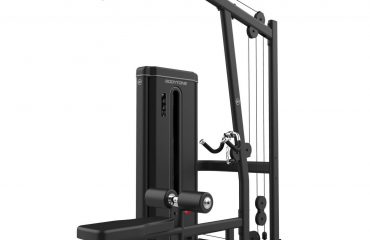
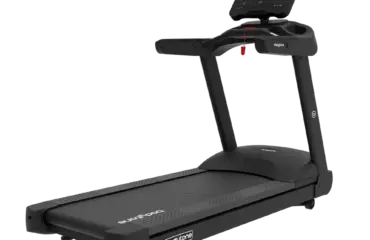
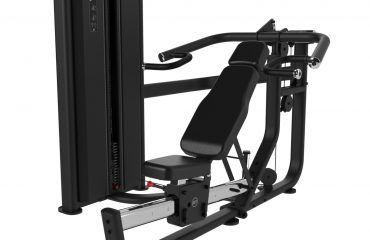
That is the single most useful sentence in this page for a buyer. If compound movements are where the results are, then racks, benches and barbells earn their floor space before any isolation station does. The full professional range is on the strength training machines page, with weight benches and Olympic barbells covered separately.
Which muscles do press-ups work?
Press-ups work mainly the chest, the front deltoids of the shoulder and the triceps. They also involve the back, the abdominals and the stabilising muscles.
Can you build muscle properly without a gym?
Free weights, resistance bands and bodyweight exercises can produce real results provided the programme is structured and the diet is balanced. What a professional facility adds is loading range, progression and supervision: the three things a bodyweight routine runs out of first, and the reason members come back to an equipped floor once they get past the beginner phase.
Which sport builds the whole body best?
Strength training is generally considered the best option, because it can recruit every major muscle group. Other sports such as climbing, rugby and tennis also build and tone the body.
Which sport gives the best physique?
There is no single sport, since it depends on individual preferences and goals. Sports that combine strength work with cardiovascular work, such as strength training, fitness and swimming, help build a toned and athletic body.
Core work
When do the effects of core training show?
They can start to be felt after a few weeks of regular training. The abdominal muscles strengthen, which shows up as better posture and greater stability rather than as a visible change.
How long should you hold a plank each day?
It depends on fitness level and on the goal. The sensible route is to start with shorter holds, 30 seconds to 1 minute, and to increase the hold time progressively.
How do you get to a one-hour plank?
Holding a plank for 1 hour is an ambitious goal that requires good physical condition and gradual progression. Start with shorter holds of 30 seconds to 1 minute and increase steadily. Regular practice and attention to breathing both help build the endurance the hold demands.
Which plank variation is most effective?
There are several effective core exercises: the front plank, the side plank and the bridge. Each recruits different muscles and each is effective for strengthening the abdominal belt and improving trunk stability.
Why do you shake during a plank?
Shaking is usually caused by intense muscular contraction and by fatigue. When muscles are worked hard over a sustained period they start to tremble, because of fatigue and lactate accumulation.
What walking does and does not do
Do you build muscle by walking?
Walking helps strengthen the leg and glute muscles, but it is not as effective as conventional strength training for building muscle. Training with weights or resistance is generally more effective at stimulating growth.
Does walking build abdominal muscle?
Walking helps burn fat and tone the abdominal muscles, but it is not as effective as targeted exercises such as crunches or planks for working that area specifically.
Which parts of the body does walking work?
Walking works mainly the leg muscles, including the quadriceps, hamstrings, glutes and calves. It also helps strengthen the back and abdominal muscles when good posture is maintained throughout.
Nutrition and body composition
What should you eat when you train?
A balanced diet rich in protein is essential. Protein supports recovery and muscle growth, while carbohydrates provide the energy for the sessions themselves. Vegetables, fruit and healthy fats belong in the diet as well.
Does strength training burn fat?
It helps, by raising basal metabolic rate and increasing calorie burn. For real results on body composition it needs to be combined with a balanced diet and with cardiovascular work.
Turning the answers into a floor plan
Read the answers together and a specification appears. Members train three to four times a week, for 45 minutes to an hour, across every major muscle group, with compound movements at the centre and a real need for progressive loading. That means enough racks and benches to absorb the peak, a barbell inventory that supports genuine progression, and a machine line for the members who are not ready for free weights.
Light In Fitness has equipped professional facilities since 2013 and specifies strength areas as complete projects, from the structure to the flooring underneath it. Send us your floor plan and your membership profile and we will size the area around it. Request a quote and our team will come back with a costed layout.