Strength training when tired: how to train safely and still progress
Training when you feel tired can look discouraging, but a session can still be worth doing if it is adapted to your physical state. The point is to find the balance between effort and recovery, so that injuries are avoided and the muscular gains are kept. Here is how to train sensibly through a period of fatigue, and, for operators, what a floor needs so that a tired member still finds something useful to do.
Understanding fatigue and rest
Fatigue can be physical or mental. Before planning the session, listen to the body. If the fatigue is intense, an active recovery session is a better decision than a heavy strength session. Proper rest lets the body regenerate muscle fibres, reduces soreness and prevents injury. Rest is not the absence of training, it is the part of the training where the adaptation actually happens.
Adapting the programme
On days when fatigue is present, adapt the programme rather than abandon it. Instead of a classic strength session, consider bodyweight exercises or circuit work with appropriate rest between stations. Low intensity cardio, such as easy running or the cross trainer, helps stimulate the metabolism and improve blood flow without loading the joints heavily.
This is one of the arguments for keeping a proper cardio equipment zone rather than treating it as the warm-up corner. On any given day a share of the members walking in are tired, and a well equipped cardio area, including cross trainers for low-impact work, is what keeps them training instead of turning round at the door.
Warming up and active recovery
The warm-up is fundamental for preparing the muscles and joints for effort. Give it real time and include dynamic stretching to activate the muscle groups involved, the thighs and the glutes among them. After the session, stretch to release tension and support recovery. Relaxing activity such as stretching work or yoga is a valid option on a low-energy day.
A floor that supports this needs mats and space as much as machines. See fitness accessories for the mats, bands and small equipment that make a recovery session possible without occupying a machine.
Intensity and type of session
Moderating intensity is the core of it. When the body is tired, the load and the total volume come down, and the rest between sets goes up. If you do use intervals, keep the work periods short and the rest generous, so that perceived effort stays manageable rather than turning the session into the hardest one of the week. Alternate movements such as lunges, squats and bench press with clearly defined rest periods, and stop the set when technique starts to slip rather than at a target number.
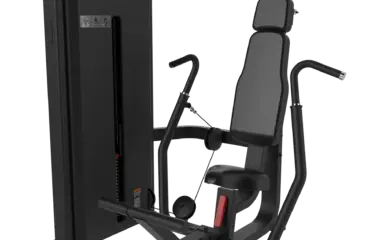
Guided machines earn their place on a tired day. A selectorised machine keeps the movement path controlled when concentration is not at its best, which is exactly when free weight technique tends to break down.
Hydration and nutrition
Hydrate before, during and after the session. Good hydration helps keep the heart rate stable and supports muscular performance. Carbohydrate and protein in the diet support muscle growth and recovery. Amino acids and food supplements can help repair, particularly for people training with heavy loads. None of this replaces sleep, which remains the largest single lever on how tired the next session feels.
Adjusting repetitions and exercises
On days when fatigue is higher, do not chase a high repetition count. Focus on shorter sets with targeted exercises that work the muscle groups efficiently without demanding an intense effort. For example, favour 3 to 4 sets of 8 to 10 repetitions on compound movements such as pull-ups or burpees, keeping good form throughout and staying attentive to how the body responds.
Listening to the body
Knowing when to slow down is the whole skill. If at any point there are signs of excessive fatigue or pain, reduce the intensity or switch to an active recovery session. Muscular work and rest are complementary, not opposed, and the members who understand that are the ones still training a year later.
Frequently asked questions
Is it better to skip the session entirely when tired?
Usually not. A shorter, lighter session or active recovery keeps the habit and supports blood flow. Complete rest is the right call when the fatigue is intense or when there is pain.
Does training tired increase injury risk?
Yes, if the load and the intensity stay the same. Fatigue affects concentration and technique first, which is why the load comes down and the rest goes up before anything else changes.
What should a session look like on a tired day?
A longer warm-up, low intensity cardio, guided machines rather than heavy free weights, shorter sets, longer rest, and stretching at the end.
What does this mean for a gym floor?
That the cardio zone, the guided machines and the stretching area are not secondary. They are what a large share of your members use on the days they arrive without energy, and they are the difference between a session and a cancelled visit.
Equipping for every kind of day
A floor that only serves members who arrive fresh serves them a few days a week. Send us the plan and the profile of your members and the equipment list is built for the full range of days they actually have. Request a quote for a proposal covering cardio, guided machines, free weights and the recovery area.