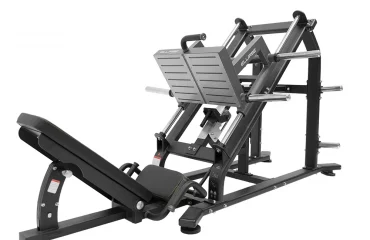
Unilateral Strength Machines: Which Ranges to Choose
Une machine unilatérale, dite isolatérale, permet de solliciter chaque côté du corps indépendamment, ce qui révèle et corrige les déséquilibres masqués par un mouvement bilatéral. Le côté dominant ne peut plus compenser le côté faible. Ces machines sont particulièrement utiles en rééducation, en préparation physique et pour les publics asymétriques.
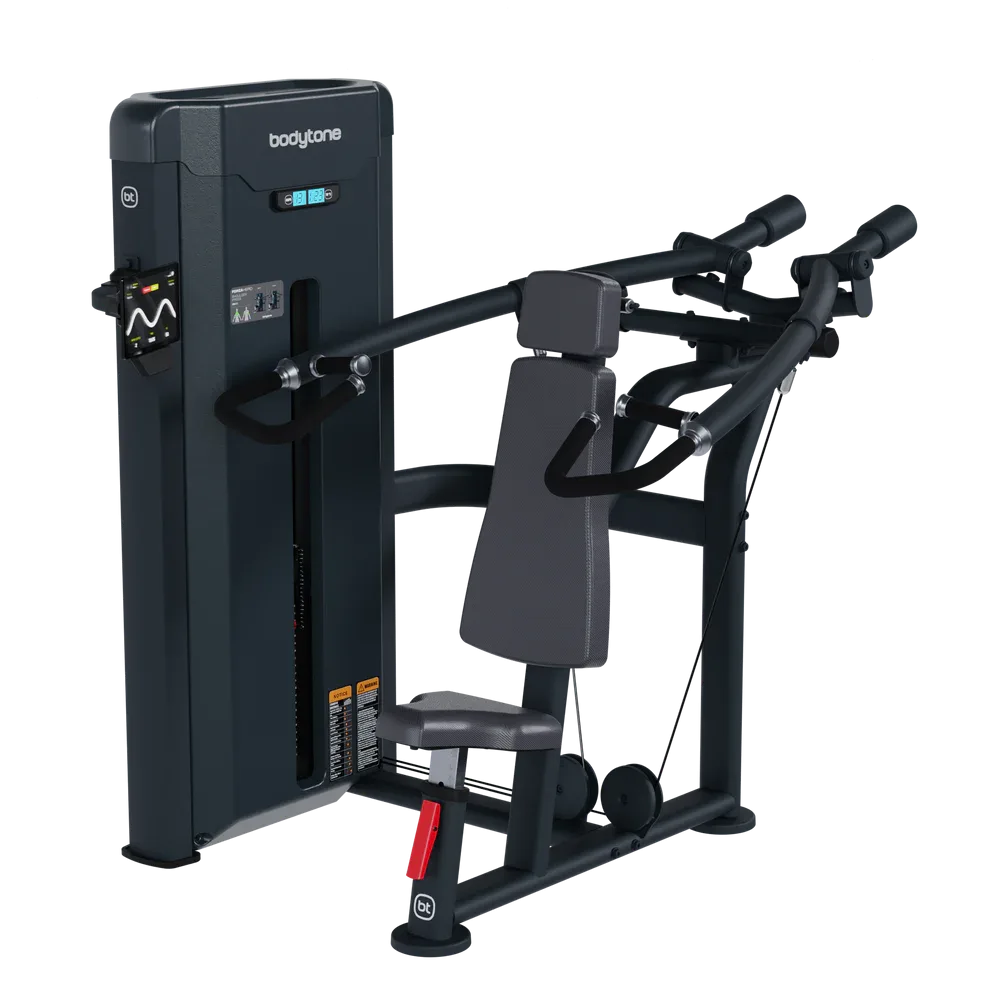
The strength machine brands worth shortlisting for unilateral work are the ones that actually engineer independent movement: machines where each side of the body can be loaded separately, so that imbalances are revealed and corrected, coordination improves and the effort can be individualised. The brand name matters far less than whether the range genuinely contains iso-lateral, converging or independent arm designs.
Why choose unilateral machines?
Machines with independent arms or legs allow one side to work at a time, unlike conventional bilateral stations that impose a simultaneous movement. That approach is useful in order to:
- correct right and left asymmetries;
- build stability and motor control;
- adapt training during a return to activity, reconditioning or sport specific preparation;
- individualise load progression more precisely.
Correcting imbalances
Each limb works at its real level, without the dominant side compensating for the weaker one. On a bilateral station that compensation is invisible; on an independent station it becomes measurable.
Finer progression
Load and volume can be set side by side according to the athlete’s profile, which matters in a performance centre and in any facility with rehabilitation clients.
Functional transfer
Independent work improves the motor control that most sports actually demand, since almost no sporting action is perfectly symmetrical.
Which ranges to look at
Rather than starting from a brand name, assess whether a range offers iso-lateral, converging or diverging and independent arm designs. The best ranges are the ones that provide:
- presses and pulls with genuinely independent arms or legs;
- a smooth, natural biomechanical path;
- a frame robust enough for continuous commercial use;
- enough consistency across the range to equip a whole strength area from one family.
In practice, independent arm designs are found first among plate loaded machines and among converging stations such as the Titan converging range and the Gold Line converging range. Compare the same key movements across ranges, a push, a pull and a leg pattern, to check the real mechanical independence and the feel under load.
How to recognise a genuinely unilateral machine
- Each side moves truly independently, not simply through a split handle on a shared arm.
- The path stays stable and comfortable even under an asymmetric load.
- The adjustments allow the user position to be set precisely, which is what makes the independence usable.
- The frame stays rigid and reassuring under intensive use.
Two different buying situations
Some buyers are still at the understanding stage: which machine types allow real unilateral work and why it matters for performance and for preventing compensation. Others are ready to compare concrete models, check build quality and get help selecting the stations that fit their room. Both deserve a straight answer, and both should insist on seeing the machine loaded on one side only before signing.
Frequently asked questions
Is a unilateral machine better than a bilateral one?
They are complementary. Unilateral stations are particularly useful for correcting asymmetries and refining motor control, while bilateral stations remain more time efficient for general loading.
Which exercises benefit most from independent work?
Chest and shoulder pushes, back pulls, and several leg movements where right and left compensation is common.
How should a commercial facility choose a range?
Check the biomechanical quality, the rigidity of the frame, the consistency of the range and the technical support behind it. A machine you cannot get parts for is not a saving.
Where can I get a selection built around my project?
Send us your room dimensions, your membership profile and your objectives and we will propose a selection rather than a catalogue. Request a quote to start the conversation.