Which Biceps Machine Should You Choose for a Professional Gym?

The biceps corner takes up very little floor space, yet it is one of the most visible areas of any commercial gym. It is busy at peak hours, it is where members compare your club to the one down the road, and it is where badly chosen equipment shows up fastest – in queues, in worn upholstery and in complaints. Choosing biceps equipment for a facility is therefore a question of traffic, durability and range coverage, not of which machine looks most impressive in a photo.
Start with the movement, not with the machine
Every biceps exercise in a gym comes down to one of three loading patterns, and a well-specified facility covers all three.
- Free-weight curls, standing or seated, where the member stabilises the load. Highest transferability, lowest cost per station, but they occupy dumbbell rack space and floor area.
- Supported curls on a preacher or incline bench, where the upper arm is fixed and the elbow is isolated. This is the pattern beginners learn on and the one coaches use to correct technique.
- Constant-tension curls on a cable or selectorised machine, where resistance stays on the muscle through the whole range. Easiest to load and unload, the fastest to use, and by far the most popular at peak hours.
A club that offers only one of the three ends up with a bottleneck at the busiest station and a piece of equipment gathering dust elsewhere.
The four equipment families compared
| Family | What it delivers | Floor space | Best suited to |
|---|---|---|---|
| Adjustable dumbbells and fixed dumbbell sets | Full freedom of movement, unilateral work, warm-up and finishing sets | Rack footprint plus a working zone | Every facility, whatever the size |
| Preacher and adjustable benches | Elbow isolation, coaching and technique correction, strict form | Small, and usable for many other exercises | Clubs with coaching, studios, rehabilitation rooms |
| Cable stations | Constant tension, angle variation, rapid load changes | Moderate, but needs clearance behind the user | Mixed-audience clubs, functional training areas |
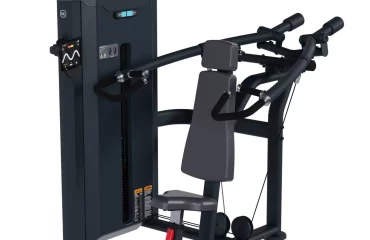
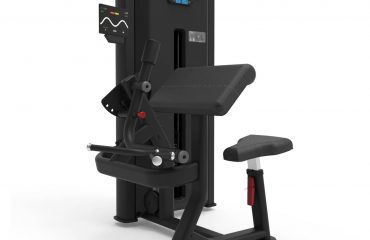
| Selectorised biceps curl machines | Guided path, fastest station turnover, safest for beginners | Compact and predictable | High-traffic gyms, hotels, corporate and municipal facilities |
An adjustable weight bench is the highest-value line in that table: it costs the least per exercise covered and it never sits idle. The cable station is the one that keeps advanced members in the club, because it lets them vary angles without waiting for a free rack.
Selectorised or plate-loaded?
For an arm station in a staffed commercial gym, selectorised is usually the right call. The weight is changed with one hand in two seconds, nothing is left on the floor, and the range of motion is guided – which matters when a large share of your members are unsupervised beginners. Ranges such as the Gold Line selectorised machines or the Bodytone Forza FH are built for exactly this: continuous use, simple adjustment, no loose plates to tidy up at closing time.
Plate-loaded equipment earns its place in strength-oriented clubs where members want heavier loading and accept the handling that comes with it. The trade-off is real: more plate trees, more tidying, more supervision.
Sizing the biceps zone for your traffic
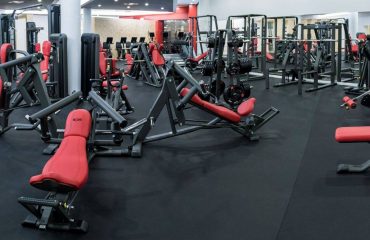
The right question is not how many biceps machines to buy but how many people will want to curl at 18:30 on a Tuesday. Count your peak-hour attendance, estimate the share of members doing arm work, and make sure that number can be served by a combination of stations rather than by one machine. Two different stations almost always beat two identical ones: they spread the load and they suit different member profiles.
Layout matters as much as the count. Keep the dumbbell working zone clear of the walkway, leave clearance behind cable users, and put the guided machine where a beginner can use it without feeling watched by the whole room.
Specification checklist for a commercial installation
- Equipment intended for professional indoor use must comply with EN ISO 20957-1 class S. Ask for the certificate, not the marketing claim.
- Check upholstery quality and whether pads are individually replaceable: in a busy gym, pads wear out long before frames do.
- Check that adjustment points can be operated seated, with one hand, without tools.
- Confirm spare-part availability and lead times before ordering, not after a cable snaps.
- Confirm floor loading and the protective flooring under free-weight zones.
Frequently asked questions
Do we really need a dedicated biceps machine?
A small studio with strong coaching can cover biceps work with benches, dumbbells and a cable station. A high-traffic club open without permanent supervision benefits from a guided machine, because it keeps beginners training safely and moves the queue faster.
Which comes first on a limited budget?
Adjustable benches and a solid dumbbell set. They cover the widest range of exercises per euro invested and they never become obsolete when your member profile changes.
How do we stop the arm area becoming a bottleneck?
Split the function across two different pieces of equipment rather than duplicating one, and position them at opposite ends of the strength area so the queues do not merge.
Is cardio equipment relevant to an arm programme?
Indirectly. Treadmills, cross trainers and rowers do not build the biceps, but they shape the overall programme your members follow and they determine how long people stay in the club – which is what fills your strength stations in the first place.
Get a specification for your floor plan
The right answer depends on your surface area, your peak attendance and your member profile. Send us your floor plan and your opening hours and we will come back with a station-by-station specification and a costed layout: request a quote.