How to Maximise Strength Training Results: A Guide for Gym Operators
Members join a gym to get results. Whether they stay depends largely on whether they get them. For an operator, the question is not an abstract training-theory debate but a concrete one: does the equipment mix, the floor layout and the coaching offer in your facility let a member progress month after month, or does it quietly stall them at week six?
This guide sets out the training principles that actually drive strength and muscle gains, and translates each one into what it means for the person specifying and running the gym floor.
The four fundamentals, and what they demand from your floor
1. A structured training plan
Results start with a plan: the right exercise selection for each muscle group, a defined set and repetition scheme, and a sensible weekly split. A balanced, progressive plan works every muscle group rather than the ones the member enjoys training.
What this means for the operator: the floor has to support a complete plan. If your selectorised line covers pushing movements well but leaves posterior chain and hip work to a single machine with a permanent queue, members cannot follow a balanced programme even if they have one. Audit your equipment against a standard full-body split rather than against a catalogue.
2. Correct technique
Technique determines whether the intended muscle does the work and whether the member gets injured. Good posture, controlled tempo and no jerking through the movement are the basics.
What this means for the operator: equipment design does a large part of the coaching. Machines with clear adjustment ranges, legible instruction panels and correct movement paths keep untrained members safe when no coach is on the floor. This is also where build quality shows: professional strength equipment for indoor commercial use is specified to EN ISO 20957-1 class S, and that specification exists precisely because a machine in a staffed gym is used by hundreds of different bodies with no supervision.
3. Consistent progression
Muscles adapt to a stimulus and then stop responding to it. Progression comes from adding load, adding repetitions or sets, or shortening rest between sets.
What this means for the operator: progression needs headroom. Weight stacks that top out too low, or plate-loaded stations with insufficient plate storage, cap your strongest members and push them to a competitor. Fine load increments matter as much as maximum load: a member who cannot make a small jump cannot progress at all.
4. Nutrition and hydration
Muscle needs adequate nutrients to grow and recover. Protein, carbohydrate and healthy fats all have a role, and hydration through the day is part of it.
What this means for the operator: stay inside your competence. General guidance is reasonable; individual dietary prescription is not, and should be referred to a qualified professional. Where you can act is on the environment: accessible water points and a sensible on-site offer support what your members are trying to do.
Six levers that move member results
1. Train with genuine intensity
Progress requires effort that meaningfully challenges the muscle: heavier loads, shorter rest, full concentration through the set. Comfortable training produces comfortable results.
On the floor, intensity is limited by availability. Members cannot keep rest periods short if they have to wait for a station. Station count and layout are intensity decisions, not just capacity decisions.
2. Vary the exercises
Varying movements, alternating machines and free weights and adding functional work stimulates muscle in different ways and keeps the programme from going stale.
A floor that offers only one modality caps variety. A complete offer usually pairs selectorised strength machines for guided, high-throughput work with plate-loaded machines and free-weight areas for members ready for heavier, less constrained loading.
3. Use intensification techniques
Pyramid sets, supersets, drop sets and forced repetitions all increase the demand placed on the muscle within the same session length.
Most of these techniques need two stations at once, or very fast load changes. Supersets fail on a crowded floor; drop sets fail when changing the load takes thirty seconds. Placing complementary stations next to each other, and choosing machines with quick load adjustment, is what makes these methods usable in practice.
4. Prioritise recovery
Recovery is where adaptation happens. Adequate rest between sessions, sufficient sleep and proper nutrition are not optional extras to training, they are part of it.
Operators influence this more than they think. A timetable that pushes members into consecutive heavy sessions, or a floor with no space for mobility work, works against the results members came for.
5. Watch the diet
Enough protein to support muscle growth, carbohydrate for energy, healthy fats for general health, and a bias towards whole rather than heavily processed foods.
6. Supplements, in their proper place
Supplements such as protein powder, creatine and amino acids can complement a balanced diet, support performance and assist recovery. They complement a diet, they do not replace one, and members should consult a health professional before starting any supplement.
Turning the principles into an equipment plan
| Training principle | What it requires on the floor | Common failure |
|---|---|---|
| Balanced programme | Full coverage of push, pull, hinge, squat and single-leg patterns | Duplicated chest stations, one hip station for the whole club |
| Correct technique | Clear adjustment ranges, correct movement paths, legible instructions | Under-specified machines that force members to improvise |
| Progression | Sufficient maximum load and usable increments | Stacks that cap strong members |
| Intensity and density | Enough stations for the peak hour, short walking distances | Queues that make short rest periods impossible |
| Variety | Machines, plate-loaded stations, free weights and functional space | A single modality across the whole floor |
| Recovery | Stretching and mobility space that is not the last corner left over | No space allocated at all |
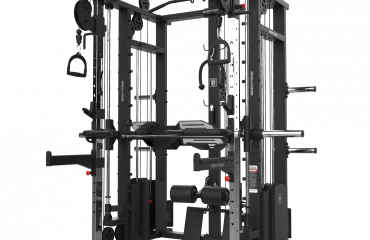
For the free-weight side of that plan, squat racks and power racks are the anchor: they carry the compound lifts that drive most of the strength progress your members will make.
Frequently asked questions
How often should members train for strength?
It depends on their fitness level and goals. As a general guide, three to four sessions per week with a rest day between sessions allows muscles to recover and develop effectively.
Can members lose weight and gain muscle at the same time?
It is possible, but harder to achieve. It requires a controlled calorie deficit alongside enough nutrients and protein to support muscle growth. Members in this situation should be referred to a health professional or nutritionist for an individual plan.
How long before members see results?
It varies with starting fitness, training regime and diet. Meaningful change generally takes several weeks to several months. Setting that expectation at sign-up protects retention far more effectively than promising fast results.
Do members need to lift heavy to make progress?
Heavy lifting is associated with significant muscle gains but it is not the only route. What matters is working the muscle progressively with a sufficient stimulus, which can also be achieved with lighter loads and functional exercises performed with correct technique. This is a strong argument for equipping a floor that supports both.
Should members consult a health professional first?
Yes, particularly members with pre-existing health conditions and those new to exercise. A health professional can advise on suitable exercises, training intensity and nutrition for the individual.
Does bodyweight training belong on a commercial floor?
Yes. Push-ups, squats, lunges, planks and burpees train effectively with body weight alone, and a dedicated functional area gives members a productive place to do them instead of blocking the machine line. It also gives your coaching team somewhere to run group sessions.
Specifying a floor that delivers results
Member results are an equipment decision as much as a coaching one. If you are opening, refitting or extending a gym, send us your floor plan, your membership profile and your peak-hour attendance and we will propose an equipment mix built around the training principles above, with a costed quotation.
Sources et références
- ANSES – avis et rapport sur les compléments alimentaires destinés aux sportifs
- NF V94-001 – prévention du dopage dans le sport : bonnes pratiques visant l’absence de substances dopantes (AFNOR)